


Technologies that operate in shared public spaces, including airspace, communities, critical infrastructure, and emergency environments, do not succeed or fail on technical merit alone. They succeed or fail on public trust.
This pattern is not new. As outlined in Four Must-Have Competencies for Success in Drones, public trust collapses fastest when programs treat regulatory compliance as sufficient while neglecting privacy, governance, and community legitimacy as operational requirements.1
From their earliest days, the public has had a love-hate relationship with aircraft, particularly when it comes to perceptions of safety, nuisance, and privacy. During my 25-year career as a naval aviator, I witnessed changes to airfield departure and arrival procedures, restrictions on or altogether closures of training ranges and outlying fields, all in response to public concerns. Today, drones, counter‑UAS systems (C-UAS), wildland fire aviation technologies, and emerging Advanced Air Mobility (AAM) platforms are converging at precisely the moment when public tolerance for perceived risk, opacity, and institutional missteps is at its lowest.
This is not a theoretical concern. Communities have halted drone delivery pilots due to noise, safety, and privacy concerns.2 3 4
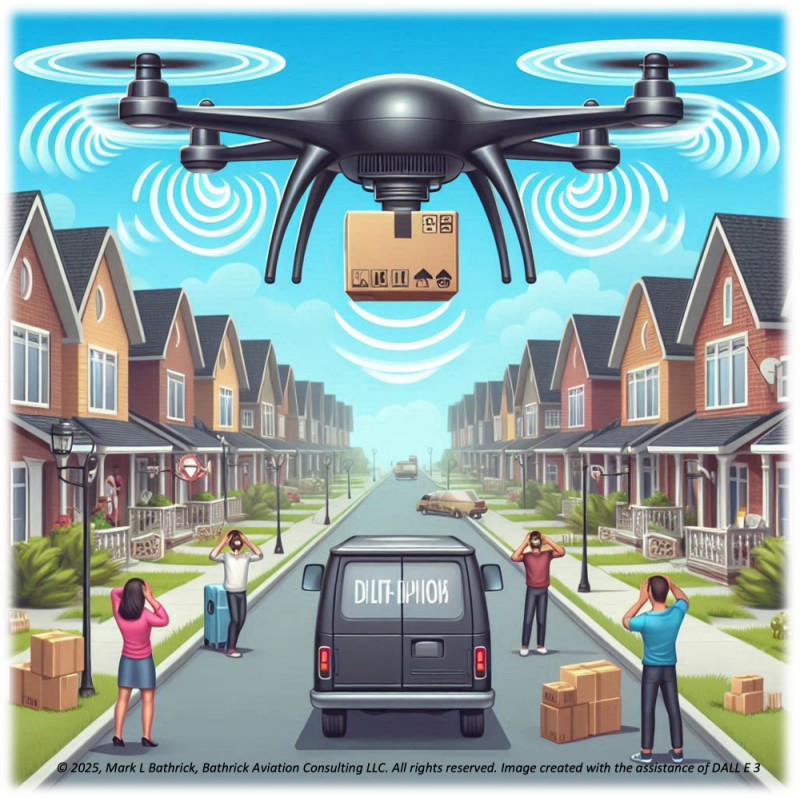
Firefighters have grounded aircraft because unauthorized drones compromised safety and jeopardized the communities they were working to protect from wildfires. C‑UAS deployments have raised civil liberty and public safety alarms.5 6AAM programs face skepticism not because aircraft cannot fly, but because the public is unconvinced they should. A stark example of this was the public backlash surrounding the proposed use of AAM “flying taxis” at the Paris Olympics that eventually led to that idea being scrubbed.7 8
The stakes are operational, economic, environmental, and national. Without sustained public trust, even the most capable technologies will stall at the edge of deployment, trapped between experimental success and real‑world adoption. As NASA has observed in its Urban Air Mobility research, public acceptance is not a downstream outcome of technical success; it is a prerequisite for it.9
Context and Background: Public Trust as Aviation’s Hidden Infrastructure
Public trust has always been a gating factor for the adoption of aviation and other technologies. History offers repeated reminders. The Hindenburg disaster ended public confidence in airships. Three Mile Island and Chernobyl reshaped nuclear power governance. The Challenger and Columbia disasters altered spaceflight oversight. The Boeing 737 MAX crisis demonstrated how quickly trust can evaporate when safety, transparency, and accountability fracture.10 11

The Boeing 737 MAX crisis illustrates how erosion in public trust is rarely caused by a single technical failure, but rather by systemic breakdowns in governance, transparency, and accountability. Similar dynamics now confront uncrewed and autonomous aviation, where public confidence hinges less on performance claims than on visible institutional discipline and public interest outcomes.12 13
Uncrewed and autonomous aircraft systems and autonomous airspace management now face a similar moment. Over the past two decades, federal agencies, industry, and academia have invested heavily in technical capability, including advanced sensors, increased autonomy, improved data processing, and enhanced networked operations. Regulatory frameworks, however, have evolved incrementally, often lagging operational reality. Meanwhile, public exposure to these systems increased faster than public understanding or confidence. In a repeated pattern of “corporate and organizational blindness,” technology companies and government agencies ignore the importance and power of public trust.
The Government Accountability Office (GAO) has repeatedly warned that the FAA lacks a comprehensive strategy for integrating drones into the National Airspace System (NAS), noting gaps in goals, milestones, and performance measures.14 These gaps are not merely bureaucratic; they directly affect public confidence in how new entrants are managed.
The Core Gap: Technology Readiness vs. System Readiness
The central failure mode is not technological immaturity; it is system unreadiness.
This gap is visible across domains:
- Drone programs that meet regulatory minimums but lack privacy impact assessments or community engagement plans.17
- C‑UAS deployments optimized for threat mitigation but insufficiently aligned with civil liberties protections and include integrated locally relevant rules of engagement (ROE).18
- Wildland fire technologies introduced without close, continuous involvement of wildland firefighters and integration into aviation safety management systems.19
- AAM concepts emphasizing throughput and autonomy while underestimating noise, visual pollution, and local acceptance concerns.20 The National Academies of Sciences, Engineering, and Medicine 2020 report explicitly warns that without addressing "public trust, noise, and privacy" with the same rigor as autonomy, the industry may fail to achieve scale.21
GAO has found that more than half of industry stakeholders seeking advanced drone operations experienced unclear requirements and inconsistent guidance from FAA offices, undermining confidence in the integration process.22 Technology availability has outpaced institutional readiness to deploy it responsibly.
Evidence and Real‑World Lessons: What Works and What Breaks Trust
Operational experience offers clear contrasts.
The DOI “Drones for Good” Program
The U.S. Department of the Interior’s (DOI) Office of Aviation Services (OAS) “Drones for Good” program demonstrated that trust can be built deliberately.23 A 2021 comprehensive review of DOI’s UAS program documented measurable public trust outcomes: zero public complaints, zero data security incidents, and tens of millions of dollars in operational savings.24 These results underscore that public trust is not an abstract value; it is an operational enabler.25
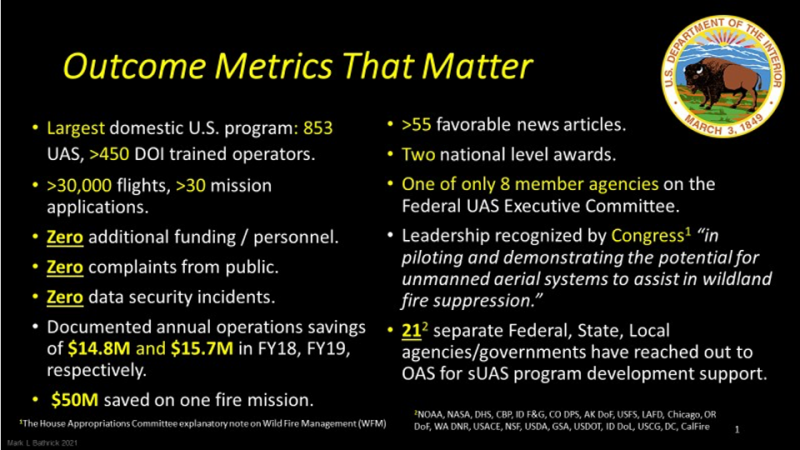
Figure 1 - Review of the U.S. Department of the Interior UAS Program - May 30, 2021 - https://www.readkong.com/page/review-of-the-u-s-department-of-the-interior-doi-7291325
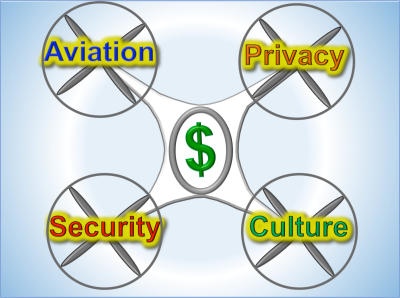
These outcomes were not incidental. They resulted from deliberate application of aviation discipline, privacy governance, cybersecurity controls, and cultural alignment, competencies later formalized and validated across multiple federal and commercial drone programs.26 The 2016 DOI UAS Privacy Impact Assessment and the 2019 Best Practices for Responsible UAS Operations guide developed by OAS remain influential touchstones for many emerging government and commercial drone programs.27 28 As documented in numerous public presentations and program reports, the enduring public acceptance of DOI’s “Drones for Good” program stems from the department’s clear recognition, ownership, and ongoing mitigation of public concerns, particularly fears of drones as tools of warfare or intelligence gathering, embedded consistently across policy development, training, operational execution, and transparent reporting.
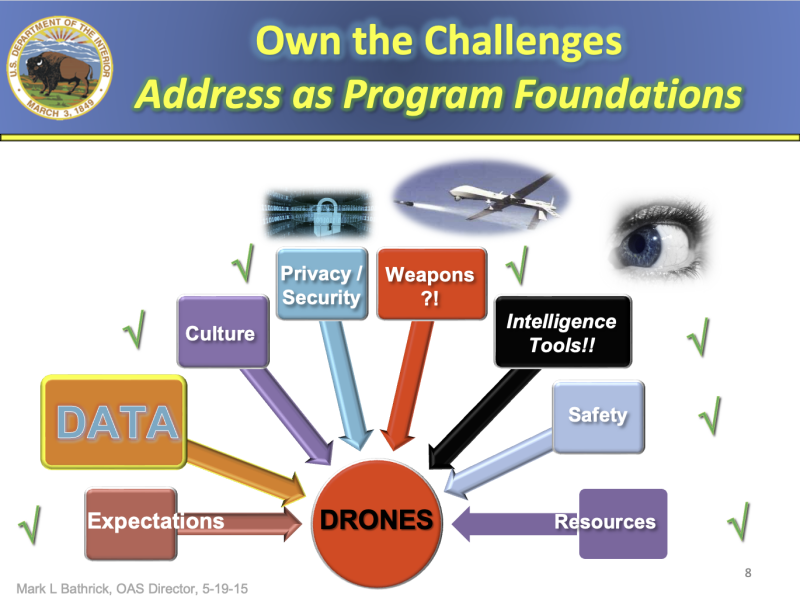
Figure 2 - How to Develop and Sustain a Successful UAS Program - May 19, 2015 - Mark L Bathrick
Commercial Drone Delivery Pilot Programs
By contrast, commercial drone delivery pilot programs in several communities have been curtailed or abandoned after residents objected to noise, flight density, and perceived surveillance. In College Station, Texas, residents described delivery drones as “incessant,” prompting Amazon to scale back operations despite regulatory approval.29 Technical performance was secondary to social acceptance.
Wildland Fire Operations
Wildfire operations provide another lesson. Unauthorized drones have repeatedly grounded firefighting aircraft, creating real safety hazards.30 The FAA reports that even a single rogue drone can halt aerial suppression, increasing risk to firefighters and communities.31
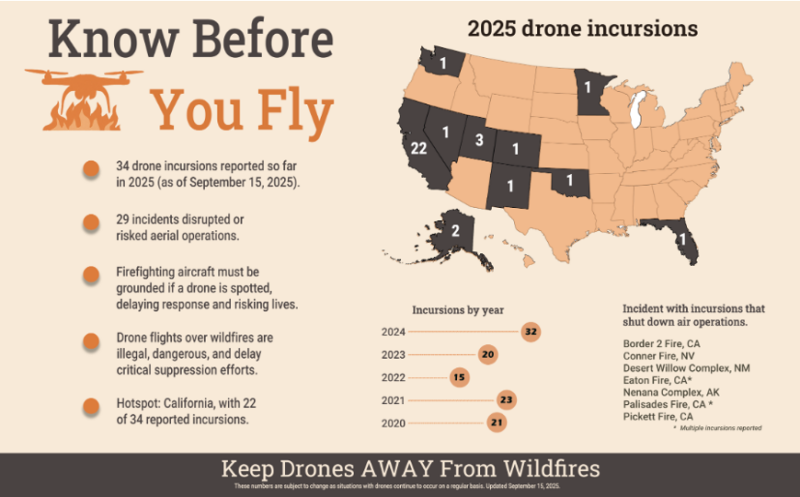
Figure 3 - 2025 UAS Incursions - National Interagency Fire Center: https://www.nifc.gov/fire-information/statistics/uas-incursions
Each incident reinforces public concern and regulatory scrutiny, regardless of whether the offending operator represents the broader industry. Trust is collective and fragile. A common piece of advice given to children about trust and reputations is that “they take years to build, seconds to break, and decades to repair.” This is certainly true in the aviation industry. Has anyone you know recently taken a trip on an airship?
Public Trust Begins With the Customer – Culture, Credibility, and Unforced Errors
Building and sustaining public trust begins with your intended customers and regulators, and it requires the same discipline, humility, and cultural awareness. Companies must invest the time to learn, understand, and respect the culture of the communities they seek to serve, recognizing that messaging crafted to excite investors often lands very differently with operational professionals.
Nowhere is this more evident than in wildland fire. Wildland firefighters operate within a proud, deeply mission‑driven culture of public servants who routinely put their lives on the line with a fraction of the resources afforded to military and national security organizations. Yet, as a consultant to many wildland fire technology companies, I have repeatedly observed unforced errors that erode trust before a product ever reaches the field. The use of militarized language, terms like “arsenal”32 to describe new aerial suppression technology or “kill chain” to explain detection‑to‑response workflows may resonate in defense circles but can alienate firefighters who view their work as protection, stewardship, and service, not combat.
Similarly, phrases such as “second shift,” 33 “autonomous," or “robotic AI firefighters”34 can unintentionally signal to firefighters that they are viewed as insufficient or easily replaceable, rather than respected professionals whose judgment and experience are central to safe operations. Trust can also be undermined visually. One aerial firefighting drone company’s website depicts men in black preparing black‑and‑white drones for launch in a desert setting, followed by ominous drones hovering in formation, imagery far more evocative of military special operations or science fiction than domestic wildland firefighting.35 These choices matter. They shape perception, intent, and credibility.36
Building and sustaining public trust is not solely the responsibility of companies developing new technologies. It is a parallel obligation of government agencies whose policy decisions shape markets, investment behavior, and public confidence. When agencies introduce new regulatory frameworks, they are not just setting technical rules. They are signaling intent, stability, and credibility to both the public and the private sector. The FAA’s decision in the mid‑2010s to move toward a federated, cooperative approach to low‑altitude airspace management is a case in point.
Conceptually, the model was sound and necessary for scalability, but it was developed largely through a safety and governance lens, without fully accounting for how companies would generate sustainable revenue within that construct. Much like a company that builds a technically elegant product without understanding how to connect with and earn the trust of its customers, the FAA advanced a policy architecture that assumed market forces would sort themselves out. The result was a prolonged period of uncertainty for UTM providers, investors, and operators, eroding confidence, stranding capital, and contributing to the failure or retrenchment of several early market leaders, including Altitude Angel, AirMap, and Skyward.37 38
The collapse or retrenchment of early UTM providers reflects a broader pattern: policy frameworks that ignore economic viability and operational trust can strand capital, erode confidence, and ultimately damage public credibility.39 40 Public trust in government policy depends not only on safety outcomes, but on whether policies are perceived as thoughtful, durable, and economically coherent. Agencies must recognize that trust is built when regulatory decisions demonstrate an understanding of downstream impacts on industry viability and public benefit, not just regulatory compliance.
When policy frameworks unintentionally undermine the very ecosystems they are meant to enable, trust, both public and commercial, becomes collateral damage. As calls for increasingly autonomous aerial operations across Air Traffic Management & Safety (ATMS) and related domains grow,41 agencies like NASA and the FAA must not only define technical and safety architectures but also deliberately develop, resource, and execute strategies to earn and maintain public and industry trust. This is crucial because without clear economic pathways, transparent governance, and durable market signals, even well-intentioned policy frameworks risk repeating the trust and viability failures that undermined earlier efforts in low-altitude airspace integration.42
Why This Is a System Problem, Not a Technology Problem
Public trust failures emerge from governance, culture, and structure, not hardware limitations. Common systemic contributors include:
- Business executive and investor misfocus, where the false assumption is held that if we build it, public (and customer) acceptance will come. As a result, little to no effort or investment is expended to identify and head off likely public trust issues until they become a crisis.
- Fragmented authority, where no single entity holds the public’s trust in outcomes related to safety, privacy, security, and public engagement.
- Procurement models that reward rapid acquisition but underfund training, sustainment, and oversight often contribute to public unease.
- Regulatory compliance treated as a ceiling, rather than a baseline for responsible operations.
- Cultural blind spots, including dismissing public concerns as uninformed or inevitable resistance.
- Lifecycle neglect, where programs plan for launch but not for long‑term operation, adaptation, and accountability.
NASA’s research on Urban Air Mobility consistently finds that public acceptance hinges on perceived safety, privacy protection, noise management, and governance transparency, not on novelty or speed.43 These dynamics create conditions where a single misstep, real or perceived, can undermine years of progress.
Recommendations: Turning Public Trust into a Strategic Business and Program Advantage
1. Treat Public Trust as a Core Business and Drone Program Requirement, Not a Communications Task
Drone ecosystem companies and government drone programs should formally define public trust as a mission‑critical performance requirement, equivalent to safety, reliability, or regulatory compliance. This means setting explicit trust objectives (privacy protection, transparency, noise mitigation, accountability) and tracking them alongside technical KPIs, rather than assuming trust will follow successful pilots or certifications. This approach mirrors the governance and performance frameworks proven in DOI’s “Drones for Good” program and subsequent federal and commercial deployments.44 45
Advantage: Trust becomes a design input, not a risk to be managed after deployment, reducing stalled programs and late‑stage resistance.
2. Move Beyond Minimum Compliance and Design for “System Readiness”
Companies should deliberately design operations that address governance, lifecycle sustainment, training, and public perception, rather than treating regulatory approval as the finish line.
Advantage: Programs scale faster and more predictably because they are perceived as responsible, not merely legal.
3. Establish Clear Governance and Single‑Point Accountability
Fragmented authority erodes confidence. Companies should clearly assign ownership for safety, privacy, security, and community engagement, ensuring accountability is visible both internally and externally.
Advantage: Regulators and communities gain confidence that someone is clearly responsible when issues arise, reducing friction and delays.
4. Operationalize Transparency, Not Just Messaging
Transparency must extend beyond marketing and press releases. Companies should publish accessible policies on data use, privacy, noise, incident reporting, and corrective actions, and update them as operations evolve.
Advantage: Transparency preempts suspicion and reframes companies as partners rather than opaque operators.
5. Proactively Address Public Fears, Privacy, and Civil Liberties Concerns
Drone, counter‑UAS, and AAM programs that ignore deep-seated autonomy fears, privacy, and civil liberties concerns face heightened resistance.46 Companies should conduct and disclose privacy impact assessments and align operations with recognized best‑practice frameworks rather than waiting for objections or complaints.
Advantage: Early, credible privacy safeguards reduce backlash and differentiate responsible operators from the rest of the market.
6. Engage Communities Early, Before Pilot Projects Begin
Companies should engage local stakeholders early, explain intended use cases, listen to concerns, and adapt operations where feasible.
Advantage: Early engagement converts communities from passive observers into informed stakeholders, reducing the risk of abrupt shutdowns.
7. Design Noise, Visual Impact, and Operational Density into the Concept of Operations
Noise and visual intrusion are repeatedly cited as drivers of opposition, even when systems are technically safe. Companies should treat these factors as core design constraints rather than secondary optimization problems.
Advantage: Operations that are perceived as considerate of local quality of life gain acceptance faster and face fewer political obstacles.
8. Invest in Training and Organizational Culture, Not Just Technology
Companies should ensure that executives, managers, and operators understand aviation risk, public accountability, and community engagement, not just system performance.
Advantage: A trust‑aware culture prevents small missteps that can undo years of technical progress.
9. Plan for Long‑Term Sustainment and Adaptation
Public trust is described as something that is “rented daily.” Companies should plan for long‑term oversight, continuous improvement, and adaptation as public expectations evolve, rather than focusing solely on launch milestones.
Advantage: Programs remain resilient over time instead of collapsing after initial success or public scrutiny.
10. Use Trust Performance as a Competitive Differentiator
The DOI “Drones for Good” example demonstrates that disciplined trust‑building leads to measurable operational and economic benefits. Companies should actively demonstrate and document trust performance as a market differentiator.
Advantage: Trust leadership becomes a barrier to entry for less disciplined competitors and a signal of long‑term viability to partners and regulators.
Conclusion: The Choice Ahead
Public trust is not an abstract ideal. It is an operational dependency that is “rented” every day through the actions, inactions, and words you employ. It is not a soft issue; it is operational infrastructure. Technologies that touch the public, physically, digitally, or psychologically, must earn and sustain legitimacy through behavior, not promises. Companies and government drone programs that design for trust from the outset can move faster, scale further, and sustain operations longer than those that rely on technical success alone.
The evidence is clear across wildfire aviation, C-UAS, BVLOS integration, and public safety operations: trust is not a communications outcome; it is engineered, governed, and earned through disciplined system design.47 48 The path forward is known. It has been demonstrated in wildfire aviation, in disciplined federal programs, and in sectors that learned hard lessons from failure. What remains is the willingness to treat trust as foundational infrastructure.
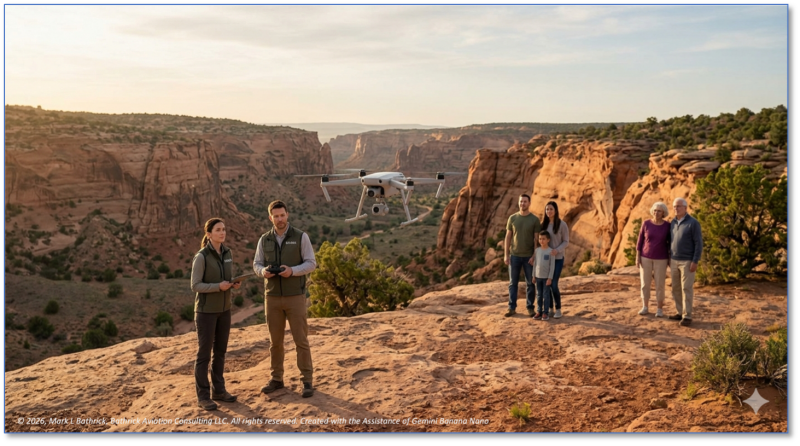
The decision point is now. We can either launch pilots and hope for acceptance and widespread public follow, or we can design systems that are inherently trustworthy from the beginning. The outcome will determine not just which technologies fly, but which endure.







Comments