

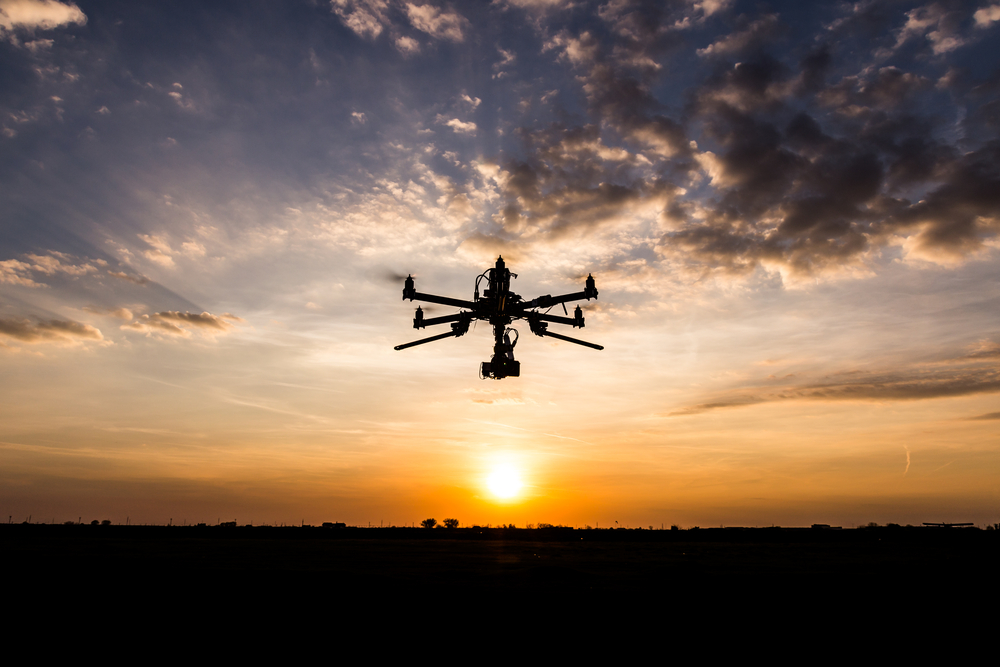
Commercial UAV Expo is coming up fast, and to help attendees get excited and prepared for the show, CUAV News is highlighting a few sessions that fall under major themes influencing this year’s content. Earlier this week, we published our first rendition of this that looked at session revolving around scaling drone programs. Now, we take a look at a few sessions that give an idea of what the future of drone operations will look like. Advancements in AI assisted workflow, the needle moving forward on BVLOS operations, and swarm drone capabilities name a few of the initiatives that are driving innovation in the unmanned airspace today.
Before we dive into the nitty gritty realities of a world where Part 108 is fully established, we first need to understand how the new rule will change the big picture of drone operations. That’s exactly what the panelists in What Widespread BVLOS Will Practically Mean for Operators will address. For a while now, normalized BVLOS has been sort of a unicorn for the industry. With the final rule approaching, it’s time to have real conversations about what organizations need to do to compete in a BVLOS-enabled industry. Moderated by CUAV News staff writer and owner of Plaza Aerospace Corp, Juan Plaza will lead this panel through a meaningful conversation that will cover everything from staffing to mission planning in the new world of Part 108.
Now that we’ve covered the big picture look at Part 108, this next panel discussion gets into the finer-detailed questions that operators are already asking such as what happens to my existing authorizations? How do I adapt my workflow? How do I actually start flying BVLOS under the new framework? All of these will be covered in the Flying BVLOS in the New Regulatory Era: Making UTM Work in the Real World session. This panel brings together operators who are putting UTM to work today and will focus on the practical implications of these potential regulatory changes.
The conversation continues and takes on different edge in Turning Part 108 & 146 into Real-World Commercial Operations. In this panel led by CUAV New’s Matt Collins, industry leaders will get real on what comes after we achieve this regulatory milestone. The airspace of the future will be much busier than it is today with the eventual influx of delivery drones and eVTOL aircraft, so how can the industry accommodate this while integrating with other big players in the airspace such as passenger and military aircraft? The airspace of the future is multi-layered, and these panelists will run through what kind of data integrity standards and maintenance governance models are needed to ensure that nothing becomes fragmented.
AI stands to be a tool that will be indispensable for the industry as it enters the world of autonomous BVLOS flights on a regular basis. While many other sessions will touch on the many benefits AI has already had on the industry, the AI and the Commercial Drone Industry: What It Is Delivering Today and Where It Goes Next session will dissect just how AI is improving post-flight workflows and is being integrated into complex missions while keeping a human in the loop. From backgrounds in AI-software, autonomous robotics, and business ownership, Ismar Avdic of Stratus Autonomous, Vikhyat Chaudhry of Buzz Solutions, and Desi Ekstein of On the Go Video will deliver a well-rounded panel discussion on what AI can do for drone operators. Moderated by Nitin Gupta of Flytbase, who will bring extensive knowledge of drone-based autonomous software to the conversation.
We would be remiss not include autonomous drone swarms in this line up of next generation drone operations. The session When One Drone Is Not Enough: The Operational Realities of Swarms and Autonomous Fleet Deployment will include in-depth presentations on this topic. Gustavo Lopez of Septentrio examines how GNSS vulnerabilities like jamming, spoofing, and multipath interference propagate across large drone swarms, and outlines mitigation strategies such as multi-constellation receivers and hybrid positioning to improve resilience. Praveen Manimangalam, an independent autonomous systems architect, presents a distributed "Drone Tree" network architecture that replaces centralized, return-to-base operations with geographically dispersed hangar nodes to boost fleet utilization and response speed for infrastructure and emergency missions. And Jane Cleland-Huang of the University of Notre Dame introduces a Human-On-The-Loop software architecture using LLM-based autonomy pipelines that lets multi-UAV teams interpret missions and propose actions while keeping human operators able to intervene when needed.
Only a few years ago did the industry state it was in its “walk” phase of crawl, walk, run. The content on this year’s program hints that the industry is picking up the pace now. These sessions are a must-attend for anyone in the industry who doesn’t want to be left behind.








Comments