
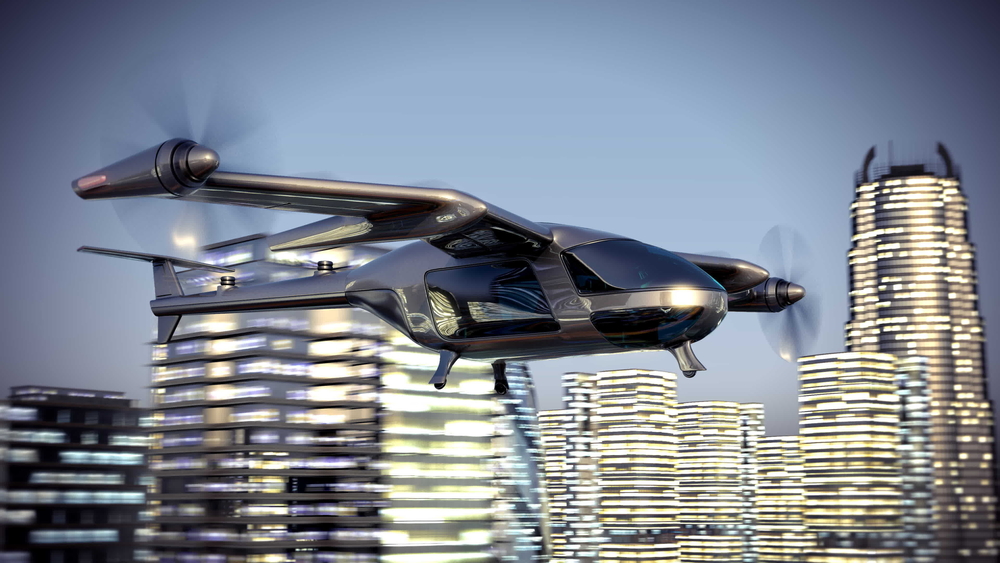
Over the past few weeks, we have been hearing news that Joby Aviation has been conducting flights over New York City, specifically to and from JFK airport and the various heliports located on the shore front of Manhattan. What we need to keep in mind when we read these good news is that these flights are being conducted under an experimental certificate, and as part of formal Federal Aviation Administration (FAA) Type Inspection Authorization (TIA) testing using the company’s first conforming aircraft. The good news resides in the fact that these flights mark the transition from prototype demonstrations to true certification flight testing, not that they are carrying passengers.
These Joby flights are being conducted with a pilot on board, so is it really fair to call them uncrewed aviation? For the past 13 years or so, the industry has been focusing on a future aviation paradigm in which pilots are remotely controlling aircraft and most of the flights are conducted under autonomous systems with pilots ‘monitoring’, not flying them.
The certification of an aerial vehicle designed and intended to carry passengers is orders of magnitude more stringent than for small drones built to carry packages or perform inspections, so let’s analyze the three aspects that cover this certification, regulatory, technological and human.
The Regulatory Imperative: Why the FAA Is Steering Toward Uncrewed AAM
The FAA’s approach to Advanced Air Mobility (AAM) is often portrayed as cautious, but the truth is more nuanced: the federal agency is shaping the conditions under which AAM can scale safely and credibly. The agency’s regulatory posture is driven by a simple reality: aviation is a zero‑margin‑for‑error domain. Every new aircraft architecture, operational model, and business concept must be integrated into a national airspace system that already supports millions of passengers and billions of dollars in commerce each year.
From the FAA’s perspective, uncrewed or remotely piloted aircraft (RPAs) are a regulatory necessity, given the general direction that transportation in general is taking towards autonomy. The agency must plan for an airspace where traffic density increases dramatically, where aircraft operate at lower altitudes, and where traditional pilot‑in‑cockpit assumptions no longer hold. Human pilots are excellent at judgment and adaptability, but they are also a bottleneck. They require training, certification, rest cycles, and physical presence. As AAM envisions thousands of vehicles operating simultaneously in urban corridors, the FAA sees automation as the only scalable path to maintaining safety.
This is why the agency’s recent frameworks, from the Innovate28 initiative to the evolving standards for detect‑and‑avoid (DAA), command‑and‑control (C2) links, and remote operations, all point toward a future where the pilot is increasingly offboard. The FAA is not mandating uncrewed aircraft outright, but it is building a regulatory environment that supposes automation will carry more of the workload. In doing so, the agency is preparing for an airspace where human oversight remains essential but is no longer tied to a cockpit seat.
The regulatory argument, then, is not about replacing pilots. It is about ensuring that AAM can scale without compromising the safety culture that defines aviation. The FAA is laying the groundwork for a system where automation and remote operations are not exceptions but expectations, a system designed for density, resilience, and long‑term viability.
But the FAA is not the only certification agency in the world, and companies such as Archer Aviation have sought certification elsewhere, as recently announced by the United Arabs Emirates General Civil Aviation Authority (GCAA) issuing a Restricted Type Certificate (RTC) to Archer’s Midnight aircraft. This RTC advances the regulatory path for the aircraft's entry into service in the UAE.
On a desperate race to generate revenue, these AAM companies might be forced to look elsewhere for aircraft certification, which will give them the opportunity to accumulate flying hours which would be invaluable when applying in the US and Europe.
The Technological Logic: Why AAM Aircraft Are Designed to Be Uncrewed
If the regulatory argument explains why the FAA is moving in this direction, the technological argument explains why the aircraft themselves are following suit. AAM vehicles are not simply helicopters with batteries; they represent a fundamentally different architecture. Distributed electric propulsion, high‑bandwidth sensors, fly‑by‑wire systems, and advanced autonomy software all point toward a design philosophy that treats the aircraft as a networked system rather than a manually flown machine.
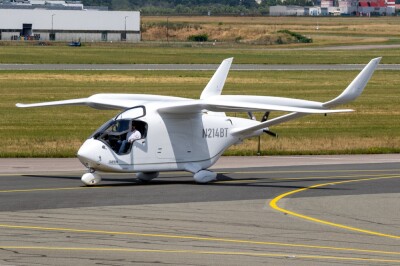
Even in the case of the Robinson R44 helicopter being turned into an AAM aircraft, this reality of a different architecture applies regardless of the fact that they are using a traditional helicopter as the vessel. The philosophy of RPA still holds.
In traditional aviation, the cockpit is the center of control, physically, operationally, and philosophically. In AAM, the center of gravity shifts to the vehicle’s digital brain. Sensors feed real‑time data into onboard processors; algorithms manage stability, navigation, and contingency responses; and connectivity links the aircraft to remote operators and traffic management systems. The result is an aircraft that is inherently more capable of automated flight than manual flight. These aircraft will not be flying under either visual (VFR) or instrument (IFR) flight rules, instead they will be using the new and not-released-yet digital flying rules (DFR), a concept that we must begin familiarizing ourselves with.
Removing the pilot from the aircraft is not just a cost‑saving measure. It unlocks design freedom: lighter structures, more passenger space and cargo useful load, optimized aerodynamics, and simplified maintenance. It also eliminates human‑factor risks such as spatial disorientation, fatigue, and reaction‑time limitations. In an electric aircraft where every kilogram matters, removing pilot controls, displays, and redundant manual systems can extend range and increase payload.
Moreover, autonomy is not a binary switch. AAM aircraft are being built with layered automation, from basic stability augmentation to full mission‑level autonomy. Remote pilots can supervise multiple aircraft, intervening only when necessary. This supervisory model mirrors how modern rail systems, industrial robotics, and even spacecraft operations have evolved: humans remain in the loop, but not in the vehicle.
Technologically, the uncrewed architecture is the natural expression of what electric, connected, software‑defined aircraft can do. The aircraft are becoming uncrewed because the technology makes it the most efficient, safe, and scalable option at the same time that the entire transportation ecosystem, including cars, buses and trains, are headed towards an inevitable driverless future.
The Human Story: Why Today’s Pilot Is a Temporary Passenger in the Evolution of AAM
Aviation has always been a story of human adaptation. From barnstormers to airline captains, pilots have shaped the identity of flight. But in AAM, the role of the pilot is undergoing a profound transformation, not disappearing, but migrating. The pilot is becoming a temporary passenger in the evolution of the industry, riding along as technology and regulation reshape what it means to ‘fly.’
In the early years of AAM, onboard pilots will provide reassurance. They help build public trust, support early operations, and serve as a bridge between legacy aviation and the autonomous future. Their presence signals continuity: even as the aircraft looks new, the human at the controls feels familiar. But this phase is transitional. As automation proves itself, as remote operations mature, and as passengers grow comfortable with pilotless flight, much as they did with driverless trains and autopilot‑heavy commercial jets, the pilot’s role shifts from operator to overseer.
This shift is not a demotion, on the contrary, it is an evolution of expertise. Pilots will become mission managers, fleet supervisors, and safety architects. They will oversee multiple aircraft, intervene only when needed, and apply their judgment at a system level rather than a cockpit level. Their value increases, not decreases, because they are responsible for more than one aircraft at a time.
The storytelling argument is ultimately about identity. AAM challenges the traditional image of the pilot as the heroic figure at the controls. Instead, it introduces a new narrative: the pilot as a conductor of a distributed, intelligent and coordinated orchestra of flying vessels. The cockpit becomes virtual. The skillset becomes more analytical, more supervisory, more strategic. And the pilot’s legacy continues, not in the box, but in the system.
So, could eVTOL be considered uncrewed aviation as we define it? Yes, the architecture is created to be completely autonomous and the requirement to carry a pilot on board initially does not change the fact that they are pilotless by design. Adoption by the general public to flying in pilotless aircraft is a different matter, and in our opinion, a generational transition is required for these services to be widely adopted. In other words, us and our children might never fly in a remotely piloted aircraft, but our grandchildren will, for sure.






Comments