

This week’s news round up looks at a new remote staffing service from Flying Lion, warnings about increasing drone traffic, and funding raised for a novel aircraft design by Airbound.
Flying Lion Launches New Remote Staffing Service
Flying Lion has rolled out a Remote Staffing Service to address one of the trickiest problems in the Drone as First Responder world: keeping a program in the air around the clock without forcing agencies to build out a full-time pilot roster of their own. By pairing remote pilots with its own pilot management software, the company anticipates that staffing, not hardware, is the real bottleneck holding back around the clock DFR coverage. This flexible model allows agencies to plug remote pilots into their own crime centers or lean entirely on Flying Lion's infrastructure, dialing support up or down as budgets and call volume demand.
What makes the offering notable is its platform-agnostic design. Rather than locking agencies into a particular drone, dock, or software ecosystem, Flying Lion says its pilots are cross-trained to work across whatever combination of tech an agency has already invested in, a meaningful selling point for departments wary of vendor lock-in. Layered on top is a workflow system that dispatches flights, tracks outcomes, keeps watch commanders in the loop, and manages airspace awareness for BVLOS missions. It's a pragmatic answer to a scaling problem: as DFR programs multiply nationwide, the limiting factor is increasingly bodies in seats, not drones in the sky, and Flying Lion is positioning itself as the company that fills that gap on demand.
Industry Professional Warns about Drone Traffic Issues
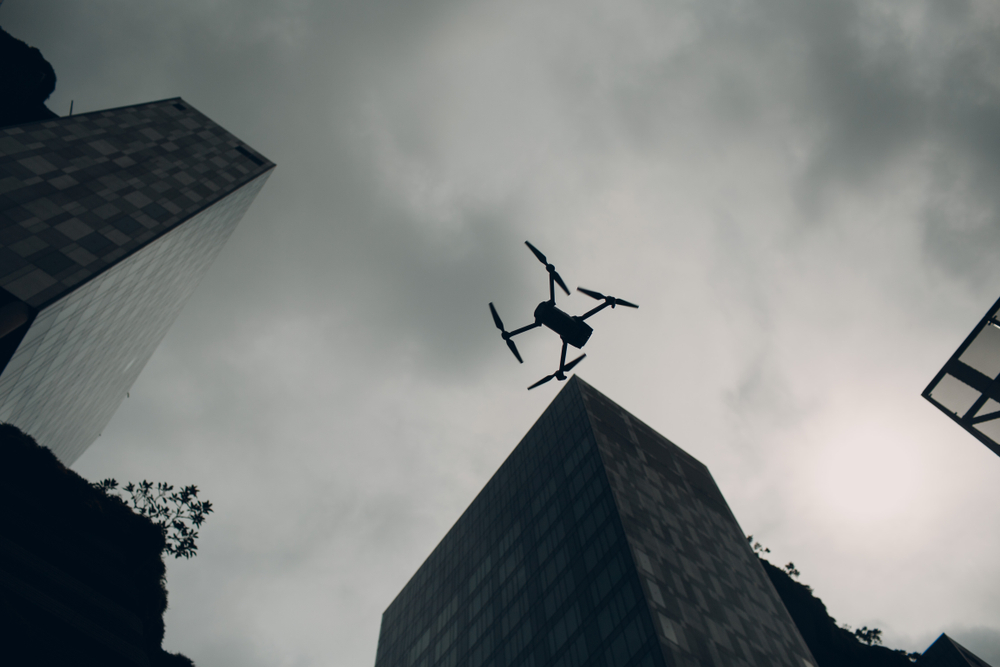
As drone deliveries from Amazon and Walmart expand, Airspace Link CEO Michael Healander is warning that the industry's growth is outpacing its safety infrastructure, and that a single bad incident could set back the whole sector. Healander, whose company provides air traffic de-confliction systems he compares to "Google Maps for drones," told The U.S. Sun that commercial delivery drones, police drones, and recreational drones are now regularly sharing the same airspace, with no comprehensive way for operators to coordinate with each other. Most delivery drones are capped around 55 pounds, though Amazon's Prime Air drones fly under a special exemption at roughly 85 pounds and can travel up to 8 miles, and Healander expects heavier drones to eventually face more rigorous testing requirements similar to those for passenger aircraft.
Healander's central worry is a "rogue drone" scenario—a single incident, whether accidental or malicious, at a large public gathering or in dense airspace, that damages public trust in the entire industry. He argues the technology to prevent mid-air collisions already exists, but many operators, particularly smaller companies, cities, and counties, lack the budget to adopt it, leaving coordination gaps even as drone traffic increases. He said new federal rules are expected within the next few months, marking a shift from requiring individual Remote Pilot Certificates to a company-level certification model that mandates documented training programs and safety systems. Amazon, for its part, says its Prime Air operations already hold FAA Part 135 certification, the same framework used for commercial airlines, and rely on trained human monitors alongside automated safety systems.
Airbound Completes Funding Series
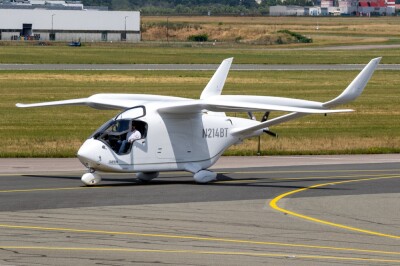
Airbound has raised a $37 million Series A, led by Greenoaks with participation from DoorDash, Lachy Groom, Lightspeed, and Humba Ventures, bringing its total funding to nearly $50 million since its 2023 founding. The Bengaluru-based company builds autonomous aircraft designed around an unusual premise: rather than spending most of an aircraft's weight lifting itself, Airbound's design flips the ratio so the payload accounts for most of the weight in flight. The company states this breaks the long-standing trade-off between fast, expensive air transport and slow, cheap ground transport, potentially making aerial delivery cost-competitive with trucking.
The funding coincides with a new commercial deployment agreement with the Indian state of Andhra Pradesh, where Airbound will build a drone delivery network connecting three cities and scale to 10,000 daily flights supporting retail, e-commerce, and healthcare deliveries. That builds on the company's existing work with Narayana Health, one of India's largest hospital networks, where it has completed over 1,000 autonomous flights transporting diagnostic samples with zero mission failures. Airbound frames India's demanding delivery expectations as a proving ground, with plans to eventually extend the same technology to freight and passenger transport.










Comments