
In the evolving world of uncrewed aviation, Part 108 has become the focal point of industry attention. It represents the FAA's long‑awaited attempt to replace the patchwork of waivers, exemptions, and case‑by‑case approvals that have governed BVLOS operations for nearly a decade. To understand its significance, however, it’s essential to see Part 108 as part of a more complex set of rules, including the new Part 146. Part 108 is an operator‑centric rule, defining the responsibilities, competencies, and safety obligations of organizations that intend to operate uncrewed aircraft beyond the operator's visual range.
Part 108, as defined in the Notice of Proposed Rulemaking (NPRM) of August 2025, is designed to establish a formal certification pathway for BVLOS operators, treating them more like traditional air carriers than experimental technology companies. It requires operators to demonstrate that their procedures, training, and oversight systems are robust enough to support routine BVLOS missions. It also places substantial emphasis on the safety case for the aircraft and its automation. Detect‑and‑avoid (DAA) capabilities, command‑and‑control (C2) reliability, and the ability to maintain safe flight even with minimal human involvement all become part of the operator’s burden of proof.
Crucially, Part 108 is performance‑based. It does not dictate specific technologies or architectures. Instead, it asks operators to show that their systems achieve defined safety outcomes. This flexibility is intentional: it allows innovation to continue while giving regulators a consistent framework for evaluating risk. However, this flexibility now depends heavily on the underlying technology framework supporting it. Part 108 governs how operators must execute and comply with the FAA’s defined workflows while strongly relying on the operational data provided by Automated Data Service Providers (ADSPs) under Part 146. This is why both Part 108 and Part 146 must work in tandem to provide the complete digital infrastructure that the FAA requires.
Part 146: The Digital Infrastructure Rule for Autonomy
If Part 108 governs the actors, Part 146 governs the information ecosystem that makes their actions safe. Part 146 is the FAA’s proposed rule for certifying ADSPs. These are not operators and not aircraft manufacturers. They provide the real‑time digital services that autonomous and semi‑autonomous aircraft rely on to navigate safely in complex, dynamic airspace.
Part 146 is groundbreaking because it regulates something the FAA has never formally regulated before: data. The rule recognizes that autonomy is impossible without trustworthy information. Weather intelligence, airspace constraints, strategic deconfliction, conformance monitoring, and dynamic hazard alerts are all essential inputs to autonomous decision‑making. Without them, even the most advanced aircraft would be flying blind.
To ensure the reliability of these services, Part 146 establishes requirements for data integrity, cybersecurity, performance assurance, and quality management. It also defines standardized interfaces so that multiple ADSPs can coexist and interoperate, creating a national ecosystem rather than a collection of proprietary silos. The rule treats these services as safety‑critical, subjecting them to certification standards that mirror those applied to avionics and other high‑assurance systems.
Commercial UAV News reached out to Jon Damush, President and CEO of uAvionix, a company specialized in the development and sale of advanced avionics for crewed and uncrewed aircraft, for his views on how Part 108 and Part 146 interact to make autonomous flights possible.
“Part 108 deals exclusively with BVLOS flights below 400 ft. above ground level (AGL), outside of the airport environment. While most people would assume that not much aviation happens that low, the reality is that there are both recreational and critical aviation operations at very low altitude. Crop dusting, police helicopters, medi-vac, etc. Therefore, considering the expected volume of BVLOS UAS in the future, we need a good approach to ensuring safety at low altitudes, including avoiding collisions between aircraft," Damush said.
“Based on the Part 108 NPRM and subsequent requests for comment from the FAA., it seems likely that there will be a requirement for some sort of electronic position sharing by crewed aircraft that want or need to operate below 400’ AGL outside of the airport environment. ADS-B would satisfy that requirement, but there is also talk of accepting alternative means of position sharing, generically referred to as ‘electronic conspicuity’ to provide an easier and more affordable option for compliance. If that is indeed part of the final rule, then each and every UAS operator will need to have the ability to receive ADS-B. The companion rule, Part 146, outlines the requirements to be an ADSP, which opens the door for a UAS operator to receive ADS-B data from a 3rd party. This gives the UAS operator choices to have their own ADS-B receivers onboard, use their own receivers on the ground, or perhaps subscribing to a data feed from a 3rd party who provides high quality ADS-B data, approved by the FAA.”
One of the most important design principles of Part 146 is the separation between operators and service providers. An operator certified under Part 108 does not need to build its own Uncrewed Traffic Management (UTM) stack or weather intelligence system. Instead, it can rely on certified ADSPs whose services meet FAA‑defined performance and integrity requirements. This separation mirrors the telecommunications model: operators rely on infrastructure, but they do not own or control it. The result is a more resilient, competitive, and scalable ecosystem.

For further clarification on the role of ADSPs in the new Part 108/Part 146 ruling, CUAV News spoke to Edwin Sanchez, Founder and CEO of VOTIX an American robotics company specializing in enterprise software platforms for orchestration, operation and automation of drones and robots.
“The natural evolution of Part 107 is not Part 108 alone; it’s the combo of Part 108 plus Part 146 and the important role that ADSP’s will play in making sure operators are functioning over a technological foundation that senses and captures as many aspects of the context involving a drone operational workflow as possible,” Sanchez said. “The FAA is doing the right thing by creating a regulatory framework that supports and regulates this technological foundation that will require constant compliance by every player participating in the ecosystem.”
According to Sanchez, as published by VOTIX in a recent white paper on the subject, there are five key elements that would allow for autonomous operations under Part 108/Par146:
- Systemic Reliability – Compliance in real time.
- Operational Assurance – Strictly follow FAA-defined workflows.
- Real-Time Decision Logic - Continuous airworthiness evaluation.
- Automation as Accountability – Guaranteeing FAA's alignment at all times.
- Operational Resilience – Cybersecurity protocols in place at all times.
“The role of the ADSP as defined in Part 146 is one of ‘Conceptual Conscience’ in terms of automation, in other words these service providers will be responsible to deliver constant, reliable and only the necessary information to, not only operators and aircraft, but to other ADSP’s that might be necessary to ensure a safe operation. Only by doing this we guarantee continuous compliance and interoperability.”
How Part 108 and Part 146 Mix to Enable Autonomous Operations
The most important insight in the emerging regulatory landscape is that neither Part 108 nor Part 146 is sufficient on its own. Autonomy requires both. Together, they form a dual‑pillar architecture that finally gives the United States a coherent regulatory foundation for uncrewed aviation.
Part 108 defines who acts. Part 146 defines what informs them. Autonomy emerges only when both are present.
Autonomous aircraft cannot rely solely on onboard sensors for situational awareness. They require externalized intelligence, airspace constraints, cooperative traffic data, micro‑weather insights, and strategic deconfliction to make safe decisions. These inputs come from ADSPs certified under Part 146. But having the data is not enough. Operators must demonstrate that their automation stack can ingest, interpret, and act on that data predictably and safely. That obligation sits squarely within Part 108.
The interaction between the two rules creates a closed safety loop. Part 146 ensures that the data is trustworthy. Part 108 ensures that the operator and its automation use that data responsibly. Regulators can evaluate both sides of the loop, certify them independently, and oversee them continuously. This structure is what makes autonomy certifiable rather than experimental.
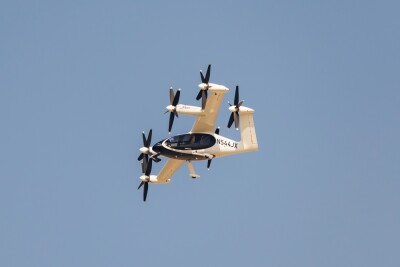
The architecture is also intentionally scalable. The same dual‑pillar model applies not only to small drones but also to uncrewed cargo aircraft, eVTOLs (electric vertical takeoff and landing), and future autonomous air taxis. As the industry evolves, the regulatory foundation remains stable: operators are certified under frameworks such as Part 108, and the digital infrastructure they rely on is certified under frameworks such as Part 146.
In this sense, Part 146 plays a foundational role, not a supporting one. It provides the digital backbone that autonomy depends on. Part 108, meanwhile, provides the operational discipline and safety assurance that regulators require. Together, they create the first complete regulatory stack for autonomous aviation in the United States, a system in which autonomy is not a special case but a normal, certifiable mode of flight.
We, as members of the uncrewed aviation community have been paying too much attention to the eventual release of Part 108 (BVLOS) as a natural complement to Part 107 (VLOS), but in reality, the big impact of any new ruling will be the fact, for the first time in history, the FAA will be regulating technology that is not directly related to aircraft and how they operate, but to every other system that allows them to fly independently and autonomously. This is a bigger revolution than simply moving from VLOS to BVLOS.








Comments