

Contributed by Brandon Lint, Regulatory Affairs and Certification Specialist, SkyGrid
The FAA's proposed Part 146 has been called the "overlooked enabler" of autonomous operations, and that label is exactly right and exactly the problem.
While the industry has been focused on Part 108, the BVLOS rule that finally replaces years of waivers and exemptions, Part 146 has been doing quiet, foundational work. It establishes the first-ever certification pathway for Automated Data Service Providers (ADSPs), the companies that build and operate the data services autonomous aircraft depend on to fly safely in complex, shared airspace.
As the rulemaking process continues, the industry needs to make clear why this framework is important and why the stakes extend well beyond drone delivery.
The Dual-Pillar Architecture Doesn't Work with One Pillar
Part 108 and Part 146 were designed as a system. Part 108 governs what operators and UAS must do. Part 146 governs the information ecosystem that enables those actions to be safe and certifiable. They are not alternatives, but complements. Remove Part 146, and you haven't simplified the regulatory framework, but instead undermined it.
Autonomous aircraft cannot operate on onboard sensors alone. They need externalized intelligence: real-time airspace constraints, cooperative traffic data, weather, and strategic deconfliction. These services come from certified ADSPs. But certification requires a regulatory pathway, and right now, Part 146 is the only one the FAA has proposed.
Without it, operators have no mechanism to rely on certified third-party data services. They either build their own, a burden that defeats the purpose of a competitive service ecosystem, or they operate without the certified data infrastructure that safe autonomous flight requires.
The AAM Infrastructure Gap
The stakes are highest for Advanced Air Mobility.
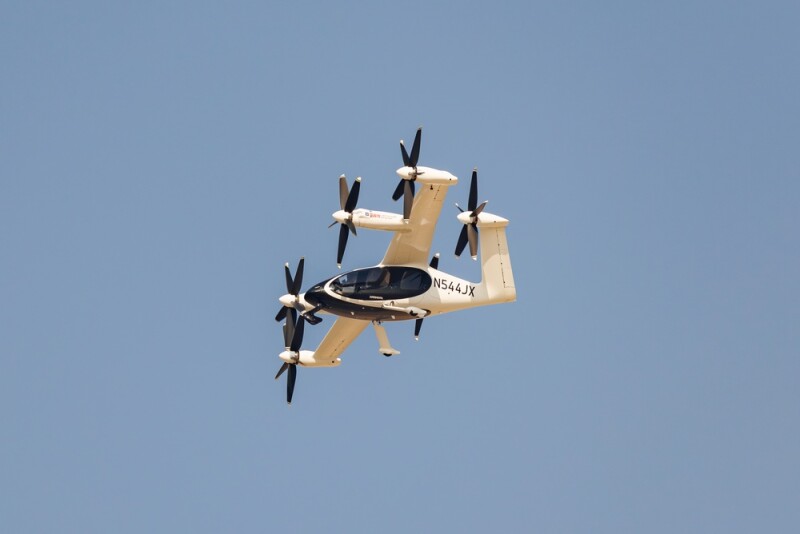
AAM operators, such as air taxis, autonomous cargo aircraft, and eVTOL systems, have highly specific data service requirements: demand capacity balancing of constrained resources, strategic traffic management systems, ground-based surveillance, and conformance monitoring. These services must integrate directly into operator automation architectures, respond to operator-specific edge cases, and evolve as aircraft technology advances.
All these needs cannot be met by a single generic platform. They require purpose-built services developed by providers with deep operational expertise, grounded in industry consensus standards, and capable of adapting as the operational environment evolves.
Part 146 provides the regulatory home for those services. Without it, AAM operators face an infrastructure gap with no clear path to resolution, and the services that companies have been building in good faith, following the FAA's regulatory direction, have no certification pathway to reach the market.
Dallas Proved the Industry Model Works at Scale
Last month's Flytrex/Wing milestone in North Texas is directly relevant here. Eight thousand conflict-free, overlapping delivery flights; two competing operators; zero airspace conflicts. The framework that made that possible, ASTM F3548-21, USS interoperability, and standards-based intent sharing, is precisely the kind of industry-built, multi-provider ecosystem that Part 146 is designed to enable nationally.
That milestone does more than demonstrate that shared airspace is achievable. It also shows that industry-built ADSP services work at operational scale. Part 146 is the regulatory mechanism for certifying and scaling that model. Without it, the USS interoperability framework that Flytrex and Wing used has no path to formal certification, and the broader ecosystem that Karassikov described as "designed from the start to support additional operators" has no regulatory foundation on which to grow.
The Legal Dimension
This is not only a policy argument. Section 932 of the FAA Reauthorization Act of 2024 requires the FAA to establish a method for approving third-party service providers. Part 146 is the mechanism the FAA proposed to fulfill that statutory obligation. The obligation doesn't disappear if Part 146 does; it simply goes unmet.
The Investment at Stake
U.S. industry and the federal government have invested hundreds of millions of dollars in UTM and PSU infrastructure, standards development, demonstrations, and early system builds, all in line with the FAA's regulatory direction. That investment was made in good faith, in expectation of a clear certification pathway.
Without Part 146, that investment has nowhere to land. The services exist. The standards exist. The operators are ready. Part 146 is the framework. The industry is ready.
About the Author
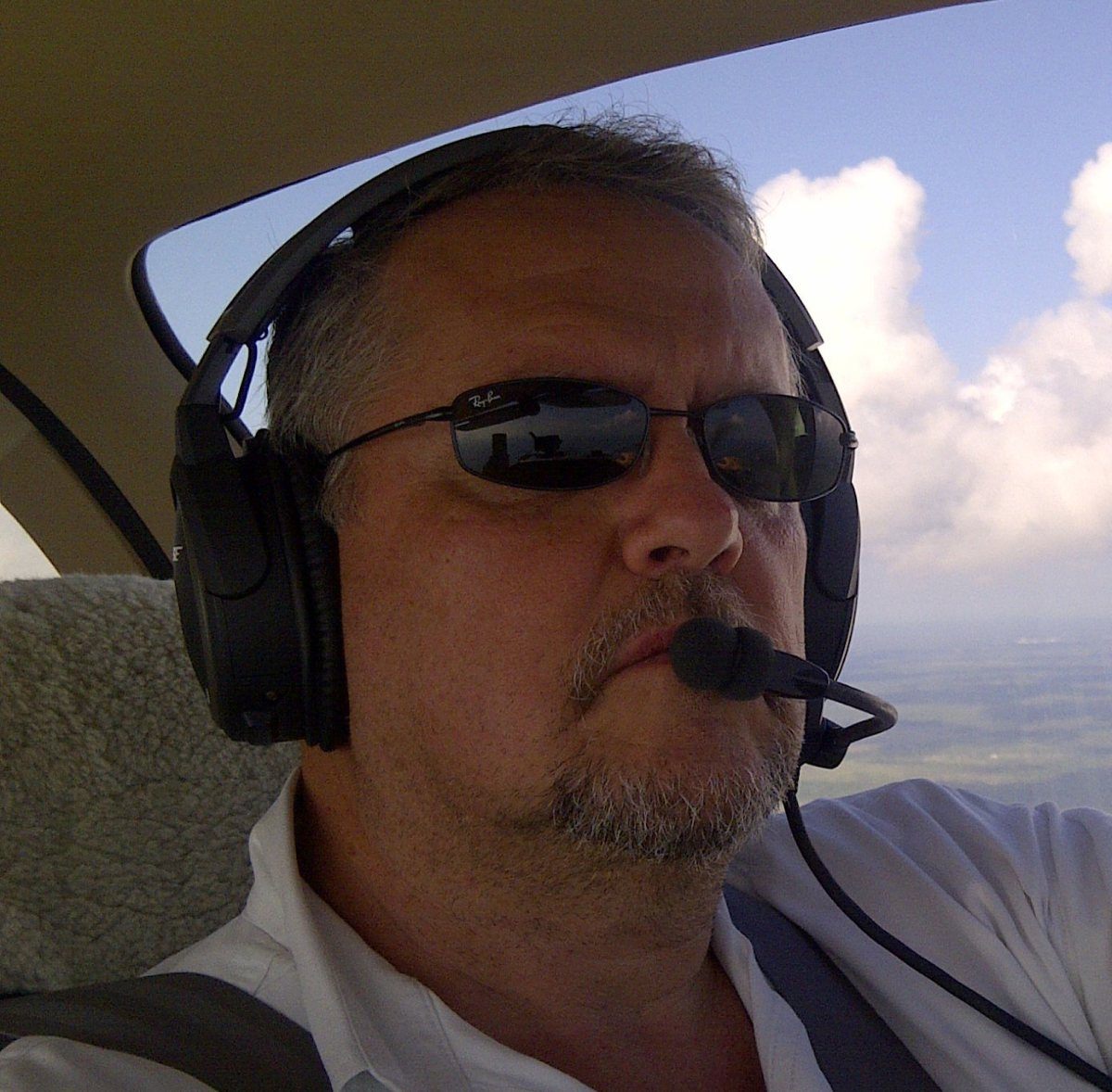
Brandon Lint is a Regulatory Affairs and Certification Specialist at SkyGrid, a Boeing company, where he leads certification and regulatory strategies for assured Automated Data Service Provider (ADSP) services aimed at enabling Advanced Air Mobility operations. His work involves translating emerging regulatory requirements into practical certification pathways that support the safe and scalable deployment of autonomous and networked airspace services.
Before joining SkyGrid, Brandon served as the Emerging Technologies Team Manager within the Federal Aviation Administration’s Air Traffic Organization, leading efforts to develop UAS Beyond Visual Line of Sight (BVLOS) rulemaking and policies under Parts 108 and 146. He also managed a multi-million-dollar engineering portfolio focused on integrating advanced concepts such as urban air mobility, high-altitude operations, and unmanned traffic management (UTM) into the National Airspace System (NAS).
Brandon began his aviation career in the U.S. Air Force and later advanced through FAA technical and leadership roles that influenced modernization across various NAS automation, surveillance, and decision support systems. He holds both bachelor’s and master’s degrees in Aeronautical Science from Embry-Riddle Aeronautical University, with specializations in aviation safety and operations. A decorated veteran and recipient of multiple FAA and Air Force awards, Brandon continues to drive innovation at the intersection of regulation, safety, and emerging aviation systems.









Comments