
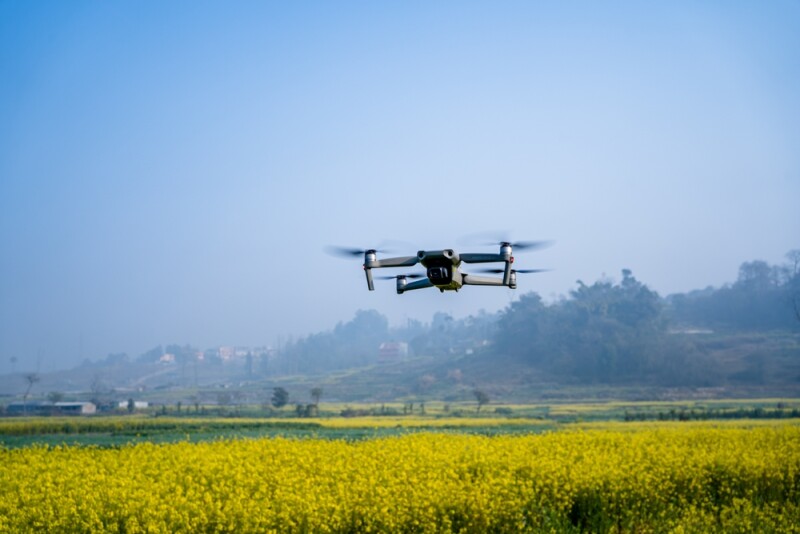
When the FAA released Part 107 in 2016, it did more than establish the first comprehensive regulatory framework for small, unmanned aircraft in the United States. It established a global precedent. In the months and years that followed, civil aviation authorities across Latin America, Asia, Africa, and parts of Europe adopted rules that closely mirrored the FAA’s approach to visual line‑of‑sight drone operations. The structure of Part 107, including pilot certification, operational limitations, waiver mechanisms, and clear definitions, became the template for dozens of national drone programs. For many countries, the FAA’s rule offered a concise and simple regulatory foundation at a time when few had the resources or expertise to invest and build their own from scratch.
Now, as the FAA prepares to finalize Part 108, the long‑awaited rule that will govern BVLOS operations, the question naturally arises: Will the world follow again? The stakes are far higher this time. BVLOS is the key to unlocking scalable drone applications, long‑range infrastructure inspection, medical delivery networks, agricultural monitoring, and autonomous logistics. If Part 107 was about enabling the first wave of commercial drone activity, Part 108 is about enabling the drone economy itself. And because the challenges of BVLOS are universal, the FAA’s approach will inevitably shape global thinking.
The good news for the uncrewed aviation community is that if countries around the world adopt similar regulations following a generic Part 108 pattern in less crowded skies, we will begin to have solid data that would validate, or not, the assumptions that led the FAA to their original form.
The FAA remains the world’s most influential aviation regulator, not only because of the size and complexity of the U.S. airspace system but also because of its historical role in setting global standards. When the FAA defines a regulatory pathway, it sends a signal to industry, manufacturers, and foreign regulators about what "acceptable safety" looks like. This influence is amplified in emerging sectors like uncrewed aviation, where many countries lack the institutional capacity to develop highly technical rules independently. For these nations, adopting a framework that is heavily aligned with the U.S. reduces risk, accelerates industry growth, and ensures compatibility with global manufacturers and service providers.
Part 108 is particularly well positioned to become a global reference because it addresses the core challenges every country faces when integrating BVLOS operations. Detect‑and‑avoid (DAA) requirements, separation from crewed aircraft, airworthiness pathways for uncrewed systems, and the role of uncrewed traffic management (UTM) or airspace service providers are not uniquely American problems; they are universal. Whether a drone is flying over Kansas farmland or a rural valley in Nigeria, the fundamental safety questions are the same. Regulators everywhere must determine three basic issues: how to authorize routine BVLOS operations without relying on individual waivers, how to ensure that uncrewed aircraft can safely coexist with general aviation, and how to certify aircraft that do not fit neatly into traditional categories.
.jpg.small.400x400.jpg)
The FAA’s proposed framework offers a performance‑based approach that many regulators will find attractive. Instead of prescribing specific technologies, it generally defines the safety outcomes operators must achieve. This gives industry flexibility while giving regulators a clear structure for approvals. The shift from waivers to a scalable certification model is especially important. Under Part 107, BVLOS operations in the United States have depended on a slow, resource‑intensive waiver process. Many countries adopted similar systems, which quickly became bottlenecks. Part 108 proposes a more efficient, predictable pathway, one that other nations may adopt to accelerate their own drone industries.
Industry pressure will also play a major role in driving global alignment. The companies building drones, DAA systems, and UTM platforms operate internationally. They prefer harmonized regulatory frameworks because they reduce compliance costs and simplify product development. If the FAA establishes clear requirements for BVLOS aircraft, sensors, and operational approvals, manufacturers will design to those standards. Once that happens, foreign regulators will face strong incentives to align with the U.S. model to ensure compatibility with widely available technology. This dynamic was evident after Part 107, when many countries adopted similar pilot certification and operational rules because the global training ecosystem had already formed around the FAA structure.
However, the adoption of Part 108 abroad will not be as uniform as the adoption of Part 107. The global regulatory landscape has evolved significantly since 2016. The European Union, through EASA, has already implemented a sophisticated risk‑based framework for drone operations, including BVLOS called Specific Operation’s Risk Assessment, or SORA. Countries like Australia, Canada, and Japan have also developed mature systems that reflect their own airspace needs and operational realities. These regulators may borrow concepts from Part 108, but they are unlikely to replicate it wholesale. Instead, they will integrate elements that align with their existing frameworks while maintaining their own structures.
In regions where regulatory capacity is more limited, the influence of the FAA will likely be stronger. Many countries in Latin America, Africa, and Southeast Asia still rely heavily on foreign models when developing aviation rules. For them, adopting a U.S.‑aligned BVLOS framework offers a practical path forward. It provides a tested structure, reduces the burden on local regulators, and ensures compatibility with global industry practices. In these regions, Part 108 could become the de facto standard for BVLOS operations, just as Part 107 became the standard for visual line‑of‑sight operations.
Another factor that will shape global adoption is the maturity of UTM systems. Part 108 envisions a future in which airspace service providers play a central role in enabling safe BVLOS operations. Some countries are already experimenting with UTM, while others are years away from deploying such systems. Nations with advanced digital infrastructure may adopt the FAA’s model quickly, while others may need to adapt it to environments where UTM services are not yet available. Even so, the conceptual framework, delegating certain safety functions to digital service providers, will likely influence global thinking.
Ultimately, the FAA’s Part 108 will not be a universal blueprint in the way Part 107 was, but it will be a powerful reference model. Countries with mature regulatory systems will study it closely and integrate its logic into their own frameworks. Countries with emerging systems will adopt it more directly. And across the world, industry will push for alignment to reduce fragmentation and accelerate the growth of BVLOS operations.
The International Civil Aviation Authority, ICAO, has already achieved complete compatibility across international borders in crewed aviation and today, commercial and private aircraft fly from one country to another following exactly the same procedures and speaking the same language that have allowed the aviation industry to become safe and truly international. If we could do it for thousands of aircraft, each carrying hundreds of passengers, we should be able to reproduce this success for uncrewed platforms.
It is now time for the drone ecosystem to enter this new phase, one defined not by experimentation but by scale. As nations prepare for this transition, the FAA’s approach to BVLOS regulation will surely shape expectations, influence technology development, and guide policymakers. The world may not copy Part 108 word for word, but its principles will echo across continents. In that sense, the phenomenon that followed Part 107 is poised to repeat itself, adapted to a more complex and ambitious era of uncrewed aviation.


.jpg.small.400x400.jpg)









Comments