
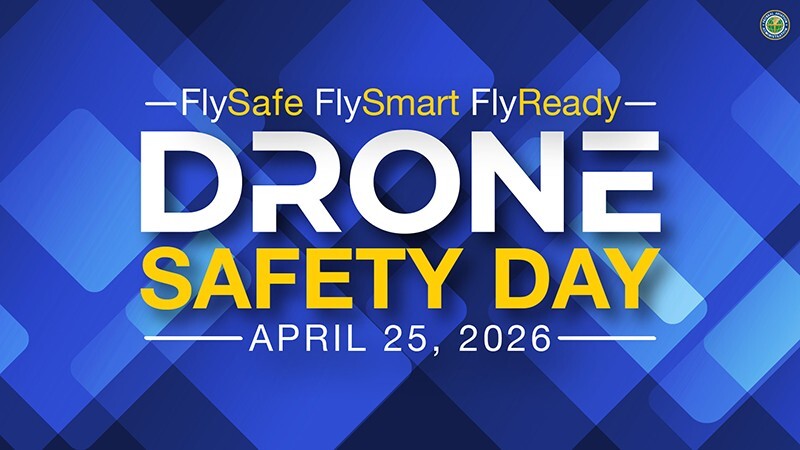
For many years, the FAA has been holding an annual event to celebrate drone safety. It was originally launched as a seven-day event known as National Drone Safety Awareness Week, with 2023 being the last time it followed that format. Since then, it has become a one-day event rebranded as Drone Safety Day, to be celebrated on the last Saturday of every April. For 2026, that is tomorrow, April 25.
Drone Safety Day has become the FAA’s annual moment of collective reflection, a day when the entire drone community pauses to reaffirm that safety is the foundation on which all innovation must rest. What began as a modest outreach initiative has grown into a national event that unites recreational flyers, commercial operators, educators, public‑safety agencies, and industry leaders. Its purpose has always been straightforward: to reinforce the idea that drones are aircraft, their operators are aviators, and the national airspace is a shared public resource that demands responsibility.
This year, the day carries particular weight as the FAA prepares to introduce Part 108, the long‑anticipated regulatory framework for Beyond Visual Line of Sight (BVLOS) operations. Drone Safety Day once focused primarily on basic operational awareness, but now serves as the cultural bridge between the familiar world of Part 107 and the emerging world of scalable, automated, BVLOS flight. The event used to be about reminding operators to check their batteries or avoid airports, but now in a more dynamic fashion, is preparing an entire community for a structural shift in how drones will be regulated, deployed, and integrated into the national airspace.
Why Drone Safety Day Matters Now
The significance of Drone Safety Day 2026 cannot be separated from the scale and maturity of the drone ecosystem. The United States now has more than 855,000 registered drones and over 400,000 certificated remote pilots. Drones inspect bridges, monitor crops, support emergency responders, map construction sites, and increasingly operate in proximity to people, property, and critical infrastructure. The fleet is large, diverse, and growing, and the public’s exposure to drones is growing from occasional to routine.
At the same time, the regulatory environment is shifting. Remote ID is fully enforceable, creating a new baseline of accountability and transparency. Operators must understand how their aircraft broadcast identity and location, how modules differ from built‑in systems, and how compliance affects where and how they can fly. Drone Safety Day provides a national platform for clarifying these expectations and reducing unintentional violations.
But again, the most important reason why this year’s event matters is the imminent introduction of BVLOS operations in the country, and Drone Safety Day becomes the moment when the FAA can begin socializing the cultural, operational, and technological expectations that will define the next decade of unmanned aviation.
The public dimension is equally important. As drones become more visible, public trust becomes a prerequisite for expansion. Drone Safety Day demonstrates that the community takes safety seriously, that operators are trained and responsible, and that the FAA is actively shaping a safe integration pathway. In a world where BVLOS operations will soon be commonplace, public acceptance is a requirement, and we should all work hard to earn it.
The Future: A Dual‑Track System for Safe Integration
The emergence of Part 108 raises a central question: What happens to Part 107? The answer is not exactly black and white. The FAA has not categorically said that Part 107 stays, but in the Part 108 Notice of Proposed Rulemaking (NPRM) published in the Federal Register last year, Part 108 is added alongside Part 107, with no language proposing the removal of Part 107.
Organizations such as the Pilot Institute have expressed similar views in published tutorials, where they express confidence that Part 107 will coexist with Part 108.
The FAA also has a tradition of coexisting regulations, such as Part 121 for commercial airliners with scheduled flights, Part 135 for charter with unscheduled flights, Part 91 for non-commercial recreational flying, and Part 137 for agricultural operations. It feels logical that both will be operating in parallel, covering two distinct ways to fly. Part 107 will remain the regulatory home for visual line of sight operations, small‑scale missions, lighter drones, and pilot‑centric decision‑making. Part 107 will stay to enable photographers, surveyors, real‑estate professionals, and small businesses to operate safely and efficiently. Its simplicity and accessibility are features, not flaws, and the FAA has no intention of replacing it.
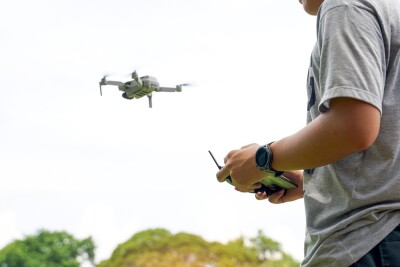
Part 108, by contrast, is being built for a different world, one in which operations extend far beyond the operator’s line of sight, for potentially heavier aircraft that rely on automation and detect‑and‑avoid (DAA) systems, and for organizations that manage fleets rather than individual drones. It shifts the regulatory focus from the pilot to the operator, requiring system‑level reliability, documented safety management processes, and aviation‑grade corporate accountability. Part 107 establishes the human as the primary safety mitigator, but all that changes with Part 108, when the law switches responsibility to the system.
This separation is not simply a bureaucratic redundancy measure, but a deliberate safety architecture. A photographer flying a drone 200 feet away and 100 ft above ground (AGL) does not pose the same risk as a utility company flying a drone 20 miles down a transmission corridor. The regulatory frameworks must reflect those differences. Part 107 supports accessibility, experimentation, and low‑risk operations. Part 108 supports scale, automation, and integration into the broader national airspace. Together, they form a dual‑track system that mirrors traditional aviation’s separation of rules for general aviation, charter operations, and scheduled air carriers.
Drone Safety Day becomes the cultural bridge between these two worlds. It prepares operators for the higher professionalism that Part 108 will require, reinforces the safety fundamentals that apply to both rules, and helps the public understand how drones will operate in increasingly complex environments. It also supports the transition from waiver‑based BVLOS operations to rule‑based operations, reducing uncertainty and creating a clearer pathway for innovation.
The future of unmanned aviation will not be defined by a single rule but by the interplay between these two complementary frameworks. Part 107 will continue to empower individuals and small businesses, while Part 108 will enable enterprise‑scale networks, automated inspections, and long‑range operations. Drone Safety Day is the annual reminder that both paths require the same foundation: a shared commitment to safety, professionalism, and responsible integration.
As the industry stands on the threshold of this new era, Drone Safety Day becomes more than a symbolic gesture. It becomes the moment when the community reaffirms the values that will guide the transition from today’s VLOS‑dominated environment to tomorrow’s BVLOS future. Drone Safety Day 2026 honors the past, prepares for the future, and reinforces the idea that safety is a cultural shift, not a regulatory requirement.
We at Commercial UAV News encourage all our readers to celebrate this day as we enter a new era of full integration and eventual profitability, for an industry that, for ten years, has been accumulating millions of hours of flight time and perfecting technologies that would allow for this integration to become a reality in the safest way possible.








Comments