
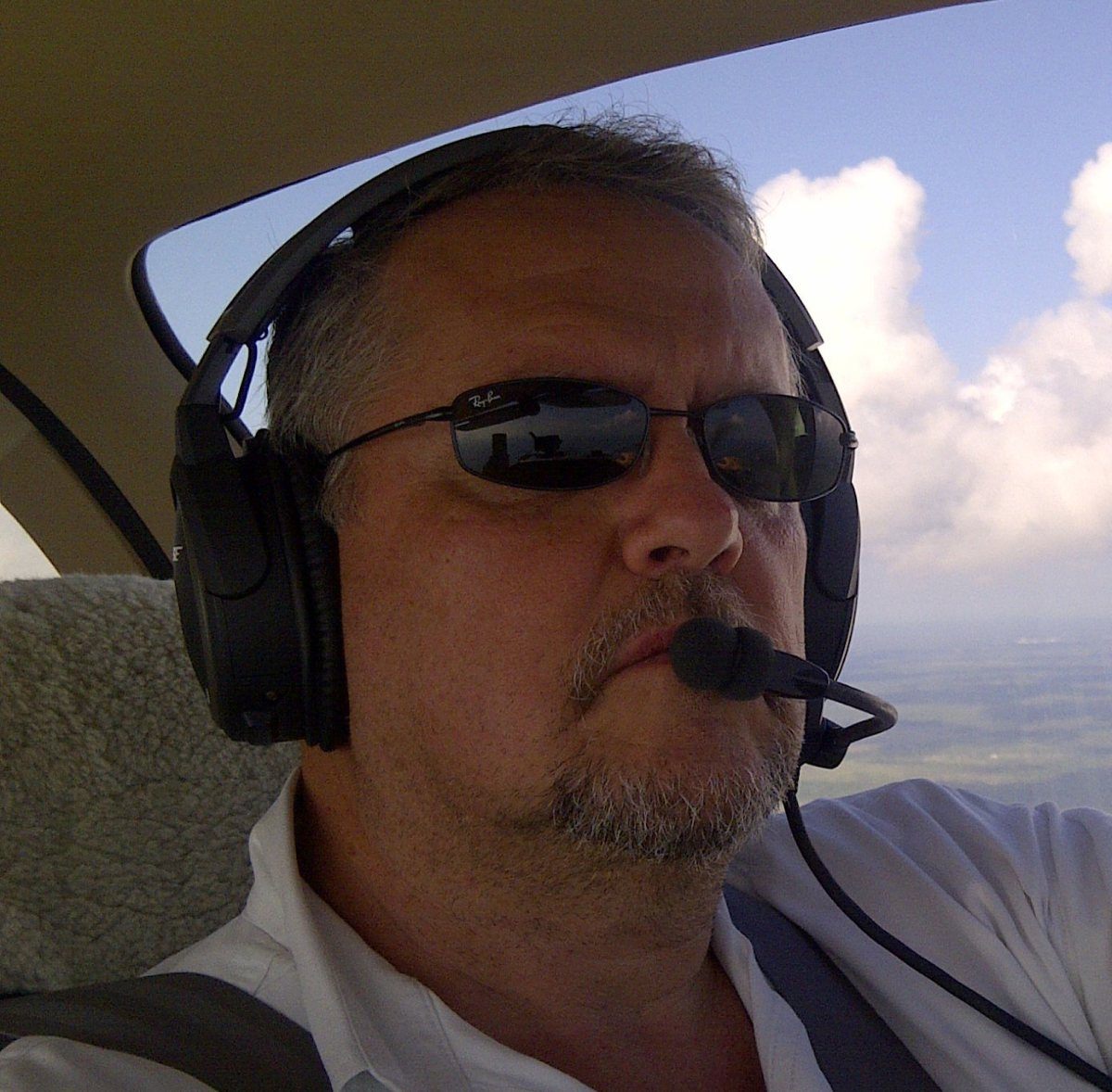

Ever since the Wright Brothers' first flight in 1903, aviation has evolved towards automation. Orville Wright, the pilot of that first flight in Kitty Hawk, North Carolina, controlled his powered aircraft for a mere 12 seconds, relying entirely on an anemometer, a stopwatch, and an RPM gauge for the engine.
Today, pilots rely on instruments that have evolved over 123 years, making aviation the safest mode of transportation. However, one thing has remained constant: the presence of a human onboard to monitor the instruments and act in case of emergencies and deviations.
We are entering a new phase of aviation in which the level of automation is about to jump a notch by removing the physical presence of a human on board and replacing it with sensors and a ground-based technological foundation that would enable pilotless operations. But this change will happen first in small, uncrewed aircraft rather than in large passenger planes.
We will see the first attempts at full automation, without passengers on board, over the coming months with the issuing of the BVLOS regulation in the US, Part 108.
The eventual passage of Part 108 will mark a decisive turning point in the evolution of uncrewed aviation. For years, the drone industry has operated under Part 107, a regulatory framework built around the idea that every aircraft must have a dedicated human pilot exercising direct control. That model made sense when drones were small, operations were local, and the airspace was simple, but as the industry pushes toward large‑scale logistics, long‑range inspection, and persistent automated operations, the one‑pilot‑per‑drone paradigm becomes a bottleneck. Part 108 is the FAA's acknowledgment that the future of uncrewed aviation will be built on automation.
This shift carries real consequences for the drone pilot population. The FAA has already stated plainly that as autonomy increases, “the role of the pilot has and will continue to decrease.”
This statement is a regulatory declaration indicating that the center of gravity is shifting away from the individual pilot and toward the system. In the same way that modern commercial aviation relies on automation for navigation, stability, and even decision‑making, uncrewed aviation will rely on automation for everything from detect‑and‑avoid (DAA) to contingency management. Humans will remain in the loop, but increasingly as supervisors rather than aviators.

The most immediate consequence is the collapse of the traditional ratio between pilots and aircraft. Under Part 107, the model is simple: one pilot, one drone. Under Part 108, the paradigm shifts to one operator overseeing tens or even hundreds of aircraft simultaneously, intervening only when the system encounters an edge case it cannot resolve. The pilot becomes more like an air traffic controller than a stick‑and‑rudder operator. The number of aircraft in the sky will grow exponentially, but the number of humans required to oversee them will not.
This shift does not eliminate pilots, but it dramatically reduces the number of people whose primary job is to fly drones manually. Today, the industry has over 400,000 certificated remote pilots, most of whom entered the field during the early boom years when drones were new, exciting, and accessible. Many built careers around photography, real estate, small‑site inspections, and ad‑hoc commercial work.
These jobs will not disappear entirely, but they will not scale in parallel with the industry’s growth. They will remain niche, local, and limited in number. The high‑growth sectors, such as logistics, linear infrastructure inspection, automated mapping, and emergency response networks, will operate under Part 108 and will not require large numbers of manual pilots.
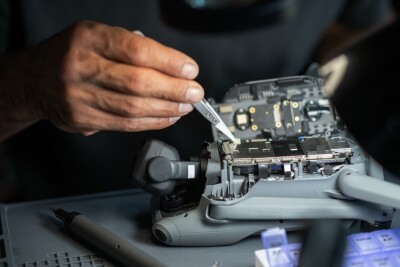
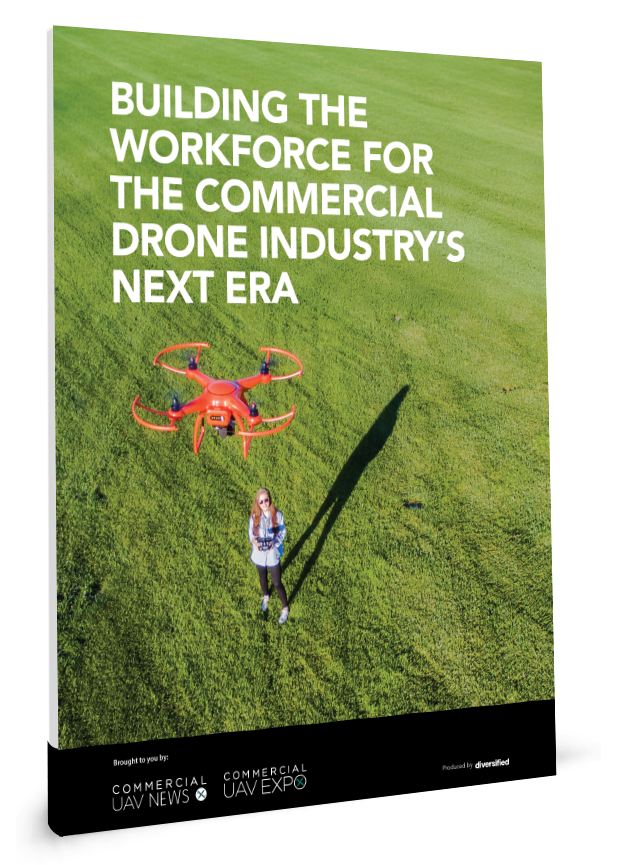
Instead, the workforce will shift toward roles that support automated systems. Rather than a shortage of pilots, the industry has a shortage of technicians, coordinators, and supervisors. The jobs that grow are those that ensure the health, safety, and reliability of automated fleets. Operations supervisors will oversee compliance, training, and safety management. Flight coordinators will monitor multiple aircraft simultaneously, stepping in only when the system encounters an anomaly. Maintenance technicians will become indispensable, diagnosing electrical issues, repairing composite structures, and ensuring the integrity of sensors and communication links. Cybersecurity specialists will protect command‑and‑control (C2) networks. Data analysts will validate mission outputs and ensure that automated flights deliver usable results. These roles require aviation literacy, technical competence, and systems thinking, but not manual piloting skills.
For the existing pilot population, this creates a skills divide. Pilots who upskill into system‑level roles will thrive. Those who remain focused solely on manual flight will find fewer opportunities. The Part 107 certificate, once a gateway into the industry, becomes a baseline credential rather than a job qualifier. It proves familiarity with airspace and safety fundamentals, but it does not prepare someone to supervise a fleet of autonomous aircraft or manage a complex BVLOS operation. The industry will increasingly value people who understand automation, risk management, and operational oversight. The pilot who can only fly manually becomes the elevator operator of the aviation world, still capable, still valuable in certain contexts, but no longer central to the system.
There is also a geographic consequence. Today’s drone pilots are distributed across the country, serving local clients and local needs. But BVLOS operations will be centralized. Logistics networks will be run from operations centers. Utility inspections will be coordinated from regional hubs. Public‑safety drone networks will be monitored from emergency operations centers. This means fewer “local pilot” jobs and more centralized, shift‑based roles. The workforce becomes more like air traffic control: concentrated, specialized, and structured.
Beyond the economic and structural impacts, there is a human dimension that deserves attention. Many drone pilots entered the field because they love to fly. They enjoy the tactile experience of controlling an aircraft, the creative satisfaction of capturing a perfect shot, or the technical challenge of navigating complex environments. Automation changes that identity. The pilot becomes an exception handler, not an aviator. The system flies while the human watches. This can create a sense of loss — of agency, of craft, and of the very thing that drew many people into the field.
At the same time, the shift toward automation elevates the profession. Supervising a fleet of autonomous aircraft is a high‑responsibility role. Managing safety in a BVLOS operation requires judgment, discipline, and expertise. The work becomes more analytical, more strategic, and more aligned with traditional aviation safety culture. The pilot becomes a systems manager, a safety steward, and a critical link in a complex operational chain. The job becomes less about joystick skill and more about operational excellence.
In the long term, the drone workforce will likely resemble other highly automated transportation sectors. Railroads employ far fewer engineers than they once did, but they employ large numbers of technicians, dispatchers, and safety professionals. Commercial aviation relies heavily on automation, but pilots remain essential as supervisors and decision-makers. Air traffic control is a profession built entirely around oversight rather than direct control. Uncrewed aviation will follow a similar trajectory, with a small group of highly skilled supervisors overseeing large fleets supported by a broad base of technicians, analysts, and engineers.
The challenge for the industry, and for policymakers, is to manage this transition responsibly. The existing pilot population represents a large, motivated, and aviation‑literate workforce. With the right training pathways, many of them can transition into the new roles created by Part 108. Without those pathways, the industry risks leaving behind thousands of people who helped build the early foundations of uncrewed aviation. Retraining programs, certification updates, and clear career ladders will be essential. The goal should not be to preserve the old model, but to ensure that the people who thrived in it have a place in the new one.
Part 108 is a cultural shift, marking the moment when uncrewed aviation ceases to be a cottage industry of individual pilots and becomes a mature aviation sector built on automation, safety management, and large‑scale operations. The sky will be filled with thousands of drones operating simultaneously, safely, and efficiently, but the number of humans needed to keep them flying will be far smaller than the number of pilots who exist today. The future belongs to those who can adapt, learn, and embrace the role of supervising the systems that will define the next era of flight.
How long it will take for these changes to percolate to crewed, traditional aviation is anyone’s guess, but rest assured that the uncrewed aviation industry is destined to be the one showing the way to a pilotless future. Small aircraft with pilots on board will continue to exist, but increasingly as a recreational pursuit operating inside a broader airspace system dominated by highly sophisticated, automated uncrewed operations.






Comments