

Contributed by Guy Liebert, Founder, Droneview.be
A commercial drone job has four stages people talk about: plan the mission, fly it, process the data, deliver the result. A fifth stage happens before any of them, but gets almost no attention and quietly decides whether the whole job was worth flying. That is pricing and quoting: working out what the job should cost, and turning that into an offer the client accepts. Most operators improvise it, and it is where a lot of otherwise good work loses money.
It matters more than it may seem. You can plan a mission carefully, fly it clean, and process it well, and still finish the day out of pocket because the number you quoted only covered the part everyone can see: the drone in the air. The flight is often the shortest and cheapest stage of the job. Price it as if it were the whole job and you are working for free on everything around it.
Why Operators Underprice
The trap is simple. A client asks what it costs to inspect a roof or map a site, and the operator pictures the flight: twenty minutes over the building, maybe half an hour. They quote against that mental image, but really, the flight is a sliver of the actual work. Before it, there is quoting, planning, permissions, checking airspace and weather, and driving to site. After it, there is processing, which on a large map or a thermal set can run longer than the flight itself, then building the report, then delivering it. The client is buying all of that,but the quote often covers a fraction of it.
The Three Cost Buckets that Vanish
When you price only the flight, three kinds of cost disappear from the number.
The first is your own time across the whole job, not just the airborne part. Preparation, travel, flight, processing, and reporting are all billable hours. Add them up honestly, and the flight is usually the smallest line.
The second is fixed cost per job. Insurance. Permits and admin. Depreciation on the aircraft and the payload. Depreciation on the software you process in. Storage for the data you are expected to keep. None of these feel like they belong to a single job, which is exactly why they get left out, and why the year ends thinner than the day rate suggested it should.
The third is risk. Weather turns, a battery underperforms, a client asks for one more pass. A small buffer for the reflight you sometimes have to make is not padding. It is the difference between a bad-weather day costing you nothing and costing you a second full trip.
Cost-Plus, Not the Going Rate
The most common way to set a price is to find what a competitor charges per day and match it. It is also the most dangerous. Their cost base is not yours. Their aircraft, insurance, overhead, and processing time on a given job are all different, and you cannot see any of it from their day rate. Copy the number, and you are betting your margin on someone else's spreadsheet.
Build the other way instead: Start from your own costs across the whole job, add the margin you need, and let that produce the price. It is slower than copying a figure, but it is the only number that is actually yours, and it is the only one you can defend when a client pushes back. It also keeps you out of the race to the bottom, where everyone undercuts everyone until nobody can afford to do the work properly.
The Aircraft is a Cost Line, not a Status Symbol
The drone belongs in the price as a cost, and different aircraft carry very different costs. A light sub-250g platform, a prosumer camera drone, an enterprise thermal rig, and a heavy-lift aircraft do not depreciate at the same rate, do not cost the same to insure, and do not put the same load on your processing time. A radiometric thermal payload in particular is expensive to own and slow to process, and a job flown with one should be priced with that in mind. You do not need a database of every model on the market. You need to know which aircraft class a job requires and what that class actually costs you to run.
From a Number to a Quote that Wins
Once you have the number, the breakdown that produced it is also your best sales tool. A client who sees a single figure has nothing to react to except its size. A client who sees preparation, travel, execution, processing, expertise, and delivery as separate lines understands that they are not paying for a half-hour flight. The itemized quote makes the argument for you. Remember, the client doesn't just pay for the flight. They pay for everything that turns the flight into something they can use.
This is the part of the workflow with the fewest dedicated tools, which is why so many operators rebuild it by hand on every job, usually in a spreadsheet they only half-trust. A few tools now handle the estimate and turn it straight into a branded quote. DronePortal.app is one; it is worth comparing against whatever fits your own job volume. Whatever you use, the point is the same: treat pricing and quoting as a real stage of the job, tooled and repeatable, not something you improvise the night before.
FAQ
Should I show the client the full breakdown?
Usually yes. The breakdown is what justifies the price. A client arguing with one big number is arguing with nothing. A client reading the lines sees where the work actually is.
Is it ever worth undercutting to win the work?
Winning a job below your own cost is not winning it. If a price only works by leaving out insurance, depreciation or your processing time, the job is losing money quietly. Better to lose the quote than the margin.
How do I price a possible reflight?
Not as a separate charge the client sees, but as a small risk buffer inside your own numbers, sized to how often that kind of job actually needs a second visit. Corridor work and weather-sensitive jobs carry more of it.
What about VAT or sales tax?
Keep it out of the working number and add it at the quote stage under whatever regime applies to you and the client. Mixing tax into your cost calculation only hides your real margin from yourself.
About the author
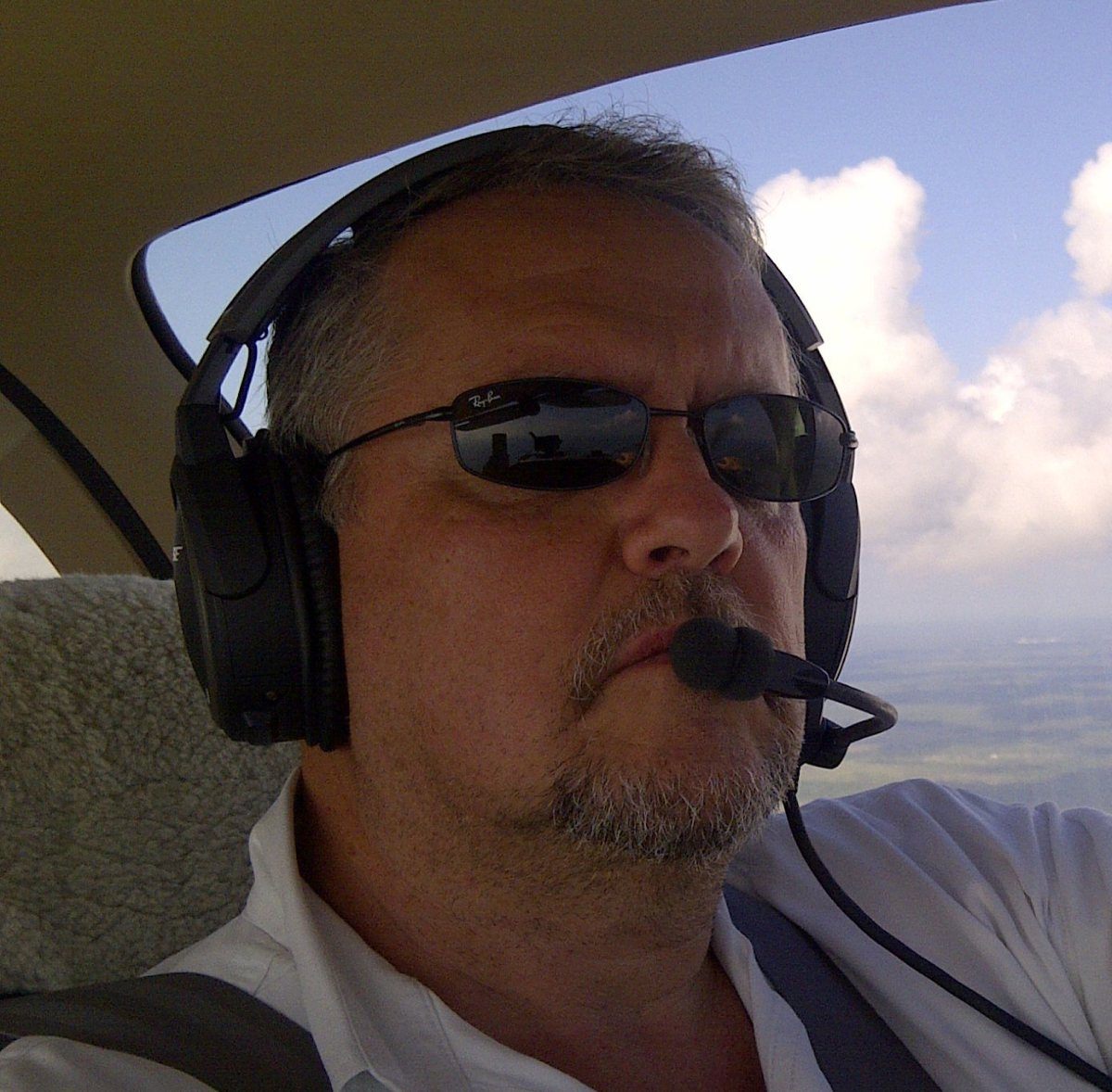
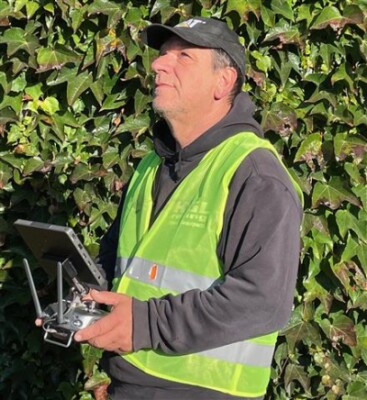 Guy Liebert is the founder of Droneview.be, an EASA-certified drone inspection and thermography operator in Belgium. He spent around 30 years in construction and groundworks before moving to drone-based inspection, and that background shapes how he approaches thermal and mapping work today. He also builds quoting and delivery tooling for drone operators as DronePortal.app.

.jpg.small.400x400.jpg)





Comments