

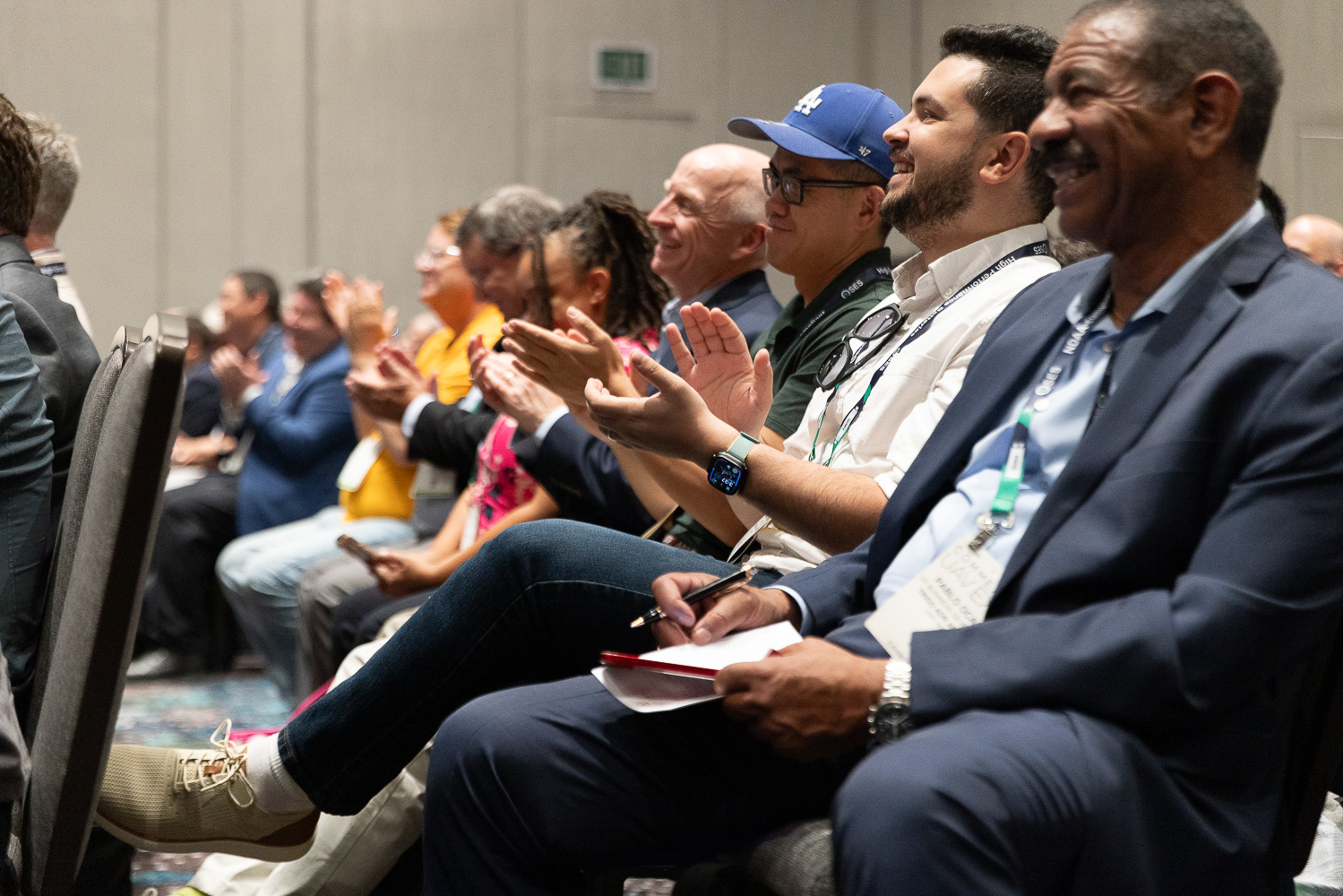
Last week marked the sixth Commercial UAV Expo that I’ve attended, and the energy at this rendition was definitely something noteworthy and that speaks to where the industry is at, regardless of how you are involved. In years prior, the majority of the conversations and the conference session had an over-arching theme of where this technology pushes the limits of modernization and what great ways it can make everyday operations more efficient and safer across many industries. While these themes continue to ring true and were reflected across the show floor and in the conference rooms, the industry as a whole is now focused on how to move operations forward while preserving them amongst changing regulations.
Between the FCC Covered List decision and Part 108 on the horizon, there was an air of uncertainty at the show that was palpable. Yet, leaders in the industry continued to reiterate how important it is to stay cautiously optimistic, and to remember changes of this caliber do not happen overnight.
The covered list decision has many operators wondering what the future of their fleet will look like. With a majority of drone programs currently relying on foreign-made fleets, managers are window shopping what their go-to aircraft will be in the future. The show floor reflected this featuring many NDAA-compliant and American made aircraft models, sensors, and batteries. I say window-shopping instead of buying for a good reason.
In both the panel discussion around what the FCC’s Covered List really means for the industry and the opening keynote which shared survey results from the industry directly, it was evident that not many operators or managers are immediately replacing their fleets. Instead, people are sitting back and waiting to see how this all plays out. This regulation essentially says that if you want a brand new drone, it needs to be made in the United States. While this is great for the stateside drone ecosystem, high-volume manufacturing of such technologically advanced equipment doesn’t happen in the blink of an eye. As mentioned in that keynote, there is a gap between supply and demand here. So, until people start putting in mass orders at stateside manufacturers, the industry will continue to watch from the sidelines.
Regulators are wrestling with a version of the same uncertainty. The FAA and EASA sessions both circled back to the idea that no regulatory body can write enough rules to cover every ground and air risk scenario in advance. The path forward, is a grassroots approach, collaboration at the local level, rather than waiting on top-down clarity. Societal acceptance is already uneven: agriculture and public safety applications draw little pushback, since the safety case is obvious, but package delivery and integration with the broader aviation industry remain more contested. Convergence between the FAA and EASA is happening, it's going to take time and sustained data-sharing to get there.
Given all that, I expected the session “What the FCC’s Covered List Decision Means for Commercial Drone Operators” to be a fairly anxious conversation. So, when I asked the panel whether all this regulatory change might scare new entrants away, I was ready for a grim answer. Instead, I got the opposite. All panelists agreed that this is a genuinely good time to enter the industry. New operators don't have old fleets or legacy workflows to unwind. They're building fresh, at the exact moment the rest of the industry is being forced to rethink its assumptions anyway. This left me with a new optimism going into the rest of the week, and for the industry as a whole.
Shifting over to day-to-day operations, the clearest take away is that a successful drone business thrives on understanding and relationships. Understanding what exactly your client needs from the flight you are providing, understanding the language of their field and not just of the drone data you are giving them will take you much farther than just handing over a bunch of images at the end of your job. In the session “What Separates Drone Businesses That Thrive From Those That Stall” Brandon Beal mentioned how his customers are primarily farmers, and they think in terms of price per acre, not price per hour flown.
Building off that, Robert Hart said something that stuck with me. “Relationships create opportunities, equipment cannot.” I think this is an important sentiment to keep in mind as we watch the regulations play out, especially if you want to remain optimistic. Knowing that your skills, relationships, and reputation are a large part of what will keep your business running during turbulent times can be a life saver.
Walking the show floor on that last day, I kept coming back to something one of the FCC panelists said: this is a good time to be building something new. Not because the uncertainty around the Covered List, fleet availability, and Part 108 has resolved, it hasn't, and it won't for a while yet, but because the industry seems to have collectively decided that waiting for clarity isn't a strategy. Regulators are taking a grassroots approach because they have to. Operators are window-shopping NDAA-compliant fleets instead of panic-buying because that's the sensible move. And the businesses that will come out ahead aren't necessarily the ones with the newest equipment, but the ones that have built real relationships and real understanding of what their clients actually need.
That's not a small shift. It means the industry is maturing past the phase where the technology itself was the whole story. Six shows in, this was the first time I left thinking the real competitive edge isn't in the payload or the platform, it's in how well you know your customer, and how well you can adapt while everyone waits to see how the rules shake out. If there's one thing to carry out of this year's show, it's that: stay ready, stay relational, and don't mistake uncertainty for a reason to stall.








Comments