

This week's roundup features stories on important discussions that happened at Commercial UAV Expo around drone law, recent concerns from Texas residents in Amazon Prime Air's drone delivery path, and a new approval for a special container designed to carry radiopharmaceuticals by drone.
Drone Law Discussed at CUAV Expo 2026
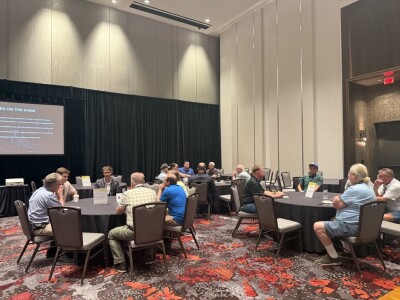
Drone regulation is evolving quickly, and a panel at Commercial UAV Expo offered some clarity. The headline development is Section 2209's critical-infrastructure protections, a decade-old congressional mandate now taking shape via a proposed UAFR framework. Attorneys on the panel pushed back on the assumption that this is bad news for operators, arguing it could replace a patchwork of state overflight bans with one federal standard, though with roughly 900,000 public comments to adjudicate, a final rule isn't expected before mid-2027. Separately, the SAFER Skies Act has extended counter-drone authority to local law enforcement for the first time, and panelists flagged a gap: the implementing rule offers limited protection for compliant operators, with only a handful of agencies nationwide trained so far.
The other major thread was supply chain compliance. New FCC rules tied to the NDAA restrict foreign-made drones and components from China, Russia, Iran, and North Korea, with a scope broad enough to catch non-Chinese manufacturers too. Temporary exemptions like the Buy American Act and Blue UAS list are set to expire, so panelists urged manufacturers to audit their supply chains now rather than later. Also on the horizon is Part 108, the anticipated BVLOS rule that would enable scaled autonomous operations, still under federal review and likely to be finalized alongside the related Part 146 rule. The overarching message: regulation is starting to catch up with the technology, and operators who engage proactively now will be better positioned than those waiting for certainty.
Pushback on Amazon Prime Air Drone Deliveries
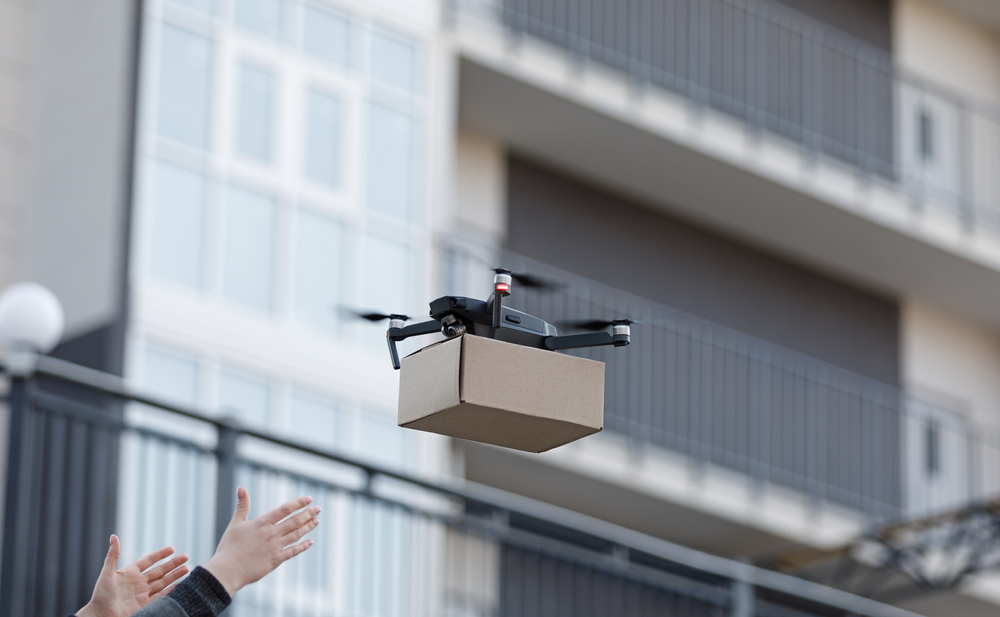
Richardson, Texas has become ground zero for growing pains around Amazon's Prime Air drone delivery service, with one resident logging as many as 122 drone flights over her home in a single day. Complaints escalated through city council meetings this spring, driven largely by noise, with residents also flagging altitude concerns, some drones reportedly flew as low as 150 feet, well under Amazon's stated 225-foot average. Amazon has pointed to strong customer demand as validation of the service, even as it frames Richardson's outsized flight volume as an anomaly tied to its proximity to a delivery hub. Current city rules cap operating hours from 7 a.m. to 8 p.m., but residents pushing for tighter restrictions say federal aviation authority over drone airspace leaves little room for local recourse.
A separate, dispute centers on the drones' cameras. Richardson's own FAQ maintains the drones use only low-resolution sensors for navigation and safety, but Amazon's Prime Air page acknowledges that people, pets, and property near delivery sites may be recorded, a discrepancy that hasn't gone unnoticed by residents, some of whom have reached out to warn officials in El Paso and Richmond, Virginia, the next cities slated for expansion. Amazon says footage is encrypted and access-restricted, and that households can opt out. With U.S. drone registrations approaching 900,000 and the FAA projecting that number will climb to 3.5 million by decade's end, Richardson's friction may be an early preview of debates other communities will soon face.
Crash Protected Drone Delivery Container
Viking Drone Packaging has secured a Letter of Recommendation from the Vehicle Certification Agency for a crash-protected container built to transport radiopharmaceuticals by drone. The packaging, developed over two-plus years with regulators, NHS stakeholders, and drone operators, is designed to move time-sensitive isotopes like Gallium-68 safely, and passed rigorous crash testing including 400-foot helicopter drop tests. Because existing standards didn't account for radioactive cargo, the VCA had to expand its own assessment criteria to accommodate it, making this the first recommendation of its kind.
The approval doesn't authorize commercial operations outright, but it clears a key hurdle toward the broader Civil Aviation Authority sign-off needed for drones to carry dangerous goods. Co-founder Geoff Leach, a veteran of the UK CAA's Dangerous Goods Office, framed the milestone as a step toward faster, more reliable delivery of time-critical medicines, with potential future applications extending beyond healthcare into industrial and offshore logistics.








Comments