

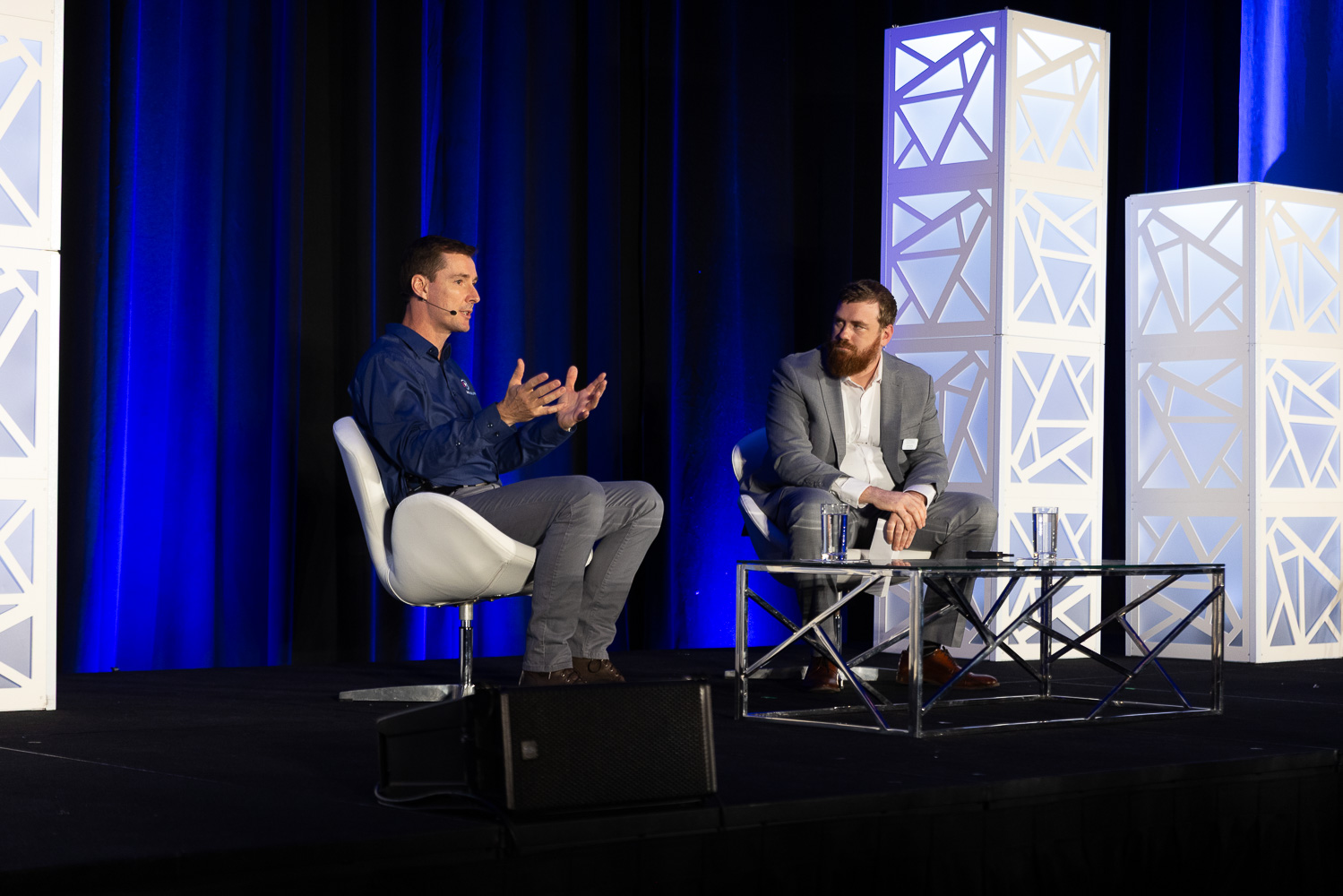
Day one of Commercial UAV Expo wasted no time getting into the topics the industry can't stop talking about: Part 108, and where it puts the industry as a whole today. In the opening keynote, Matt Collins, our content manager, and Greg Reverdiau, co-founder of Pilot Institute, sat down to dissect the results of the State of the Industry Survey, which gave us an inside look at the challenges everyday operators face amid new regulations and advancing technology.
The session started with Collins running through the survey results, which I believe painted a very accurate picture of what operators are dealing with today and how they anticipate the next few months playing out. An overwhelming number of responses came from independent operators, with program managers and service providers falling slightly behind. These are the groups that feel the ripple effects of the industry's changes most acutely, so it makes sense that they're taking every opportunity to speak up.
The results made clear that even though the FCC has cracked down on the use of foreign-made drones, the majority of fleets still rely on them. To put that in numbers, 62.8% of operators reported that 76–100% of their active fleet is DJI or other foreign-manufactured hardware. While availability is a driving factor, Collins made clear that cost is a bigger barrier than policy. "The other barriers are important, but the fact that cost remains the largest barrier tells us a lot. It's an opportunity for folks who are in manufacturing to hear what the industry needs the most," Collins said.
Reverdiau agreed, noting that "availability of drones is going to be a difficult thing, we're trying to build up manufacturing, but that's something that takes time."
He elaborated on how this will affect those who fly every day. "Now we're going to be faced with a period where some drones won't be available. We need to consider those with a Part 107 who are flying today and will need a drone they don't have access to."
Beyond cost, the data showed an industry approaching this change with caution. In terms of shifting tactics around fleet procurement, almost half of respondents said they're taking a "wait and see" approach before fully transitioning to NDAA-compliant alternatives. While the industry says it's cautiously optimistic about the rule, this approach puts operators in an awkward in-between phase. "We have people who cannot replace the platform they have now , so what do you tell them? Do you tell them to get a new platform now that may not meet their needs in the near future? The issue is that this takes away the demand from manufacturers to make all these aircraft now," Reverdiau explained.
Of course, the opening keynote of the show would be remiss not to address Part 108. The second part of the survey was a pulse check on how ready the industry is for this next step, and how different roles will change in this new era of drone operations. Despite this rule being highly anticipated, some gray areas still need clarification. When we asked how prepared organizations were for Part 108, 43% of respondents said they hadn't started preparing , partly due to a lack of clarity around the rule itself and how it will affect certain processes.
Toward the end of the session, Reverdiau and Collins brought the conversation back down to grassroots operators, reminding us how the majority of successful operators got started. Collins pointed out that if he polled the room and asked how many people started their drone careers by flying a cheap hobby drone, the vast majority would raise their hands. Following up on that, Reverdiau shared a message to any manufacturers in the audience: "Please come up with a [drone] model that is affordable. That's still a tool people need to get into the industry."
One final point really stood out to me. As someone who's considered the industry to be advancing at a quick clip for the last few years, this was an idea Reverdiau didn't entirely agree with, especially regarding wider adoption of BVLOS operations.
"We have the ability to look at everything we've learned from autonomous BVLOS, so let's see how we do flying BVLOS manually. Let's build onto everything we've learned so far and make it a lot simpler than what the FAA has put out."
He ended by stating that "Part 108 is running. We need to walk first," a sentiment that stuck with me, as someone who usually views the UAS industry as being in its "walk" phase as a whole.
Reverdiau's biggest takeaway from the survey? People are paying attention. The industry as a whole is paying attention. There's pushback when they think things aren't fair.
The keynote concluded with the announcement of the annual Officer Eric Talley Memorial Award, given out by DRONERESPONDERS. The award honors Boulder police officer Eric Talley, who was tragically killed while responding to an active shooter incident in 2021. Since then, the award has been given to celebrate outstanding leadership in the management of public safety UAS operations. Jason Day, deputy director of DRONERESPONDERS, took the stage to introduce the award and explain its significance and high honor.
Matt Rowland, a retired officer from the Fort Wayne Police Department and 2025 recipient of the award, presented this year's award to Greg Whiting, sUAS program manager of the Texas Military Department.
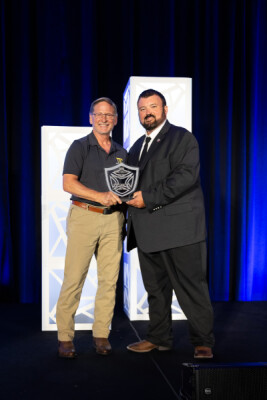
Greg earned this award for his work on
Watch the session in full below:












Comments