

In this week’s news round up, we look at Elroy Air’s drone as the chosen aircraft for a government eVTOL program, drones surveying hard-to-reach areas in mines, and a new drone platfrom from Flying Lion.
Elroy Air Chosen for Government eVTOL Program
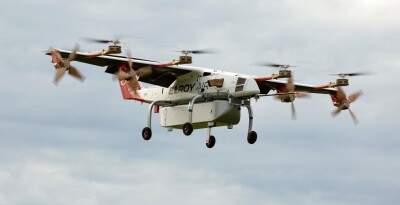
Elroy Air, a U.S.-based manufacturer of autonomous aerial systems, was chosen for the U.S. Department of Transportation's eVTOL Integration Pilot Program (eIPP). The company was the only original equipment manufacturer with a purpose-built heavy-payload cargo drone chosen for the program, standing apart from air taxi companies and legacy aircraft retrofitters. The company was selected as part of Louisiana's application alongside partner Bristow Group, Elroy Air's Chaparral drone, which is capable of carrying 300 lbs of cargo up to 300 miles, will deliver cargo across the Gulf Coast and to energy industry sites in Louisiana, Texas, and Mississippi. Operations are set to begin this year.
The eIPP selection gives Elroy Air a direct collaborative channel with the FAA to integrate heavy-payload cargo systems into the National Airspace System, separate from the regulatory complexities of passenger aircraft. Bristow Group, whose core U.S. operations are based in Louisiana, sees the partnership as a way to meet growing offshore cargo demand with lower risk and higher efficiency.
Drones Survey Manganese Mines
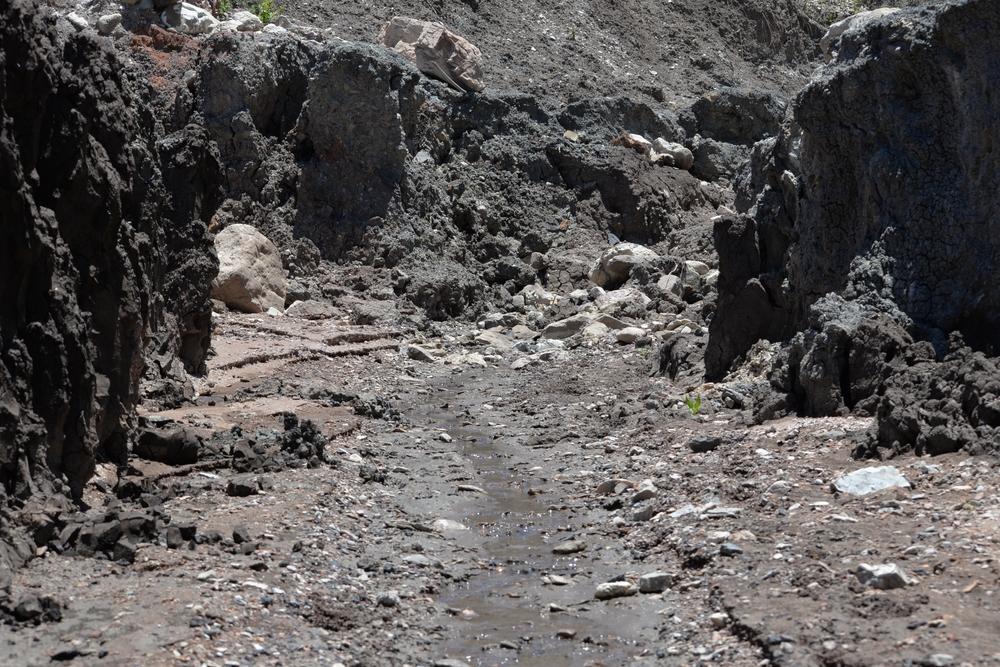
Estrella Resources is using a DJI FlyCart 30 heavy-lift drone in Timor-Leste to conduct geophysical surveys capable of imaging manganese mineralization up to 800 meters underground, a depth that previously required a helicopter. The drone carries the MobileMTd system, which uses naturally occurring electromagnetic fields from lightning strikes to map subsurface resistivity and detect mineralized structures. Surveying a 5-kilometer corridor at 5-meter intervals, the program has already identified three strong anomalies aligned with previous manganese hits, giving the company solid targets for a 2026 drilling program. Estrella's Ira Miri project has already stockpiled over 27,000 tonnes of manganese at an average grade of 28.64%, with some samples reaching 60% — well above the commercial-grade threshold of around 40%.
The shift from helicopters to drones represents a significant cost and accessibility breakthrough for mineral exploration. Helicopter-based surveys in remote terrain can cost $1,500–$3,000 per line-kilometer. The FlyCart 30 costs $50,000–$60,000 fully equipped and can perform the same work at a fraction of that cost. This makes advanced geophysical surveying viable for smaller, junior exploration companies that previously couldn't afford it. Combined with a separate drone-based LiDAR survey covering a 621-million-tonne limestone prospect on the same project, Estrella's program illustrates how heavy-lift commercial drones are democratizing the data-collection phase of mineral exploration, putting capabilities once reserved for major mining companies into the hands of smaller teams working in challenging terrain.
Flying Lion Unveils DroneBooth at ISC West
Flying Lion, Inc. unveiled its DroneBooth™ at ISC West, a rapidly deployable drone enclosure designed to enable 24/7 drone dock operations without the need for permanent infrastructure. The system addresses the most common barriers to drone program deployment such as power requirements, network connectivity, construction timelines, and site limitations. It does so by operating within a compact, field-ready footprint that eliminates the need for fixed installations, fiber runs, or permanent utilities. Flying Lion pairs the enclosure with remote pilot services, security operations, and inspection capabilities, giving agencies a complete aerial solution without building internal infrastructure or staffing from scratch.
The DroneBooth™ is aimed at a wide range of use cases including critical infrastructure, temporary security deployments, construction environments, and Drone as First Responder programs. Its modular, relocatable design speaks directly to the scalability challenge facing drone programs as they expand across both public safety and private sectors. In an industry where speed, compliance, and operational reliability are essential, the ability to stand up aerial capabilities quickly, and move them as needs change, represents a meaningful shift toward practical, large-scale drone deployment.










Comments