

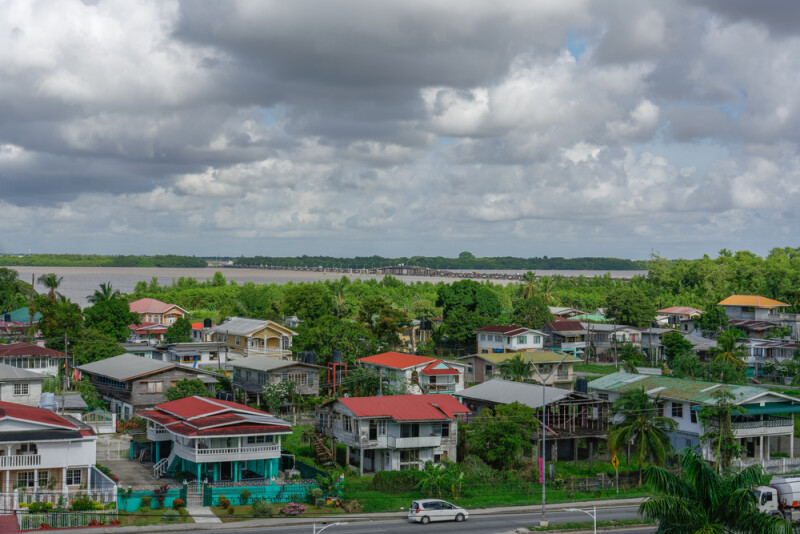
In a recent conversation with Commercial UAV News, Brian Smith was already out and about first thing in the morning. On this day, in the middle of July, Smith was en route to help run a program for over 50 children in the South American country of Guyana, teaching the next generation about what it takes to become a professional in the commercial drone industry, and what can come from this career path. It’s something that Smith, the founder of Dragonfly, a drone services and geospatial solutions company in Guyana, learned relatively recently himself and is passing on to the next generation.
“We’ve spent the week being here with about 53 kids, teaching them about drones, about surveying, and GIS, and the whole career system,” Smith said.
For Smith, this career path started during the pandemic, a common time around the world for folks to make drastic changes to their career paths. In his case, he had previously been working in public service working for the head of state, but became burnt out during that tumultuous time. That year, for his birthday, his wife purchased him a drone, and with his background playing video games he picked up the controls relatively quickly. Add in the free time after leaving his previous job, and he had plenty of time to research drones on YouTube, quickly getting more and more interested in the space.
IT wasn’t long after that he started seeing the potential to actually make money off of this new hobby. He shared with Commercial UAV News that his first gig was with a local farmer, who because of the pandemic was stranded away from home and needed someone to take pictures of the farm. Smith obliged, and quickly saw the value he could bring to others, and what that could mean for him.
“I took those pictures and he paid me through Western Union,” Smith recalled. “I was like, ‘All right, I can make money off this.’”
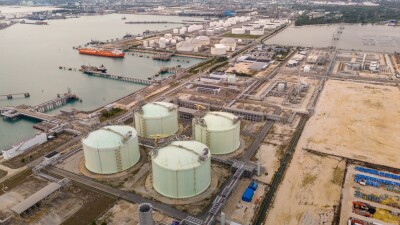
That was all he needed to really get this new career path going, quickly finding new verticals and technologies with which he could provide even more value. Smith explained that this also coincided with the oil and gas industry in particular really starting to take off in Guyana, leading to demand not only from those developments but also the subsequent bump in the real estate market.
“People were asking for pictures of the property to rent to the people who were coming into the country for oil and gas,” he said. “So we were able to ride that wave into the real estate market.”
It wasn’t entirely smooth, though, because while there was a bump in demand there was also a surge in hobbyists who were looking to make a similar shift, saturating the market of available pilots to complete this work. Now, he had to figure out new ways to differentiate himself from the competition. When a customer asked him to do more formal surveying work, he started to see the more technical types of projects that could be completed with his drone, and he got to work on studying up on that. Smith started studying up on different surveying software platforms, while also upgrading onto a bigger hardware platforms – in his case, the DJI Matrice – as well as learning more complex payloads like lidar systems.
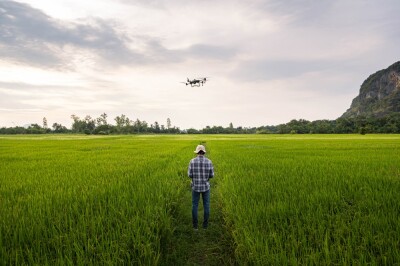
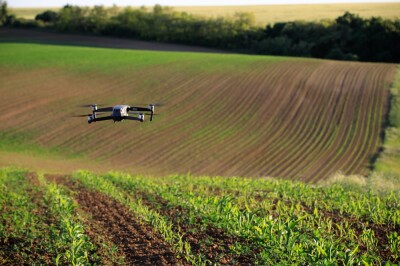
Fast-forward to today, and Draganfly is working with all of the industries mentioned above and more. Smith notes that oil and gas is still a significant part of that work, but that he is also still working in agricultural settings as well. Rice farming is a big part of the agricultural industry in Guyana, one that is also experiencing a bit of a labor shortage today, due in part to the aforementioned boom for oil and gas. So, as Smith explains, drones are helping to fill that gap.
“People go into the fields and literally throw the paddy by hand, and they don’t want to do that anymore,” he said. “So, people go into and put on overalls and work in oil and gas. Now, you have a labor shortage in the rice fields, so people ask us, ‘Hey, is there a drone solution for this?’”
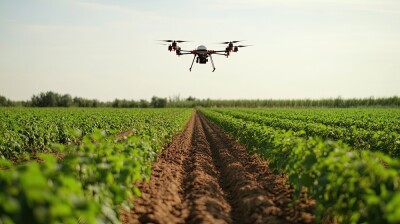
Today, Smith offers solutions for that industry, including both multispectral mapping and spraying seeds and fertilizers.
Beyond his work in the field for these different industries, though, he also has a tremendous amount of focus on building up the industry and workforce in the drone industry around his home country. Smith told Commercial UAV News that, at this point, he probably spends about half of his time working and the other half educating. That includes working with the next generation, as discussed above, but also professionals in government and looking to change careers. With this, not only is Smith able to help build up this emerging industry for others around his country, but he is also then able to leverage their newfound talents to complete projects for his company, perhaps in regions that are more difficult for him to reach.
That collaborative spirit extends beyond Guyana's borders as well. Smith's most significant partnership to date came through a joint venture with Altmaxx, a Canadian company with deep experience in certification and inspection workflows for the energy sector. The two connected after Guyana's Georgetown Chamber of Commerce ran an outreach event for Canadian businesses looking to expand into the country, and Altomaxx was on the list.
For Smith, the timing lined up with a gap he had already identified in his own market.
"We don't have certification gaps in Guyana for oil and gas work, and that work is very safety conscious," he said. "You've got to get your licenses and your certificates. If you don't have that, you can't really compete and bid for work."
What sealed the partnership, though, was a shared interest that had nothing to do with certifications. Altomaxx runs its own drone program for kids in Newfoundland, and once that came up in conversation, the connection moved quickly. The joint venture now gives Dragonfly access to equipment Smith couldn't otherwise afford on his own, including Flyability's confined space drones, while also opening the door to the kind of technology transfer he wants to see spread through Guyana's mining and environmental sectors.
That partnership sits inside a wider, largely informal network Smith has built across the Caribbean, with connections in Barbados, Belize, Trinidad, Suriname, and the U.S. Virgin Islands. The region lacks any shared standard for how drone work gets done, and Smith sees that as the next problem worth solving.
"We don't have a regional standard in the deployment of any of this technology," he said. "Some people have a background in GIS, so they do it one way. Some have a background in surveying, so they do it another way. We're just trying to create some harmonization."
Nowhere is Smith's investment in the next generation more visible than in the youth program that opened this story. Now in its third year, the program initially aimed for 50 spots, but demand made that number hard to hold to.
"We tried to do it at 50, and the applications we got were like 100," he said. "It was a task for us to bring that down."
The program has also surfaced talent Smith didn't necessarily expect, including students on the autism spectrum who have taken to flying with particular skill.
"I have a young girl who is literally converting off the Imperial system in her head," he said. "It's amazing. Those are some of the impact stories that give me joy about doing this."
Smith's ambitions for the program are still growing. Next year, he wants to take it beyond the capital and into Guyana's agricultural regions, where he believes the gap in opportunity is even wider than what he sees in the city.
For Smith, all of it–the company, the partnerships, and the classroom sessions with teenagers–points back to one goal: getting more attention on the work already happening across the Caribbean.
"I really want to try to push to have a bit more coverage about the work that is done in the region," he said.







Comments