

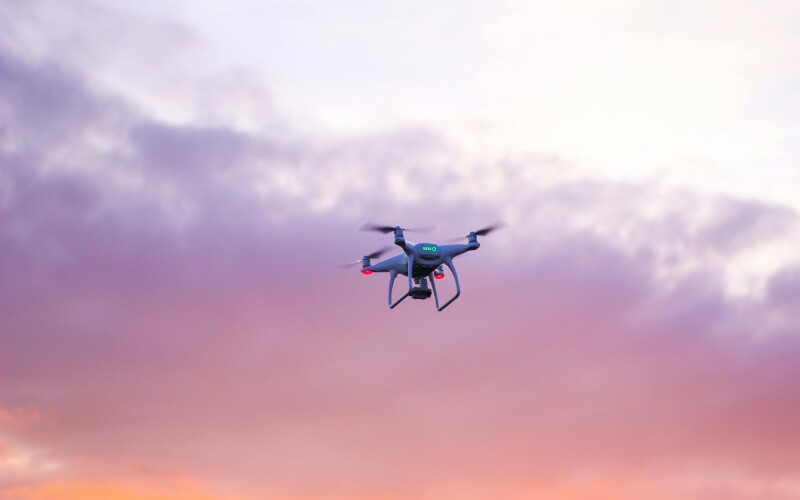
For this week’s round-up of commercial drone industry news, we look at projected growth in the counter-UAS market, the creation of a dedicated procurement system for drone companies, and the potential impact of a Chinese drone ban on U.S. farmers.
Counter-UAS Market Could Hit $14.51 billion by 2030
According to the Vanderbilt Report, growing threats, mounting defense needs, and new partnerships are spurring growth in the counter-drone market. According to the article, “The global counter-UAS market is projected to grow from $4.48 billion in 2025 to $14.51 billion by 2030-a compound annual growth rate of 26.5%.” However, “some forecasts push even higher, with the counter-UAS systems market estimated at $6.64 billion in 2025 and projected to reach $20.31 billion by 2030, registering a CAGR of 25.1%.” In accessing the state of the counter-UAS market, the Vanderbilt Report focuses on recent industry news, including VisionWave Technologies’ new Argus space-based counter-drone system.
A Procurement System Tailored to Drone Companies
To help UK drone companies “efficiently fast-track major projects and unlock new opportunities,” Drone Major has launched “a first-of-its-kind managed procurement services platform for the global drone industry.” An article in AeroMorning explains that “Drone Major’s new platform is centered around a business-to-business marketplace to connect buyers and suppliers globally with vetted, trusted partners in the drone and robotics ecosystem.” The system coordinates supply chains, evaluates supplier bids, handles compliance and regulatory issues, and more.
How Would a Chinese Drone Ban Impact U.S. Farmers?
With a ban on Chinese-made drone looming as a distinct possibility in the U.S., news site The Week looks at how the move would affect agricultural operations. The article quotes sources reporting that Chinese-made DJI drones are a “key agricultural tool to treat more than 300 types of crops in fields and orchards,” and that “over 90% of the spray drones our industry uses come from China.” Although many legislators are pushing for ban for security reasons, many are pushing back, claiming that a ban would be devastating for the farming industry.













Comments