

.png.small.400x400.png) This week, AirData announced a new integration with BRINC that automatically captures and organizes flight data from the Lemur 2 and Responder drones within AirData's platform, eliminating manual recordkeeping for public safety agencies.
This week, AirData announced a new integration with BRINC that automatically captures and organizes flight data from the Lemur 2 and Responder drones within AirData's platform, eliminating manual recordkeeping for public safety agencies.
The integration creates a complete, searchable mission record for every flight, with built-in tracking for equipment, maintenance, and pilot activity. Flight data is pulled directly from BRINC's proprietary systems and organized in AirData automatically, meaning records are generated regardless of whether a pilot takes any additional action after landing.
"Public safety agencies rely on a connected ecosystem of tools," said David Benowitz, VP of strategy & marketing communications at BRINC, in a statement. "Integrating with platforms like AirData ensures flight data is automatically captured and accessible without adding friction to critical operations."
The announcement comes as public safety drone programs continue to scale. More than 1,500 law enforcement agencies in the United States operate drone programs as of 2024, according to the Electronic Frontier Foundation's Atlas of Surveillance. Drone as First Responder (DFR) adoption accelerated sharply in 2025, with some jurisdictions reporting that drones resolve up to 25 percent of calls without a ground unit response. That growth has increased pressure on agencies to maintain consistent, auditable records across teams, shifts, and deployments.
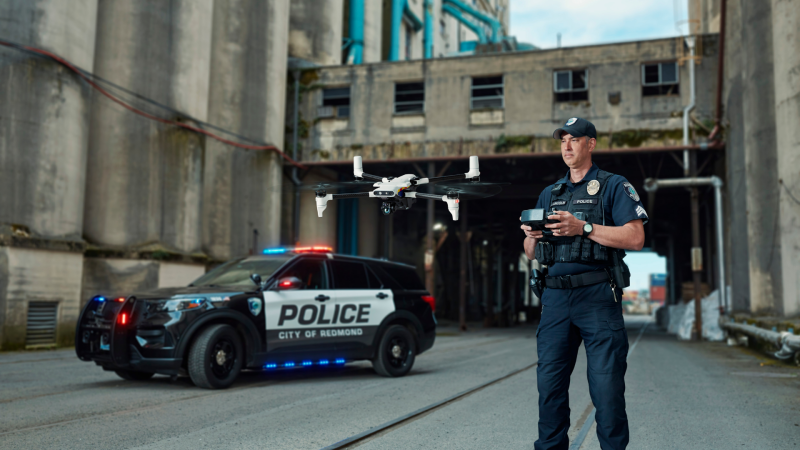
BRINC's two supported drones serve distinct operational roles. The Lemur 2 is built for indoor environments, enabling teams to assess structures safely during high-risk incidents. The Responder, meanwhile, is designed for DFR programs, deploying autonomously to 911 calls with live video, thermal imaging, and remote operation capabilities.
"BRINC builds drones that perform in the most demanding environments," said Eran Steiner, CEO of AirData, in a press statement. "Connecting that hardware into AirData gives agencies more than flight logs. It gives them a system of record that captures pilot activity, equipment health, and program-wide trends automatically."
AirData's Public Safety Program functions as a centralized system of record across law enforcement, fire, and emergency response operations. Agencies use it to manage fleet readiness, track maintenance cycles, monitor pilot credentials, and produce documentation for audits, compliance reporting, and program justification.
Source: AirData












Comments