
This article is part two in a two-part story looking at the role test sites are playing in the UAS industry from both a technological and regulatory standpoint. You can read part one here.
As the uncrewed aviation industry develops increasingly sophisticated aircraft that can fly longer distances, carry heavier payloads, and operate with greater autonomy, the FAA’s job is to ensure these technologies are safely introduced into the National Airspace System (NAS).
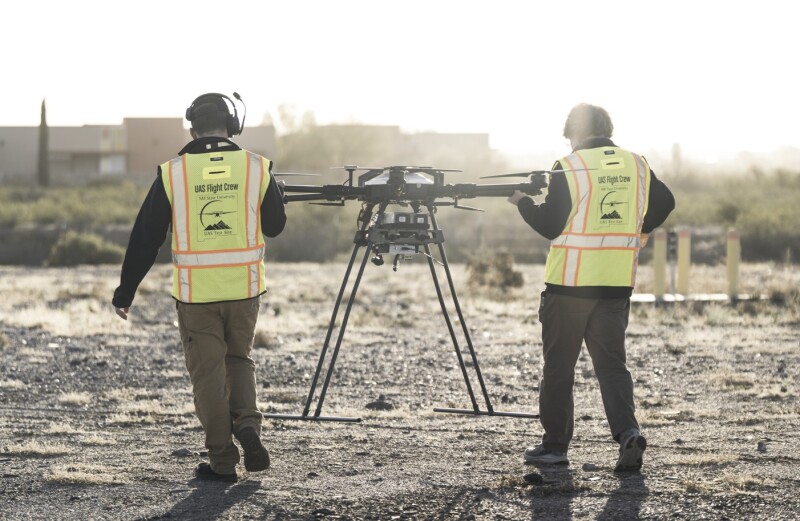
The nine FAA-designated UAS test sites play an increasingly important role in this process. Their facilities and expertise allow manufacturers and operators to conduct controlled experiments, document performance, and develop the technical information needed to support regulatory applications.
The sites do not issue certifications or operational approvals; those decisions remain with the FAA. Their contribution instead lies in helping industry produce credible evidence that regulators can evaluate.
From Flight Testing to Regulatory Evidence
A successful flight demonstration can establish that an aircraft or system performs as intended under particular conditions, and regulatory acceptance requires a broader understanding of its performance, limitations, and potential failure modes. This distinction becomes increasingly important as uncrewed aircraft grow larger and more complex.
Dr. Catherine Cahill, Director of the University of Alaska Fairbanks UAS Test Site, emphasizes the importance of the program's accumulated experience:
“In the case of the FAA’s University of Alaska Fairbanks UAS Test Site, we have focused on testing UAS that are larger, go farther, and fly higher than most commercially available UAS across a wide variety of environmental conditions. Our testing partners have real-world experience with their UAS before they take them to market around the world.”
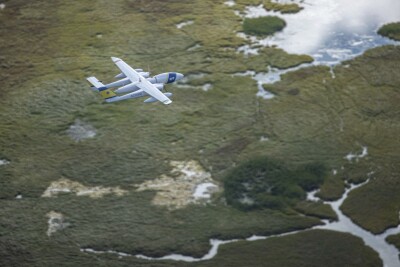
The experience gained from testing larger aircraft over longer distances, at higher altitudes, and under demanding environmental conditions can give manufacturers valuable evidence for regulatory submissions. As uncrewed aircraft become more complex, understanding their operational limitations becomes increasingly important to the FAA's evaluation process.
At MAAP - Virginia Tech's Mid-Atlantic Aviation Partnership – the emphasis includes the controlled testing environment and the personnel responsible for conducting experiments safely.
"Our test site is a critical proving ground for integrating crewed and uncrewed aviation into the National Airspace System," Tombo Jones, Director of MAAP, explained. "By providing a controlled environment to evaluate emerging technologies, and a team of aviation experts who ensure testing is conducted safely, we help accelerate industry innovation and advance the safe, efficient operations of tomorrow’s airspace."
The expertise Jones describes matters most when test results must support a regulatory submission.
Jennifer Bjoraker, representing New Mexico State University's UAS Test Site, makes the connection explicit.
"At NMSU, we work with manufacturers and operators to find problems, test solutions, and collect the data the FAA needs to evaluate those operations."
The quality of that data, the conditions under which it was collected, and the ability to reproduce results can all influence how useful the evidence is to regulators.
Navigating the FAA Approval Process
The regulatory path for uncrewed aviation depends on the aircraft, its intended mission, and the operating environment.
Some commercial operations are conducted under Part 107, which establishes requirements for small UAS. Operations that exceed those limitations may require waivers, exemptions, or other FAA authorizations.
Aircraft certification presents a separate challenge. Depending on the aircraft and operation, manufacturers may need to demonstrate compliance with applicable airworthiness requirements, while operators must establish that their proposed activities can be conducted safely.
These distinctions matter because obtaining approval can require extensive documentation, testing, and interaction with the FAA.
Trevor Woods, Executive Director of the Northern Plains UAS Test Site in North Dakota, identifies a practical obstacle confronting manufacturers.
"FAA-designated UAS Test Sites are more important than ever because companies need access to airspace to test, evaluate, and advance their technology. Access to closed ranges can involve lengthy waits, slowing development and delaying deployment."
According to Woods, test sites can help companies navigate the regulatory process more efficiently.
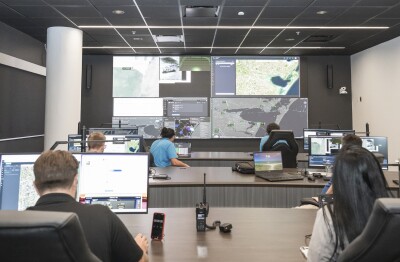
"Our experience with FAA approval pathways helps companies navigate complex requirements and secure the authorizations they need sooner than they often could on their own. By reducing delays and helping companies move more efficiently through testing and evaluation, we save them time and money while supporting the safe advancement of their technology."
His observations introduce an important economic consideration.
For manufacturers developing commercial aircraft, delays in obtaining testing opportunities or operational authorizations can increase costs, postpone customer demonstrations, and complicate investment decisions.
Test-site personnel's experience can help applicants understand what evidence is required and how to organize their testing programs around specific regulatory objectives.
At the Choctaw Nation of Oklahoma's Emerging Aviation Technology Center, testing includes technologies central to the safety of BVLOS operations.
"Our work helps evaluate how uncrewed aircraft detect and avoid other traffic, maintain reliable communications and operate safely beyond visual line of sight," James L. Grimsley, executive director of advanced technology at the Choctaw Nation of Oklahoma's Emerging Aviation Technology Center, explained. "The results help industry strengthen its safety cases and inform FAA decisions about expanded operations."
The distinction is significant. A safety case must explain why an operation can be conducted with an acceptable level of risk, supported by evidence appropriate to that operation. Test sites can contribute the measurements, operational experience, and technical documentation that support such arguments.
Parts 108 and 146 and the Expanding Regulatory Role of Test Sites
The FAA's proposed framework for Parts 108 and 146 for BVLOS operations could represent an important change in how commercial uncrewed aviation is regulated.
Today, many advanced BVLOS operations depend on individual authorizations or waivers. The proposed framework seeks to establish a more systematic regulatory pathway for qualifying operations, potentially reducing reliance on case-by-case approvals.
However, a standardized regulatory framework would not eliminate the need for testing. Manufacturers and operators would still need to demonstrate that their aircraft, equipment, and operational procedures satisfy applicable requirements.
Depending on the final rule, this could create demand for more standardized testing methodologies, documented performance data, and evidence supporting the reliability of DAA systems and C2 communications.
The regulatory role of test sites also extends into other emerging areas of aviation.
John Franz, Project Director of Program Integration at the Autonomy Research Institute (ARI), Texas A&M University–Corpus Christi, points to the increasing importance of Advanced Air Mobility (AAM) and Counter-UAS activities.
"Considering UAS proliferation and economic development, the FAA designated UAS test sites like ARI at Texas A&M University-Corpus Christi (TAMU-CC) help the FAA develop Urban Air Mobility (UAM) concepts as well as conduct UAS and uncrewed aircraft performance and safety verification testing. These activities serve to safely integrate UAS and UAM concepts into the NAS at pace to keep up with industry demands."
Franz also identifies a potentially significant development in federal Counter-UAS policy.
"Additionally, test sites are a critical mechanism in the protection of our national infrastructure. As the C-UAS business segment grows at a corresponding rate, a recent federal policy change makes the FAA-designated UAS test sites the only non-federal entities permitted to conduct destructive C-UAS testing on behalf of federal sponsors."
If confirmed, this policy would significantly expand the responsibilities entrusted to FAA-designated test sites. Destructive C-UAS testing raises regulatory and safety questions that differ considerably from those involved in evaluating conventional uncrewed aircraft operations.
But what about the Automated Data Service Providers (ADSPs) contemplated under Part 146? As BVLOS operations become increasingly dependent on third-party services for surveillance, traffic information, and operational decision-making, who will validate those services' accuracy and reliability? Could the FAA-designated UAS test sites become the proving grounds where these providers demonstrate compliance with the new regulatory requirements?
The distinction between testing systems designed to protect critical infrastructure and authorizing their operational deployment matters. The authority to conduct a controlled experiment does not necessarily permit using the same technology in ordinary airspace operations.
As manufacturers introduce larger aircraft, autonomous capabilities, and increasingly diverse missions, regulators will face a growing variety of operational risks and technical requirements.
A medical delivery aircraft operating over rural communities, a long-distance infrastructure inspection platform, and an autonomous cargo aircraft may require different forms of evidence to demonstrate acceptable safety performance.
The FAA will continue to determine which aircraft and operations satisfy applicable requirements. The test sites will provide manufacturers and operators with opportunities to develop the evidence supporting those decisions. As the industry moves toward routine BVLOS operations and increasingly complex airspace integration, the relationship between testing and regulation will become even more important.
For manufacturers and commercial operators, the ability to generate credible evidence efficiently to accelerate regulatory compliance may prove as important as developing the technology itself, and having these nine test sites available is a strong move by the FAA to accelerate the advancement of US-based uncrewed aviation solutions.









Comments