
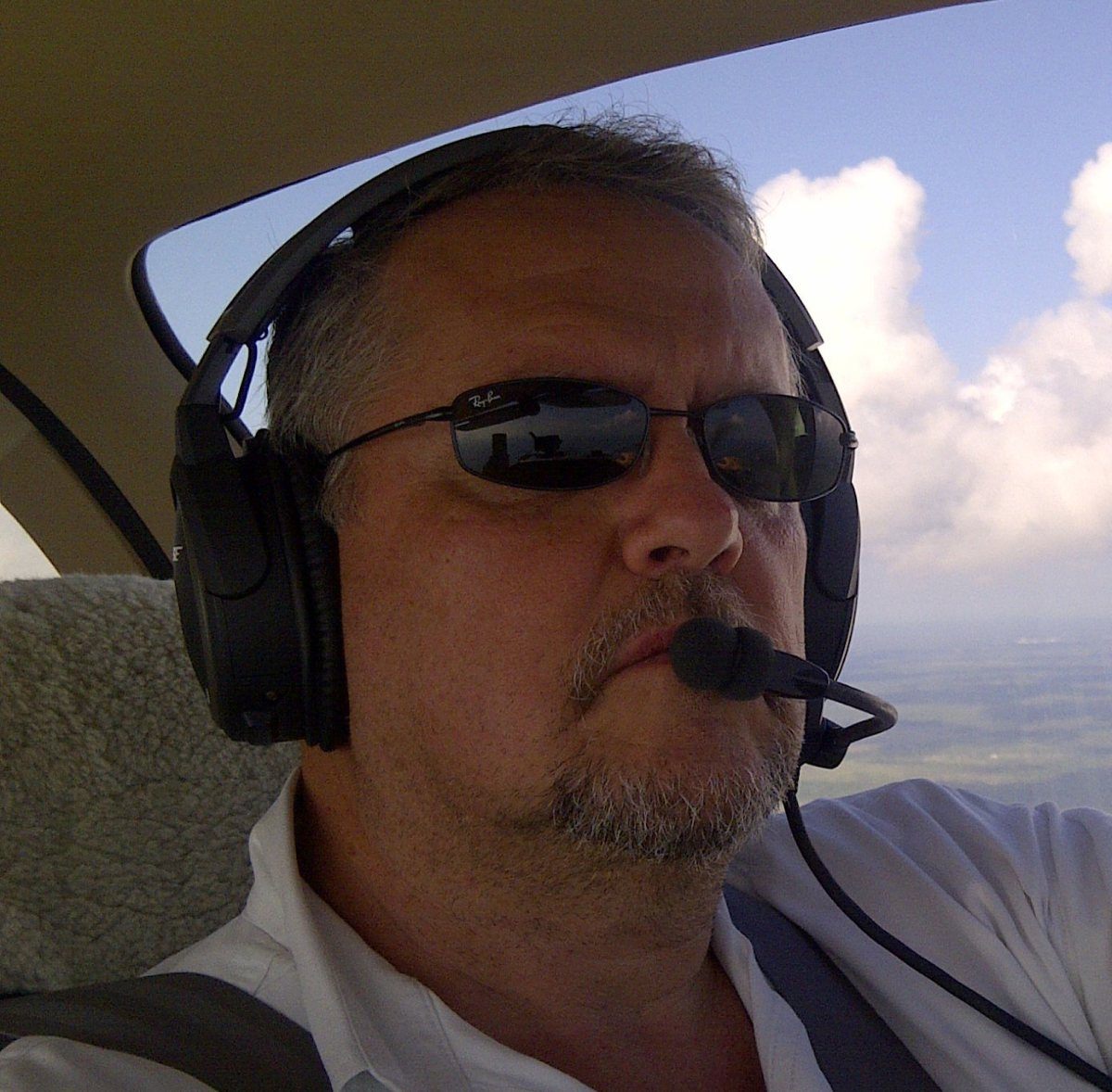
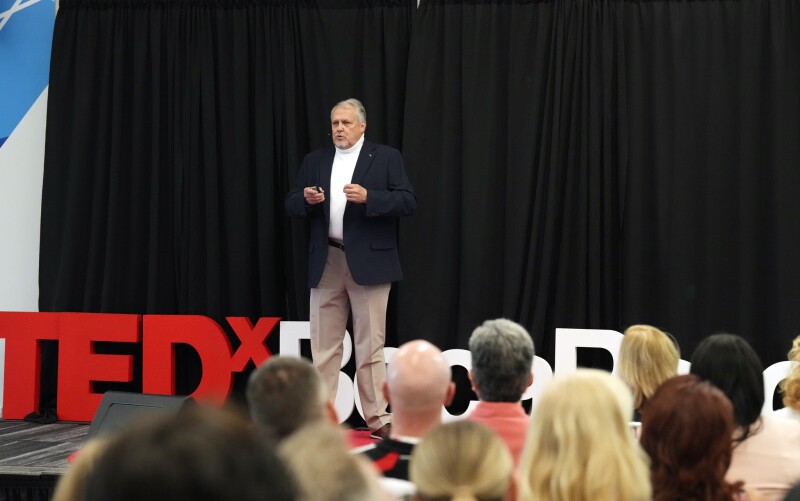
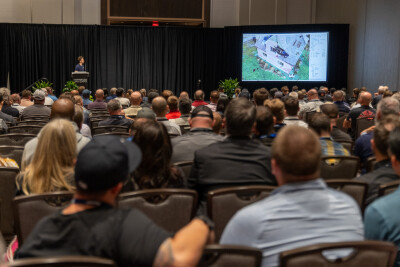
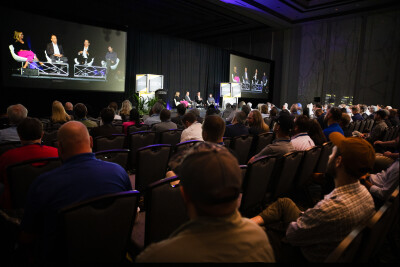
On Saturday, May 2, I had the honor and privilege to deliver a TEDx talk to a packed audience in the historical BRIC building in Boca Raton, Florida. The event was organized and masterfully executed by Erik Mintz and Cindy Metzler of TEDx Boca Raton, and the venue is historic because it was where, in the 1970s and '80s, IBM developed and launched the Personal Computer revolution. Erik was part of that IBM team, and the BRIC building has always played an important role in the TEDx Boca Raton events.
My TEDx talk revolved around the question: Why are commercial drones taking so long to have an effect on our daily lives? I tried to establish similarities and comparisons with other technological revolutions that I have seen in my life, such as the PC in 1979, the internet in 1990, and the smartphone in the early 2000s.
These three technologies came into my life abruptly and forever changed the way I worked, communicated, did research, and generally conducted my daily life. However, in the case of drones, it has been 13 years since I saw my first drone and I’m still waiting for them to have a real effect on my life.
In 2015, one year before Part 107 was issued, I decided to become a commercial pilot at the ripe age of 60 in order to understand firsthand why drones were having such a hard time penetrating the National Airspace System (NAS). As soon as I became a regular and active participant in the skies above North America, I understood what was happening: The skies were already full, and the FAA and every other civil aviation authority (CAA) around were having a hard time giving drones a chance.
Eventually, the FAA issued Part 107 in the summer of 2016, and it was highly restrictive, keeping flights below 400 feet, always within visual range of the operator, or Pilot in Command, and one pilot was prohibited from handling more than one drone at a time.
This was not integration, but rather segregation, though it at least gave the industry the legal framework with which to begin accumulating hours and developing the necessary technology that would allow the FAA and all the other CAAs around the world to work on the natural evolution of Part 107.
That next uncrewed aviation regulation would eventually be called Part 108. In the summer of 2025, the FAA published a notice of proposed rulemaking (NPRM) and opened a 60-day comment period, though some aspects of the comment period were revisited in early 2026.
The final rule for Part 108 has not been issued yet, but it already promises to be the next step in remotely piloted aircraft or RPAS regulation, as it will allow for drones to fly beyond visual line of sight (BVLOS), but also would permit one pilot to supervise many drones. These two issues combined would open the door for profitability for an industry that, for a decade, has been accumulating flying hours and developing new and innovative technologies waiting for the right time to implement them.
In the summer of 2016, when the FAA issued Part 107, most of the CAAs around the world took the basic guidelines of drone weight, maximum flight altitude, and VLOS, and issued their own particular drone regulation for their respective jurisdictions. We expect that, with the release of Part 108, a similar phenomenon will occur and CAAs will follow suit in an effort to have a semi-homogenous international law, similar to what we have now for traditional, crewed aviation and supervised by the International Civil Aviation Organization (ICAO).
When it comes to the issue of certification, I read an article by Erik Mintz here in Commercial UAV News in which he argues that drones are technically aircraft, but in reality, they behave more like computers that happen to fly. Therefore, the FAA and all other certification agencies are having a hard time finding a way to certify these vehicles appropriately and at a fair cost. If certifying a one-pound drone will cost the same as a new Boeing jet, this industry is not going anywhere, so these agencies must find a path to certification that makes sense and is affordable to the new players. This is not an easy task, to say the least.
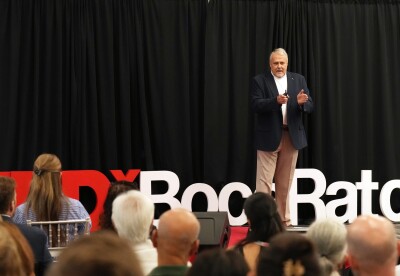
What I tried to convey in my TEDx talk is that drones are taking time to enter our lives in similar ways to the previous three revolutions, not because of technology but because of the regulations. Today, commercial aviation is the safest mode of transportation, and in order to keep it that way, all the CAAs, including the FAA in the USA and EASA in Europe, are being ultra-cautious to release a BVLOS regulation that will initiate the process of migrating from the existing segregation status quo to a more integrated sky.
But, at the same time, why have drones been so successful in theaters of war? Very simply because of exactly the same two reasons: The skies over wars are almost empty, and there are no innocent bystanders at 1,000 ft., while there are also no certification requirements. If a soldier in a trench finds a way to destroy the enemy with a home-made drone, it will be used immediately without asking permission to the civil aviation authorities, emphasis on the word ‘Civil’.
So, while it will take time, in my opinion it is inevitable that drones will eventually enter our lives. Drones are flying marvels, and as such, they will play an essential role in the development of humanity moving forward. They will help us replace humans involved in dangerous tasks, reduce the number of delivery diesel trucks from our congested roads, and save lives by delivering medicines, defibrillators, and emergency supplies, by finding people using infrared sensors, and in general, become the tool of choice for new applications.
If you want to know when your life will be affected by drones, follow the news, not only of the technology, but also of the regulations, because when these change, everything else will follow.







Comments