

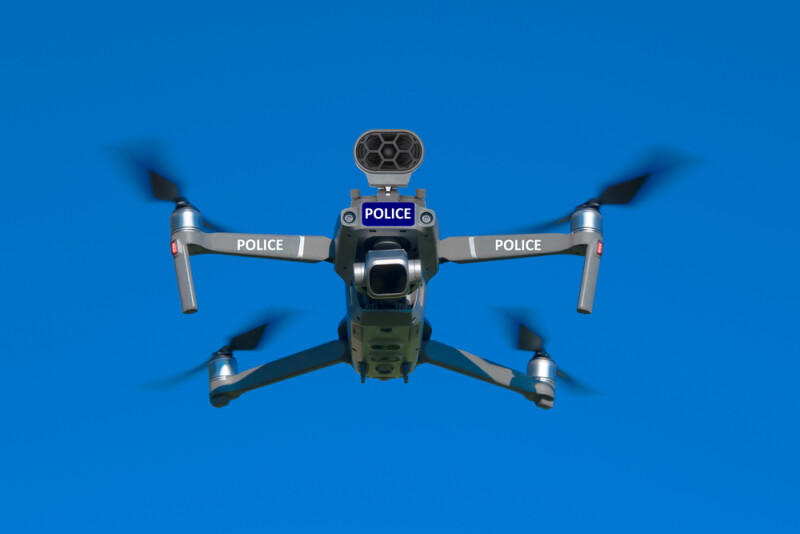
.png.small.400x400.png) Public safety agencies using Versaterm DroneSense will be able to request and receive authorizations through the FAA Low Altitude Authorization and Notification Capability (LAANC) directly in the platform, without manual FAA coordination or separate applications. The capability comes from a new integration of Versaterm Aloft's airspace authorization tools into DroneSense, announced Wednesday.
Public safety agencies using Versaterm DroneSense will be able to request and receive authorizations through the FAA Low Altitude Authorization and Notification Capability (LAANC) directly in the platform, without manual FAA coordination or separate applications. The capability comes from a new integration of Versaterm Aloft's airspace authorization tools into DroneSense, announced Wednesday.
LAANC is an FAA system that lets drone operators request authorization to fly in controlled airspace near airports through approved software providers. The integration creates a single workflow that unifies computer-aided dispatch (CAD), drone operations, and FAA airspace authorization. Versaterm says the integration reduces coordination time and lets agencies respond faster to emergencies in controlled airspace near airports. The company notes agencies can use near-real-time authorization processing and automatic compliance reporting for time-critical missions such as search and rescue and tactical response.
DroneSense customers get the LAANC capability through existing subscriptions at no additional cost, according to Versaterm.
"Readiness shouldn't depend on how many systems a pilot can juggle under pressure," said Versaterm CEO Steve Seoane. "This integration puts authorization where the pilot already is, so getting cleared is part of launching, not a step before it."
The integration follows a pair of Versaterm acquisitions in the past 15 months. In July 2025, the company acquired DroneSense, a drone operations platform for public safety agencies. Then, in February 2026, the company acquired Aloft, an FAA-approved UAS Service Supplier (USS) that Versaterm says processes most LAANC authorizations. As a result, DroneSense is now an FAA-approved Supplemental Data Service Provider (SDSP).
Time is critical in public safety missions, where seconds can mean the difference between life and death. With that in mind, Versaterm's connected ecosystem, which can integrate different capabilities, such as adding LAANC directly into a drone operations platform, removes a separate step for operators in this field. As consolidation becomes more common in the commercial UAS sector as a whole, this type of integration serves as a reminder of the positives that can come out of acquisitions.









Comments