

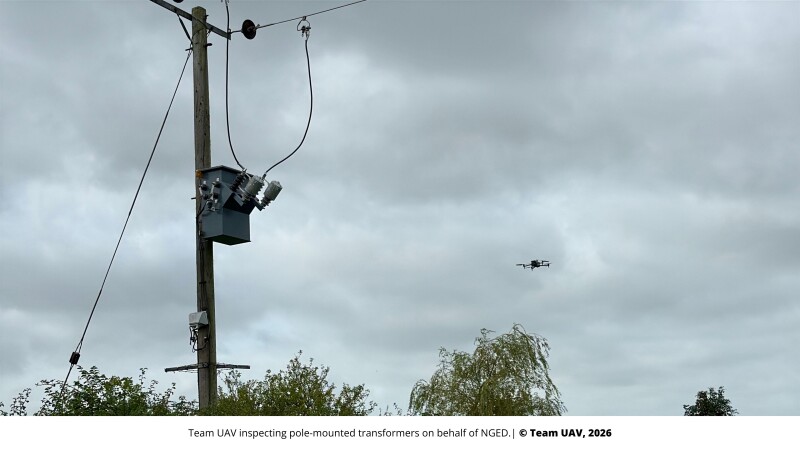
.png.small.400x400.png) Team UAV, a drone inspection service based in the UK, has completed the data collection portion of a project to assess the condition of pole-mounted transformers using drone imagery and machine learning. The company captured high-resolution imagery of 500 transformers across the National Grid Electricity Distribution (NGED) network in Cornwall, Wales and the Midlands. The project is funded through the Network Innovation Allowance (NIA), a program that lets UK network operators test new technologies, and Softwire, a UK technology consultancy, is developing the computer vision models and a prototype web application to present the results. The initial phase of the project is expected to be completed by the end of 2026.
The project is testing whether machine learning and computer vision can identify visible signs of deterioration, such as corrosion, in drone imagery. This, in turn, could allow NGED to act before transformers fail, potentially avoiding power cuts and limiting safety and environmental risks. Team UAV flew inspections in Cornwall, Wales and the Midlands, including remote and rural areas.
Prior to collecting the imagery, Team UAV carried out multiple technical trials to find the best-suited equipment and most optimal camera positions and capture techniques. Finding a consistent workflow was a key part of the process, they said, to ensure that imagery collected from different locations could be used for AI analysis.
Team UAV also built a custom GIS database and delivery process that lets crews upload imagery from the field. That imagery is linked to individual transformer locations and stored alongside relevant survey information and metadata to ensure that each set of images can be matched to the correct asset.
“Inspecting large numbers of assets across different locations presents a real challenge for electricity network operators, particularly when access is restricted or infrastructure is difficult to reach,” said Mark DeGiovanni, technical lead, Team UAV. “For this project, our focus was on developing a consistent and repeatable approach to drone inspections, ensuring the imagery we collected was suitable for the next stage of AI analysis.”
From here, the prototype application being built by Softwire is expected to map condition assessments, confidence levels, and supporting rationale against the Common Network Asset Indices Methodology, the standard used by electricity networks in the UK to assess asset health and risk. The model could be expanded to assess a wider range of conditions and support a predictive approach to maintenance.
“This innovation project will explore whether aerial imagery, AI, and computer vision can automate aspects of the condition assessment process, generating more consistent condition data to inform asset health reporting and investment decisions,” said Favour Eboh, innovation engineer at NGED.
This type of use case is becoming more common among utilities around the world due to a confluence of factors: the capabilities of AI models are ever-improving, both drones and sensors are evolving at a rapid rate, and strains on utilities are growing because of increasing urbanization, more frequent weather events, and higher usage from data centers, among other factors. That makes these types of projects critical, both improving services for customers and allowing for safer and more efficient work for utility workers in the field.












Comments