
One of the most important topics permeating the drone industry around the world right now, and certainly here in the U.S., is counter-UAS. Whether we’re talking about simple detection or the ability to take down potentially hostile drones, as well as the important question of who has the authority to do so, it’s been top of mind for every level of government. Given world events showing how this technology is now being used by malicious actors, combined with significant events coming to U.S. soil over the next handful of months, with the FIFA World Cup and the celebrations coming for the nation’s 250th anniversary, there has been swift action in training for potential drone incursions for these events and critical conversations about who has the authority to defend against them.
The concern, however, is certainly not limited to large-scale gatherings. We’ve also seen in recent months and years, particularly in Europe and the Middle East, the potential for damage to critical infrastructure from hostile drones. The issue, according to some lawmakers and industry professionals, is that there aren’t enough parties with the authority to act against potential enemy drones.
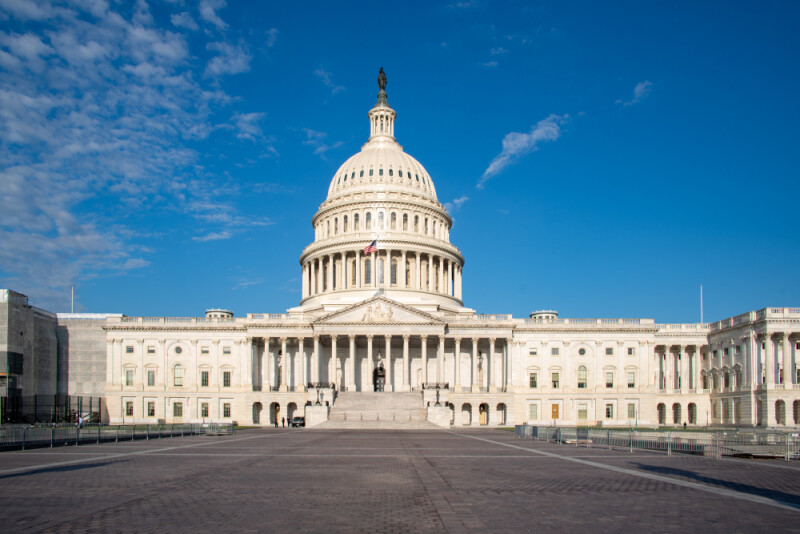
Last week, Senator Tom Cotton (R-Arkansas) introduced a bill looking to remedy this potential issue. The Critical Infrastructure Airspace Defense Act would, among other powers, “give critical infrastructure sites the legal authority to take down unauthorized drones,” according to a press release from his office.
The bill amends Section 210G of the Homeland Security Act of 2002 to extend counter-UAS authority to private owners and operators of designated high-risk facilities, specifically calling out nuclear generating stations, key substations, transformer stations, and control centers of the bulk power system. Under the legislation, qualified personnel at these facilities could legally detect, track, and mitigate drone threats that they currently have no statutory authority to address.
Importantly, that authority comes with guardrails. Personnel would need to complete a training and certification program administered by DHS in coordination with the FAA and the Department of Energy before exercising any of these powers. They would also be limited to counter-UAS technologies on an approved federal list and would be required to coordinate with the FAA in real time. The bill also authorizes $250 million in grant funding between fiscal years 2027 and 2031 to help eligible facilities purchase and deploy approved systems.
Despite the security rationale driving the legislation, the bill is likely to face scrutiny from several directions.
The drone industry's commercial operators will be watching closely. Expanding counter-UAS authority to private actors, even with training requirements, introduces new risk for operators flying legitimately near covered facilities. The bill's language around "credible threat" leaves room for interpretation, and without clear, consistent standards for what constitutes one, commercial pilots could find themselves and their equipment subject to mitigation actions based on a security contractor's judgment call.
There's also the question of implementation. The bill gives DHS 180 days to stand up a national certification program and issue implementing regulations, a tight timeline for something that requires extensive coordination across DHS, DOE, DOJ, DOD, and the FAA. How robust that certification program ultimately is will determine whether the new authority functions as intended or creates more confusion in an already complicated airspace environment.
The bill was introduced in the Senate and referred to the Committee on Homeland Security and Governmental Affairs, where it will need to advance before any floor consideration. Cotton is not the first lawmaker to push for expanded C-UAS authority beyond federal and law enforcement agencies, and this bill will likely be viewed in the context of broader C-UAS legislative efforts, including the reauthorization of existing federal counter-drone authorities, which has been an ongoing negotiation in Congress.
It should be noted, too, that this bill has a built-in sunset provision, expiring September 30, 2031, making this potential law a provisional measure rather than a permanent policy shift.
You can read the full text of Senator Cotton’s bill here.









Comments