

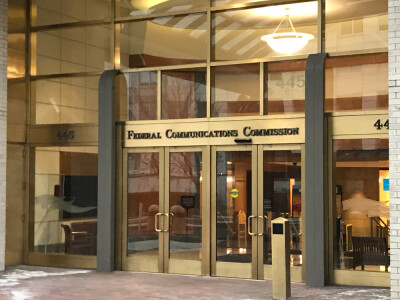
On December 22, 2025, the FCC dropped a surprise on the commercial UAV industry across the U.S. with its addition of all foreign-made drones and critical components to its Covered List. While many were expecting a move to place some in that category on the list–specifically, DJI, Autel, and others manufactured in China–the breadth of this decision was not expected by most. As time has passed, there has been a little more clarity around the issue, with the Department of Defense and Department of Homeland Security having already created some carve-outs, and the FCC passing along guidance for how companies can apply for conditional approvals.
With all of that being said, though, a few weeks out from the decision and there is still plenty of uncertainty and confusion, with it being clear that there will be changes to how organizations and individual operators will have to conduct their business. While, to be clear, there is no immediate impact for drones that are already owned, plans for the future are changing, and will have to continue to change.
Much of that has to do with the fact that drones from DJI, for whom there will almost certainly be no carve-out to the decision in the near-term, are going to be nearly impossible for commercial operators to acquire beyond what is already in their fleet. Given their massive presence in the industry, this is sure to have a significant impact on organizations across a variety of sizes and industries. This was only reinforced by the results of a survey recently published by Pilot Institute detailing how professionals within the industry believe their business will be affected by a DJI ban. To be clear, this survey was conducted prior to the FCC ruling referenced above, but it provides key insights into how many in the industry feel this decision will affect them moving forward.
Before diving into a few of the most notable responses to come out of the survey, it’s worth looking at exactly who made up the group of respondents in the survey. Overall, 8,056 people responded to the survey, of whom 83 percent identify as commercial or professional drone operators. When separated out by industry, photography, videography, and media make up the largest portion of the group, with 43 percent identifying this as their primary use case, with that being followed by construction and surveying, and public safety. Critically, the group exemplifies just how widespread DJI ownership is among the group, with nearly 97 percent of respondents noting they use DJI drones, and 70 percent saying they operate fleets that are solely made up by DJI drones.
Perhaps the biggest takeaway from the survey of this subset is the financial consequences of disrupted access to DJI, something that was taking place before this FCC ruling and that will certainly not be eased in the aftermath. Over the last 12 months, about 46 percent of respondents noted that prices for DJI drones or parts were “noticeably” higher than before, and nearly 42 percent said that they were unable to purchase the specific model they wanted. As a result, these organizations report real financial consequences, with over half reporting a financial impact of at least $5,000, and nearly 10 percent reporting an impact of at least $50,000.
As respondents looked ahead to a potential scenario where they were unable to purchase or import any DJI drones, they overwhelmingly foresaw negative consequences. Overall, 43 percent believed this would have an “extremely negative or potentially business-ending impact.” Those numbers are even higher for specific industries, with 56 percent of respondents from the agriculture, utility, and public safety fields saying that not being able to buy DJI drones would “potentially end” their operations.
One of the other interesting takeaways from this report was the stated effect this could have on the consumer market. While most of the focus is, understandably, on the commercial side of the industry, there is a real effect on the consumer market as well, as DJI is also the leading provider of consumer drones. In fact, about 87 percent of respondents indicated that they learned to fly on consumer drones, with 72.5 percent of them learning on DJI-produced consumer drones such as the Mini, Mavic, or Phantom.
This could be significant for the future of the industry, as it shows that a significant portion of commercial pilots start out flying recreationally before looking to turn that into a career. If there is not an affordable consumer drone on the market, then it becomes more difficult for that initial experience, which could ultimately lead to fewer professionals in this critical industry. Respondents of this survey agreed with the assessment, with over 85 percent saying that “affordable” consumer drones are essential for getting new people interested in the industry, and another 13 percent saying they are important but not essential.
Although none of these general findings reported from this survey are necessarily surprising, the degree of the sentiments is eye-opening for the future of the industry. It is clear that major adjustments are going to be made in every corner of the sector within the U.S. in response to the loss of DJI drones on the market, and while some specific industries may be more affected than others, nearly everyone will have some sort of effect. Moreover, the pipeline for pilots could also be altered with one of the major suppliers of affordable consumer drones off the market.
For more insights into this issue, download the report in its entirety by following the link below.







Comments