

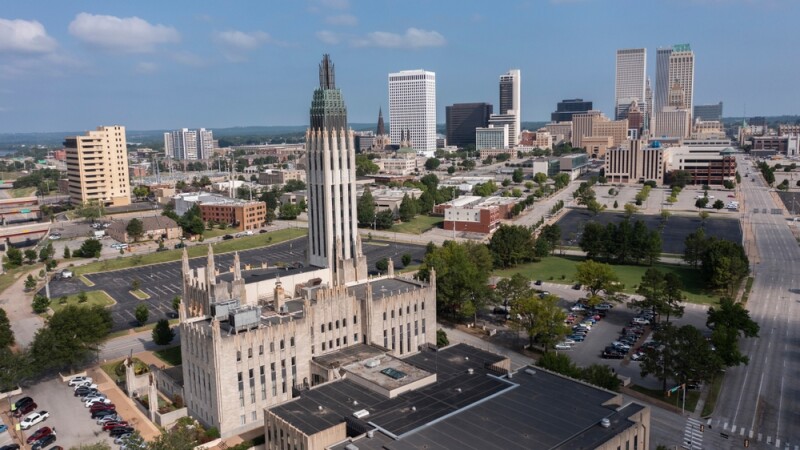
Manna, a drone delivery company founded in Ireland, has launched its first full-scale metropolitan operation in the United States, selecting Tulsa, Oklahoma, as the central base for its American expansion. The move marks the company's biggest bet yet on the U.S. market, coming on the heels of $50 million in venture funding raised earlier this year, and comes with plans to create more than 1,000 jobs in the region over the next three years.
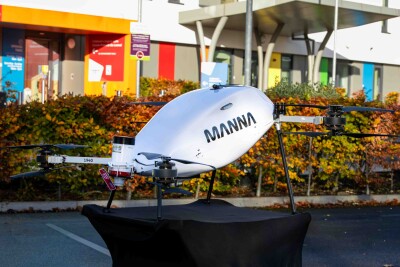
Founded in Ireland in 2018, Manna has built one of the more established commercial drone delivery platforms in the world, completing nearly 380,000 deliveries around the globe using a tether-based system that lowers packages to customers rather than landing. Until now, its U.S. footprint has been limited to operations in the Dallas-Fort Worth area.
Manna's Tulsa buildout spans aviation and flight operations, manufacturing, maintenance, commercial operations, and customer support. In an interview with TechCrunch, Founder and CEO Bobby Healy said that construction on the company's factory is already underway, with manufacturing expected to begin within the year. In the nearer term, he said the company will focus on scaling its operations team to 200 to 300 people over the next 12 months, with factory hiring pace tied to how quickly the company grows outside Tulsa.
Importantly, the expansion is additive rather than a relocation. Manna's headquarters, research and development, and core manufacturing will remain in Ireland, something the company made clear when it ceased its delivery operations in the country earlier this year.
Tulsa holds a federal Tech Hub designation and has spent several years building out a drone and advanced air mobility ecosystem, an effort led by Tulsa Innovation Labs and Tulsa Local Ventures, both George Kaiser Family Foundation initiatives. Central to that groundwork is the Secure Autonomy Feedback and Evaluation Testbed, or SAFE-T, a shared digital infrastructure project designed to help manage the airspace complexity, one of the key milestones toward making drone delivery viable. Last year, Commercial UAV News spoke with Andrew Carter, the founder and CEO of ResilienX, about work being done in Tulsa.
Healy has been direct about what changed his calculus, including in the aforementioned interview with TechCrunch. There, he credited FAA policy movement with giving the drone delivery industry a "turbo boost" and unlocking the kind of investor confidence needed to commit capital at this scale. That regulatory shift also lines up with Manna's decision to pull back its drone delivery operations in Ireland, where the company cited a lack of planning regulations that would let it scale.
The timing isn't unique to Manna. Zipline, Wing, and Amazon are all expanding BVLOS delivery operations simultaneously, a pattern that points to a shared policy tailwind rather than coincidence. Healy said the company is evaluating six additional U.S. cities for expansion, with new market entries targeted by the end of 2027 if Tulsa performs as expected. Drone delivery has long been seen as a future-focused vertical for this industry, but as regulations become clearer – something that will only accelerate when the final Part 108 rule is released – its being proven that the technology is largely ready for scale and the industry is ready to move with real momentum.
Tulsa is doing its part to be a major hub in this industry, attracting one of the world’s leaders in the sector to anchor its U.S. operations in the city. Given the current nexus of the industry right next door in Texas, and all of the innovation centers in the state, there’s little reason to bet against its future for drone delivery, and the commercial UAS sector more broadly.







Comments