

Sponsored by IPET
Every flight plan eventually runs into the same hard limit. No amount of route optimization or mission software can keep an aircraft airborne longer than its hardware allows. In today’s industry, operators keep asking for more from their missions. Longer pipeline runs without a landing. Larger mapping areas covered in a single operation. Extended overwatch during public safety events.
Meanwhile, battery chemistry improvements have slowed to incremental gains year over year. If flight time is going to keep improving at the pace the industry wants, the answer has to come from somewhere else in the aircraft.
That somewhere is the propulsion system. The motor, the electronic speed controller (ESC), and the propeller working together determine how much of the battery's energy actually becomes lift and forward motion, and how much gets lost as heat and inefficiency. Battery energy density has followed a slow, steady curve for years. Lithium chemistry improvements arrive in single-digit percentage gains rather than the leaps the industry saw in the early days of commercial multirotor platforms. Operators who need meaningfully longer flight times cannot rely on the battery pack alone to get them there.
That leaves the propulsion system as the other lever, but it’s a bigger lever than many realize. The relevant metric here is grams of thrust per watt, which determines how many minutes of flight time a given payload and battery capacity will actually produce. A motor that draws more current to produce the same thrust burns through the battery faster, regardless of how capable the flight controller's power management is.
.jpg.small.400x400.jpg)
The trouble is that motor, ESC, and propeller are typically sourced as separate components, then matched and tuned by whoever is building or integrating the airframe. Each part might perform well on its own datasheet, but together, mismatches between them show up as wasted watts, excess heat, and reliability issues that are hard to trace back to a single cause. An ESC rated for more current than the motor needs adds weight without adding performance. A propeller pitched wrong for the motor's operating range burns extra current at the throttle settings the aircraft actually flies at. While these individual issues might not always be immediately apparent, they quietly reduce flight time and shorten the propulsion system's service life.
This is why treating the power system as a single engineered unit, rather than three parts assembled after the fact, matters more than any individual spec.
IPET SYSTEM designs its I Series propulsion systems around this idea. Instead of pairing an off-the-shelf motor with a separately sourced ESC and propeller, the company co-designs all three components together as one system, matching electrical, thermal, and aerodynamic behavior from the start rather than tuning around mismatches after assembly.
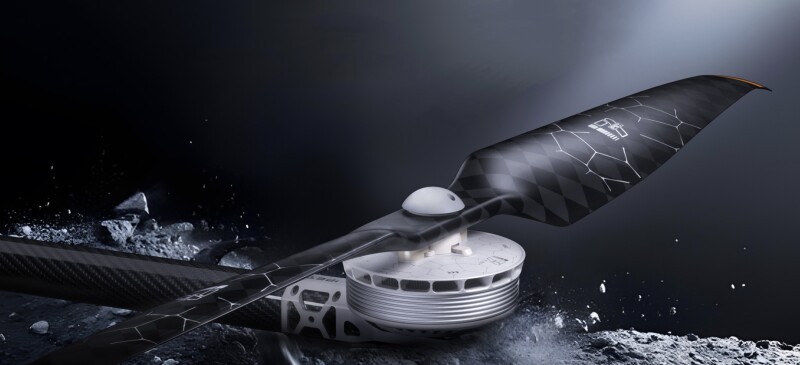
The I7, part of the I Series built for long-endurance multirotor platforms, illustrates the approach. The system pairs an I7 motor with a 14S FOC 50A electronic speed controller and a matched 30-inch I30 propeller, engineered as one configuration rather than three interchangeable parts. It is rated for 2.5 to 3.5 kg of thrust per arm, with a maximum thrust output of 7.5 kg, and it is built for recommended takeoff weights of 10 to 14 kg on four-axis platforms or 15 to 21 kg on five- and six-axis configurations. The ESC handles up to 50A of max continuous current, running on 12 to 14S LiPo power with both PWM and CAN throttle control and automatic failover between the two.
.jpg.small.400x400.jpg)
Bench testing backs up the design logic with numbers. Across the throttle range, overall efficiency runs from roughly 20 grams per watt at 30 percent throttle to under seven grams per watt near full throttle, with the system's rated operating point at 13.2 grams per watt at 2.5 kg of thrust. That efficiency curve is what separates a propulsion system tuned for brief bursts of power from one tuned for sustained, efficient cruise, which is where most inspection and mapping missions actually spend their flight time.
Field data adds a second layer of validation beyond the bench. IPET cites a customer case of a 10.35 kg MTOW quadcopter carrying a 2 kg payload that achieved 124 minutes of flight time running the I7 system, consistent with the platform's two-hour-class endurance target.
Endurance is not just about efficiency at a single point in time. It also depends on the propulsion system holding up across the operating conditions and duty cycles that real missions demand. IPET has built the I7 around a 10,000-hour service life target for its core components and backs that target with 1,200 hours of accelerated endurance testing. The system carries an IP46 protection rating and is rated to run across a temperature range of -30°C to 65°C, covering the outdoor conditions that inspection, mapping, and monitoring missions typically encounter. A tool-free quick-release mechanism lets operators swap the I30 propeller in a few seconds, which matters for crews running back-to-back missions in the field. Onboard health monitoring rounds out the reliability picture, using LED flash patterns and audible alerts to flag faults such as stall, overvoltage, overcurrent, and overtemperature conditions before they become in-flight failures.
Taken together, the bench data and field results point to the same conclusion. Solving endurance at the propulsion level, where the motor, ESC, and propeller behave as one engineered system, is what converts efficiency numbers into flight minutes an operator can actually plan a mission around.
.jpg.small.400x400.jpg)
IPET, short for Integrated Propulsion, Efficient Technology, is an independent propulsion systems brand headquartered in Singapore. The company's approach centers on co-designing motors, electronic speed controllers, and propellers as complete systems, rather than leaving UAV manufacturers and integrators to source, match, and tune those components separately.
IPET builds these integrated propulsion systems for industrial UAV manufacturers, system integrators, and application service providers worldwide. The company's stated focus areas are endurance, efficiency, reliability, heat dissipation, and propulsion system integration, problems that show up across inspection, mapping, delivery, and public safety platforms alike. Alongside the I Series for long-endurance multirotor applications, IPET's product range includes the IV Series for fixed-wing and VTOL platforms and the N Series for industrial multirotor use in harsh environments.
Mission planning software can chart the most efficient route, manage the most complex airspace, and coordinate the most demanding payload. None of that changes how long the aircraft can stay in the air. As commercial UAV missions get longer and more ambitious, propulsion system design is becoming as much a competitive differentiator as the software stack planning the mission in the first place.









Comments