

As of November 2025, about 4.9 million acres have been burned in wildfires in the United States. Wildfire destroys homes and businesses, ruin habitats, and pollutes the air and water surrounding them. As climate change progresses, wildfires continue to pose a major risk to everyone, especially in the western U.S. As the population grows, the area has become increasingly at-risk for these events, both physically and financially, with wildfire pushing people away before they even have a chance to buy a home.
In Sausalito, California, tech start-up Seneca has taken this challenge head on by developing an autonomous fire suppression system using drones for wildfires to work together with local firefighters. Commercial UAV News spoke to Stuart Landesberg, founder & CEO of Seneca, to learn more about how the company will be changing the wildfire fighting landscape, and how the company plans to utilize their recent $60 million funding round".
As a California resident, Landesberg has felt the threats of wildfires to his community, noting that it’s difficult to find safe places to live in the west.
“Over the next 20 to 50 years, if trends continue in average temperature, humidity, fuel levels in our forests, and wind speed, it’s extremely likely the American West becomes uninsurable. That would make it nearly impossible to get a mortgage unless states step in with some kind of state-backed fund to absorb billions of dollars in insurance losses every year,” Landesberg said.
The Seneca system was developed to help reduce this risk by extinguishing the early stages of wildfire before it has the chance to grow into something truly devastating.
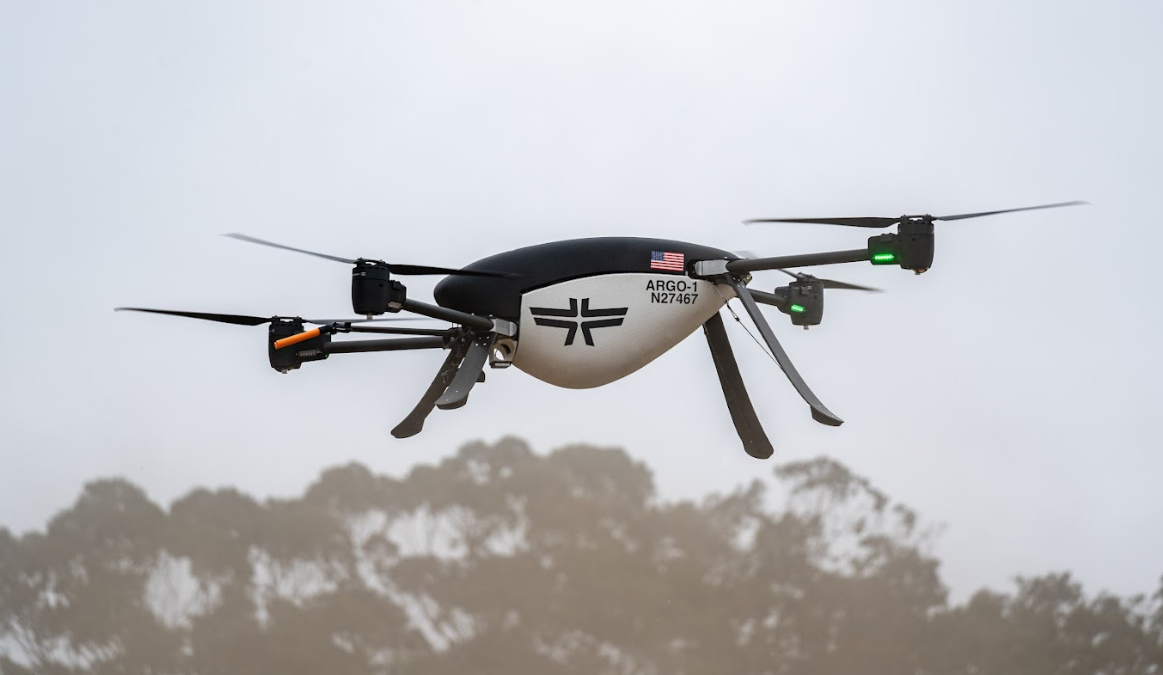
Logistically, it consists of a “strike team” of five drones and one launch station, with each drone carrying 100 lbs. of class A foam that has a 10x expansion rate. A wildland fire engine typically has 5,000 gallons of water worth of suppression power, so all five drones equal the power of one engine. There is also an option for a drone to be towed into the site.
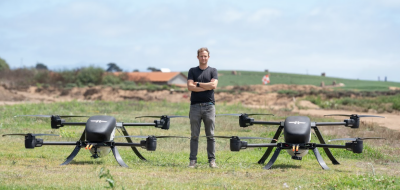
The system’s platform is tuned into the local dispatch and will receive information about a detected fire. Upon receiving that information, Seneca drones will take off from their station, with the goal of getting to the fire within 3-10 minutes of the call and take an early shot at the fire. The drones are equipped with thermal imaging to pinpoint the exact location of the fire and get a precise aim to extinguish it.
“In many cases, a firefighter will get sent out a call and when they get to the location, there is no road or path directly to the fire. This forces them to essentially trek into the area, clearing their way with a chainsaw and carrying water on their back. Our system is meant to take that burden off the grounds crew because the drone can easily get to those hard-to-reach areas.”
While this technology itself is groundbreaking, the company has a deep respect for traditional wildfire fighting methods that have been around for centuries. With that in mind, they called upon the expertise of fire chiefs while developing the technology.
“Almost every fire chief has been a firefighter for over 20 years, and they understand fire better than we can. Many of the people who oversaw these decisions [during the development of the system] are foresters or land managers because this has historically been a land management problem, not a technology problem.”
It’s also important to mention that Seneca’s goal is not to replace firefighters with AI-powered drones but rather to amplify the capabilities of firefighters while keeping them out of harm’s way. Overall, the company’s goal is to protect lives, property, and ecosystems.
Adopting new technology into an age-old system is typically met with resistance, but here, that is not the case.
“There's a huge receptivity to using drones for wildfire management. I think we've been fortunate that people now are asking for technology and recognized that the most forward-thinking chiefs in the country are the ones who are deploying technology the best.”
This company is a great example of cross-collaboration in the drone industry. Their founding team consists of individuals who have extensive experience with fire including the former fire chief of Aspen, former CalFire chief of flight operations, and former U.S. Fire Administrator. Having the input and perspective of those who have that much experience is invaluable not only to the development of technology, but also shows future clients that this is backed by decades of field knowledge
Now that they have raised the capital, Seneca is looking forward to growing the company both in people and products. Plans are currently underway for many more stations to be launched in the United States in anticipation of next year’s fire season. Additionally, Seneca will be hiring new talent as they ramp up deployments.







Comments