

Sponsored by GDU Tech
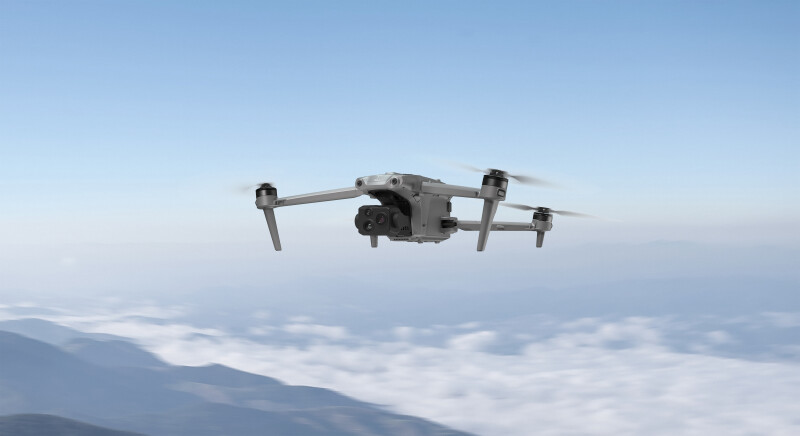
Infrastructure inspection has a range problem. Utility corridors stretch for miles, pipelines cross remote terrain, and disaster zones generally don’t sit near a launch pad. GDU’s P200 series UAV was built around that constraint, pairing a compact airframe with the sensor payload and connectivity typically reserved for larger platforms.
A Platform Built for Endurance and Payload Flexibility
The P200 series comes in four configurations: the base P200, the P220, and two P220 Pro variants distinguished by the number of gimbals and thermal resolution (640 and 1K). Specifically, the P200 features two sensors, wide and optical; the P220 includes three, with 640-resolution thermal added; the P220 Pro(640) adds a laser sensor to the other three; while the P220 Pro (1K) features those same four sensors, with the thermal sensor upping its resolution to 1K.
GDU positions the line for city governance, public safety, and infrastructure inspection work, and across all four configurations, the company emphasizes a shared foundation: an octa-core onboard chip delivering 21 TOPS of computing power, aimed at real-time visual AI recognition and cloud-edge collaboration without offloading every task to a ground station.
Flight times run close to 40 minutes depending on configuration, with a maximum takeoff weight around 2,050 grams and wind resistance up to 11.8 m/s. The aircraft folds down to about 175 x 272 x 130mm, small enough for one operator to carry and deploy solo, which GDU frames as a differentiator for emergency response and scattered-site inspection work where a two-person ground crew isn't practical.
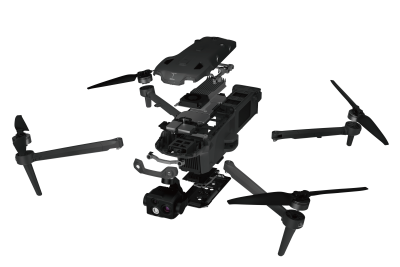
GDU also builds the airframe around an open-payload ecosystem, with expansion ports for a loudspeaker, high-precision RTK module, 5G communication module, high-intensity searchlight, parachute system, or AI computing box depending on the mission. The result? One drone body, several configurations, rather than a fleet of single-purpose aircraft.
Camera and Sensor Package
The camera package is where the P200 series differentiates itself for inspection-heavy use cases. GDU describes the sensor suite as four integrated capabilities on a single airframe: a 48MP wide-angle camera, a telephoto lens with 10x lossless optical zoom and up to 160x hybrid zoom, dual-spec thermal imaging (640 or 1K resolution), and a laser rangefinder rated to 1,500 meters. Phase detection autofocus locks in as fast as 60 milliseconds, according to GDU, letting operators inspecting transmission towers or rooftop assets keep a safe standoff distance without losing track of a target.
The 1K thermal variant adds a stated thermal sensitivity of ≤40mK at f/1.0 and 25°C with an 80-degree field of view, which GDU says sharpens target contours in nighttime or long-range shots and improves detection of heat signatures hidden in grass or rubble, useful for search-and-rescue and power-equipment fault detection. A separate full-color night vision mode is meant to preserve real color detail after dark rather than falling back to monochrome infrared, which matters for security patrols that need to document what they saw, not just where a heat source was.
GDU also highlights a link-zoom function that lets the visible and thermal cameras adjust magnification together from a single interface, along with an AI tracking mode that maintains lock on a selected target and reacquires it automatically if it's briefly lost.
Navigation and Connectivity for Contested Environments
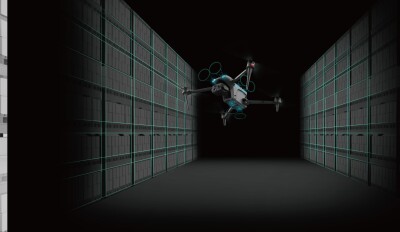
GDU built the P200 series around scenarios where GPS and standard radio links aren't reliable. Six-direction binocular vision and vision-based autonomous navigation are meant to keep the aircraft hovering, flying, and avoiding obstacles in GNSS-denied areas like mountains and forests, without relying on satellite positioning.
On communications, GDU describes 4G/5G networking and frequency-hopping image transmission running together rather than as fallback options, aimed at keeping the link stable when standard radio connections are disrupted, the kind of conditions disaster response teams actually operate in rather than a controlled test environment. GDU rates the standard communication and video transmission distance at up to 15km under FCC rules, or 8km under CE/SRRC/MIC, giving a sense of the working range before an operator needs the 4G or 5G expansion box for anything longer.
Fleet Operations and AI Processing
The P200 series is designed to work natively with GDU's K02, K03, and K05 automated docking stations, handling takeoff, landing, and battery charging or swapping without anyone on site. Paired with GDU's UVER management platform, operators can assign missions to pilots, plan routes, and manage synced data from a single PC-based interface, aimed at organizations running frequent or continuous patrols rather than one-off flights.
GDU also emphasizes a three-tier AI processing structure: onboard AI that analyzes data during flight rather than after landing or cloud upload, backed by edge computing boxes and a cloud computing platform for deeper post-processing. The company frames this as a way to shorten response time for time-sensitive alerts while still supporting heavier data analysis after the fact.
Where This Fits for Commercial Operators
For service providers and program managers weighing a long-range inspection platform, the P200 series is a bet on integration over specialization. Rather than carrying separate zoom, thermal, and range-finding payloads across multiple aircraft, GDU is asking operators to consolidate that capability into one airframe with swappable modules. That approach can lower the number of platforms a team needs to certify, train on, and maintain, though it also concentrates more mission-critical function into a single point of failure, a tradeoff worth weighing against your own operational redundancy needs.









Comments