

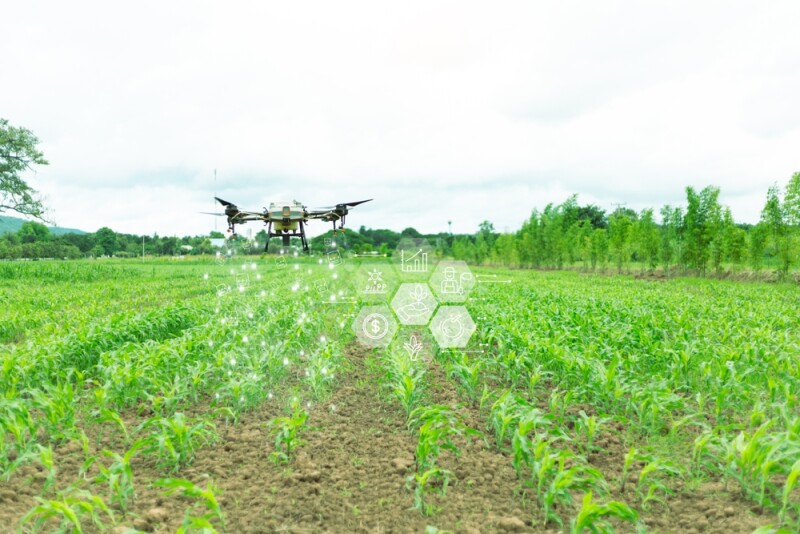
Drone use in European agriculture has reached an odd middle point. Adoption is real, but so is the gap between what the technology promises and what growers are actually able to deploy at scale. Next week, Commercial UAV News is hosting a free webinar that will bring together two people positioned to speak to that gap from very different vantage points: Julie Garland, founder and CEO of Avtrain and President of the Joint European Drone Associations (JEDA), and Valerii Iakovenko, co-founder of Futurology and DroneUA and a former drone expert with the UN Food and Agriculture Organization.
The session, moderated by Matt Collins, is built for two audiences that don't always talk to each other directly: drone operators eyeing agriculture as a new vertical, and agricultural professionals trying to figure out whether drones belong in their operations at all.
Iakovenko brings a regional lens that is critical to this discussion. His work spans both Western European ag drone programs and the Ukrainian market, where agriculture has had to adapt under wartime conditions. That contrast is likely to surface early, as the panel compares how fast (and why) adoption is moving in different parts of the continent. Farm size, crop type, and labor availability all play a role, but so does necessity. Iakovenko's perspective on whether Ukraine's accelerated, war-driven use of drones holds any transferable lessons for the rest of Europe is one of the key topics of the conversation.
From there, the conversation moves into where the work is being done today. Spraying, crop monitoring, and soil analysis are all in play, but they're not equally mature, and the panel will lay out which applications are furthest along and which are still catching up to the marketing around them. The discussion will also weigh in on which technological advances (better sensors, more autonomy, longer flight times) are actually changing outcomes for ag operators today, as opposed to developments that remain a few years from practical use.
Garland's contribution centers on the parts of this market that don't show up in a product demo: training, compliance and the regulatory patchwork that operators have to navigate to work legally across European borders. As President of JEDA and a member of the EASA Stakeholder Advisory Body, she's well positioned to explain just how fragmented that landscape remains, including the practical differences between operating under SORA and under national rules for ag-specific missions like spraying. The panel will also get into which countries, if any, have built a regulatory model worth replicating, and what operators should budget in time and cost simply to get compliant before they fly a single commercial mission.
Garland will also address a common gap that is found in a nascent market such as this: the distance between what farmers want their drones to do and what they and their operators are actually equipped to handle safely.
The back half of the session turns toward business viability. For operators considering agriculture as a new vertical, the panel will address the misconceptions they tend to bring with them, the skill gaps that show up when transitioning from other verticals, and what a sustainable service-provider model actually looks like in practice, whether that's built on spraying contracts, data services or something else.
For the agricultural side of the audience, the panel will offer a direct set of takeaways: What should tip the decision between building an in-house drone program versus hiring a service provider, what questions to ask a provider before signing a contract, and what certifications or credentials a legitimate operator should actually hold.
The panel will close by looking ahead, looking at the changes necessary to take this burgeoning sector to the next level, and what they expect the industry to look like in the medium-term future.
The webinar is free to attend, and will take place on July 14 at 10:00 AM Eastern Time / 4:00 PM Central European Time. All registrants will receive an on-demand recording of the discussion as well, so be sure to register even if you can’t make it live.









Comments