


Contributed by Dr. José Ramírez
U.S. drone operators watching Europe from across the Atlantic tend to see one thing: complexity. They see a patchwork of EASA rules, national aviation authorities, and unfamiliar acronyms (U-space, SORA, SAIL) that seems designed to keep outsiders out. That reading misses the real story. Europe is not closing a door but rather quietly building, step by step, one of the world’s most coherent commercial drone markets. The operators moving now stand to win twice, by entering the market early and by helping shape how those rules are implemented in practice.
The comparison with the domestic market is instructive. U.S. operators have spent years managing a regulatory environment built around waivers and case-by-case exemptions, alongside FAA requirements and a growing mix of state and local restrictions.
Europe, by contrast, is converging on a single set of harmonized rules applied consistently (with national implementation) across the entire bloc. That difference changes how a company should think about where to develop its next expansion project.
Here are five opportunities that deserve a much closer look.
1. U-space: Getting in Before the Airspace Fills Up
U-space is Europe’s answer to a question the U.S. is still debating on paper: How do you manage dense, automated low-altitude airspace at scale? Under Regulation (EU) 2021/664, member states are rolling out designated U-space airspaces with mandatory digital services like network identification, geo-awareness, traffic information, and authorization. Its rollout is still underway, and its governance model is still evolving. The ongoing debate over a lighter-touch “U-space light” model shows regulators themselves are still working out how much governance the system really needs, but that is precisely the opportunity. The rulebook is being written now, with room for operators who show up early to shape how it works in practice.
Contrast that with the U.S. position, where a comparable national framework for automated BVLOS traffic management remains largely conceptual, despite U-space itself developing through ongoing dialogue with NASA and FAA research on UTM. Europe already has designated U-space airspaces live or in advanced planning across multiple member states, with common information services, USSPs (U-space Service Providers), and a legal architecture connecting them to national aviation authorities. An operator that understands U-space today will not be scrambling to comply tomorrow; it will already hold relationships with USSPs, a working knowledge of the authorization process, and, in many cases, a seat at the table when national implementing rules are finalized.
This is one of those rare moments in aviation regulation where being early is the same as being in the right place at the right time.

2. SORA 2.5: One Risk Assessment, Real Predictability
The Specific Operations Risk Assessment (SORA), now in its 2.5 iteration, is often described to U.S. audiences as bureaucratic overhead. In practice, it is the opposite: a single, structured methodology that produces a defensible risk case an operator can reuse across multiple member states with only local adaptation. Compare that to the experience of assembling a comparable BVLOS case operation by operation, waiver by waiver, in the United States, where each approval is effectively a one-off negotiation with limited precedent value for the next site.
SORA is demanding up front. It requires a genuine ground and air risk analysis, mitigations mapped to a Specific Assurance and Integrity Level (SAIL), and supporting evidence that an operator has to be able to defend to a national authority. Under Regulation (EU) 2019/947, operations falling within the Specific Category are assessed through this common methodology.
The investment pays off. The same risk methodology, the same mitigation logic, and, increasingly, the same documentation can support authorization applications across multiple member states. Early signs of operational authorization reciprocity between member states (still developing, but real) mean that a well-built SORA package is increasingly an asset that travels with the project, not a cost that resets at every border. For a U.S. company used to starting from zero at every new site, that portability alone can justify the initial investment.
3. EU Funding: Europe Is Financing the Market It Wants to Build
Europe is not simply regulating commercial drones, but actively investing in the industry it wants to build. Horizon Europe, the SESAR Joint Undertaking (Europe's air traffic management research and innovation program), and a growing list of national innovation programs are supporting exactly the kind of BVLOS, U-space integration, and advanced air mobility projects that many U.S. operators already have the technical capability to deliver. Much of this funding is technology- and mission-neutral rather than nationality-restricted, and collaborative projects are actively looking for experienced operational partners.
For a U.S. company, this is still a real advantage. U.S. entities can’t access EU grants directly as third-country participants, but partnering with an EU-based operator, consortium, or university that is eligible changes that.
Such a partnership shares the cost of demonstration flights, sensor trials, and U-space interoperability testing that the U.S. company would otherwise fund alone. Europe, in turn, gains operational experience and technical capability for its own research.
4. High-Value Niches Nobody Is Fighting Over Yet
The obvious verticals (inspection, agriculture, energy, and logistics) are competitive everywhere. The more interesting opportunity in Europe lies in specialized, technically demanding niches where regulatory complexity itself discourages competitors.
One European operator I advise on regulatory classification is developing a survey platform with a suspended payload that doesn’t fit neatly into any predefined category, a common problem for operators working with specialized sensing equipment. The engineering challenge appears manageable. The real obstacle is securing an operational authorization that matches the actual configuration, since it falls outside the assumptions normally built into the Open Category. That points toward a full Specific Category authorization under SORA.
Many operators, faced with that requirement, simply look elsewhere. Those willing to do the regulatory work instead end up with a defensible, replicable authorization and very little competition, precisely because so few competitors are willing to clear the same regulatory bar.
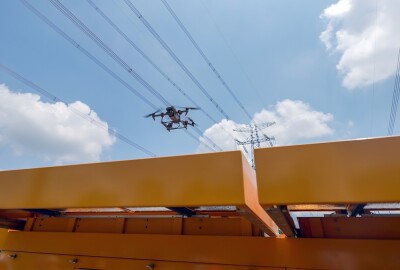
The same dynamic is emerging across high-voltage power line inspection, pipeline and rail corridor monitoring, large-scale precision agriculture, and other technically demanding operations where the payload, flight profile, or operating environment pushes missions beyond the Open Category. For U.S. operators already experienced in complex FAA approvals, these are precisely the markets where technical capability (supported by sound regulatory strategy) becomes a lasting competitive advantage.
5. One Authorization, One European Market
This is the structural advantage U.S. operators most consistently underestimate. Scaling a drone operation across the United States often means navigating federal FAA requirements together with state legislation, local ordinances, and site-specific operational restrictions. Scaling across the European Union, by contrast, means working within a single harmonized regulatory framework: EASA rules applied, with national implementation, across the European aviation market.
An operator that secures the right Specific Category authorization is not securing access to one country; it is building a template for expansion across a market of nearly 470 million people operating under one regulatory logic. National authorities still adapt implementation to local conditions, and no serious operator should expect a single approval to eliminate further work elsewhere. But the underlying methodology, the risk case, and the operational concept do not need to be reinvented every time the operation crosses a border. That scalability is difficult to replicate in a state-by-state U.S. expansion and helps explain why well-prepared entrants can establish a pan-European presence faster than many expect.
The Bottom Line
None of this means Europe is simple. It means Europe is legible: a market where the rules, however demanding, are increasingly harmonized, transparent, and supported by public investment.
The operators best positioned to benefit are not necessarily the largest. They are the ones willing to invest early in genuine regulatory understanding, building a robust SORA case instead of avoiding it, engaging with U-space as strategic infrastructure rather than an administrative burden, and treating a Danish, French, or Spanish pilot project as the first step in a pan-European business.
Waiting for a perfectly mature, frictionless regulatory framework can feel like the cautious choice. In reality, by the time that framework arrives, the strongest market positions will already be taken.
 Dr. José Ramírez is a Spanish aviation and corporate lawyer with 28 years of legal practice and a member of the Madrid Bar Association (ICAM). He holds an MBA from ESADE, a PhD in Airport Marketing, and is currently a doctoral researcher in EU aviation competition law. He advises internationally on cross-border aviation matters, drone regulation, and European aerospace law.
He can be reached at [email protected]










Comments