

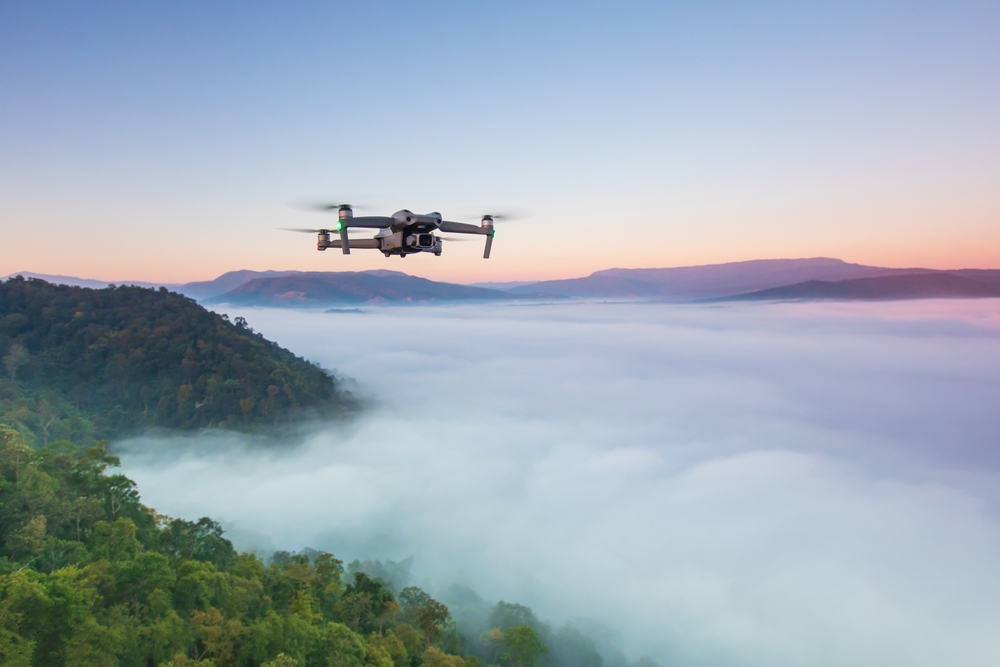
This year has already shown us that the commercial drone industry is making headlines quite often. While we usually cover the bigger ticket items like updates on regulations and other stories that affect the way professionals throughout the industry work on a daily basis, those stories don’t always capture what a drone actually looks like in action. Over the summer, drones made a name for themselves in front of more general audiences. From wildfire fighting to documenting shark sightings for local news stations on the east coast, UAS spent the last three months doing highly visible and highly physical work outside.
When Drones Fight Fire, and Sometimes Get in the Way
In June, XPRIZE ran the finals of its Autonomous Wildfire Response Track near Nenana, Alaska, and it's worth reflecting on just how aggressive the bar was: no human in the loop, at any stage, from detection through suppression. The teams in the finals included Germany's Dryad Networks, were judged on speed, accuracy, and suppression effectiveness alone. That's a meaningfully different ambition than the Cal Fire test down in California, where a person is still very much part of the loop, just overseeing more aircraft than before. When you look at the programs side by side, you get a rough map of where autonomous wildfire response actually sits right now: when a human is still making the final call, the technology is close to real-world deployment; take the human out of that loop entirely, and it's still proving itself in a competition, not in the field.
But the season's more sobering fire story came out of Spokane, Washington. As the Spokane Complex wildfires burned in early August, firefighting aircraft were grounded twice in two days after unauthorized civilian drones entered restricted airspace. 26 separate incursions were reported in one day, four of which flew directly into the path of aircraft actively working the fire and causes them to be grounded for 30 minutes. This is an unfortunate but important example of how the same technology that is trusted to fight these fires can do more harm in the hands of untrained operators.
Only a few states over did the same thing happen. In Grand Junction, Colorado, fire officials put out a warning to the public to keep drones away from active wildfires as unmanned aircraft can force operations to halt. They reminded the public that not only is flying an authorized drone in that area dangerous, but it is illegal and could cost operators their pilot’s licenses.
Patrolling the Waters
If fire season produced the highest-stakes drone story of the summer, beach season produced the most-covered one. Shark sightings spiked along the Northeast coast and in New York City in particular, and drones were the tool everyone reached for.
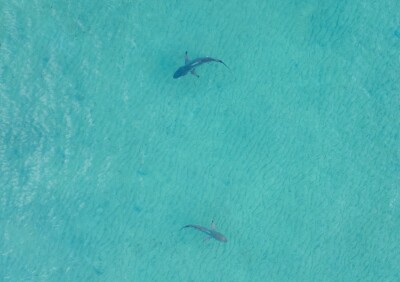
The NYPD's Technical Assistance Response Unit flew daily patrols roughly 100 yards offshore at beaches in Queens, Staten Island, the Bronx, and Brooklyn throughout lifeguard hours. Between July 1 and July 5 alone, 16 sharks were reported off Rockaway Beach, seven of them spotted first by NYPD drones. Sightings this summer forced nearly 50 temporary beach closures citywide, a volume that made the drone unit's daily flights a recurring local-news fixture through much of July and August.
Maine had the more dramatic version of the same story. On the morning of August 9, a drone spotted white shark activity offshore at Scarborough Beach State Park, prompting lifeguards to restrict swimmers to waist-deep water and begin patrolling by jet ski. Later that same day, a great white shark grabbed a lifeguard in the water, he survived, but the encounter happened anyway, despite the early warning. Drone footage from the following day showed why: five to seven great whites, including at least one estimated at 10 to 12 feet, feeding nearshore near Pine Point Beach.
Search and Rescue in the Mountains
The third summer story was quieter but arguably the most viscerally useful: heavy-lift drones doing search and rescue in terrain too dangerous for people to reach quickly.
In Colorado, Mesa County Search and Rescue borrowed a heavy-lift drone from the Department of Public Safety to help recover a body from a stretch of Mount Garfield so steep, rocky, and prone to rockfall that rescuers needed ice tools and crampons to climb it in the middle of summer. Only three rescuers could safely go up at all, and they couldn't carry everything the recovery required, so the drone carried the rest. The same team of Colorado rescuers also used a drone earlier this year to drop a flashlight to a hiker stranded off-trail after dark on Quandary Peak, giving him enough light to find his way back down on his own.
When we look at all of these stories taken together, this is a useful snapshot of where commercial and public-safety UAS stand heading into next year: drones are out in the field doing the jobs that make our lives safer, and in ways the general public can see more than ever.







Comments