
When Neil Armstrong, with quiet confidence in his voice, announced “The Eagle has landed,” he was making history in more ways than just landing on the Moon. The truth behind that moment is far more dramatic, because Armstrong had never done that before, landing on a different celestial body with no atmosphere and a different gravity. All he knew about flying and landing on the Moon had been learned in both a computer simulator and an actual flying contraption built to simulate the direction controls.
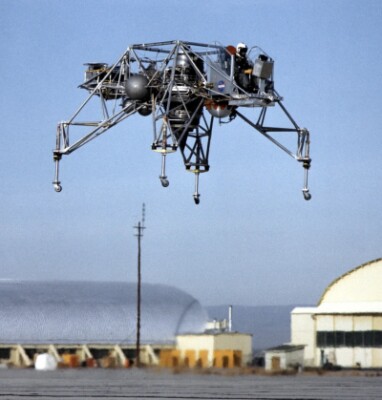
By the time he actually landed the Lunar Excursion Module on the lunar surface, he had already “landed” on the Moon hundreds, if not thousands, of times inside both. NASA’s Lunar Landing Training Vehicle was an awkward, skeletal machine, part helicopter and part science experiment, designed to mimic the Moon’s gravity and the lunar module's twitchy handling. It was notoriously unstable, prone to sudden failures, and so dangerous that it nearly killed him. One afternoon in 1968, the simulator malfunctioned so violently that Armstrong had to eject, parachuting to safety as the machine exploded on the ground.
Later, he said that without those simulations, especially the ones where things went wrong, he might not have survived the real landing.
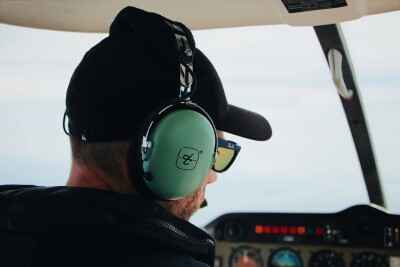
That detail is easy to overlook, but it reveals something profound about aviation: Pilots don’t just practice success. They practice emergencies. They rehearse the moments when everything goes sideways, when the alarms blare, when the aircraft shudders, when the sky becomes unpredictable. They practice the impossible until it becomes routine. Commercial pilots with type certificates need to attend simulator sessions once or twice a year to practice their emergency skills.
This philosophy is the backbone of modern aviation. Every commercial pilot flying today has lived through dozens of disasters, though for most, none of them happened in the real world. They’ve experienced engine failures at takeoff, electrical fires at altitude, hydraulic losses, wind shear encounters, rapid decompressions, and jammed flight controls. They’ve navigated blinding storms, sudden microbursts, and malfunctioning instruments, and all of that inside a simulator yearly.
Aviation simulators are designed to be unforgiving. They recreate the cockpit with such fidelity that pilots sweat, curse, and grip the controls as if their lives depend on it. In a sense, they do. The miracle landings we celebrate, like US Airways Flight 1549 gliding onto the Hudson River, are not miracles at all. They are the result of thousands of simulated emergencies. When the real crisis arrives, pilots respond with a calm that seems almost superhuman. Really, it is the training that makes them so precise and focused in a real emergency.
Simulation is where aviators learn to fail safely. The safety of the skies today is based on this constant practice of emergencies, so when they actually happen, crews react as if they have happened before, because, in fact, for them, they have.
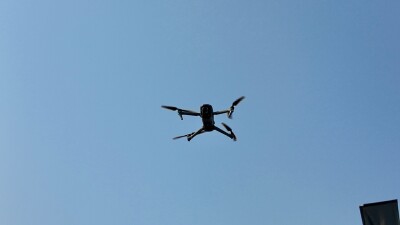
This emergency mindset has shaped decades of crewed flight, and now it is quietly transforming the world of small drones and uncrewed aviation. The drones flying over neighborhoods, farms, ports, and construction sites may not carry passengers, but they operate close to people, buildings, vehicles, and critical infrastructure. Their emergencies are different, but no less consequential.
A sudden GPS dropout near a building can cause a drone to drift toward a window. A battery sag can force an early landing in a crowded area. A gust of wind can push a drone into a tree. A lost communication link can leave an aircraft hovering helplessly over a worksite. A sensor glitch during an inspection can cause a drone to misjudge its surroundings. A motor failure mid‑flight can turn a routine mission into a dangerous descent.
These are the drone equivalent of engine failures and hydraulic losses. And just like crewed aviation, the safest place to experience them is inside a simulator.
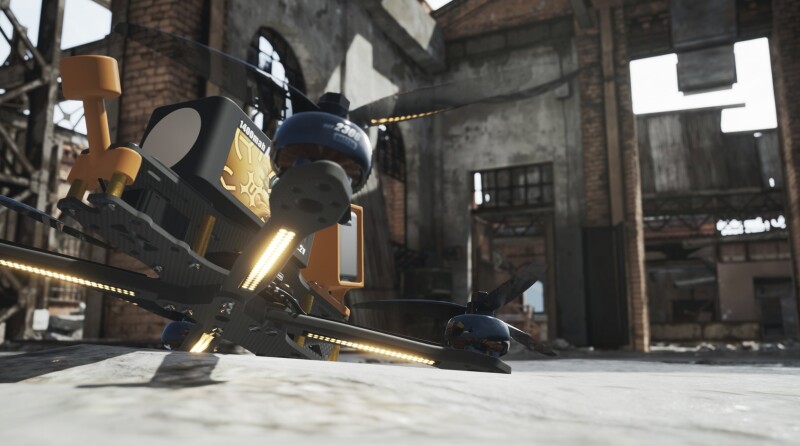
Today’s drone simulators, Zephir, VelociDrone, Liftoff, DRL SIM, Uncrashed, RealFlight, and SRIZFLY are becoming the emergency classrooms of uncrewed aviation. They allow pilots to rehearse the worst‑case scenarios without risking equipment, property, or safety. A drone pilot who has ‘crashed’ a hundred times in simulation is far less likely to crash in the real world. The reflexes built in virtual environments translate directly into safer operations outdoors.
But the story doesn’t end with human pilots. Increasingly, drones are learning to fly themselves. The same way we train AI models with machine learning algorithms is being used today to analyze and program drones to deal with emergencies on their own, without humans in the loop. Autonomy is becoming the dominant workload in uncrewed aviation, and autonomous systems cannot improvise the way humans can. They must be trained, relentlessly, repeatedly, and safely. Simulation is the only environment where autonomy can experience thousands of GPS failures, millions of sensor anomalies, endless variations of wind, rain, and clutter, and rare edge cases that might never occur in real life but must be understood.
In a sense, autonomous drones are following Armstrong’s path. They are practicing landings, takeoffs, obstacle avoidance, and emergency procedures in worlds that don’t yet exist. They are learning to fly in digital cities, digital forests, digital construction sites, digital ports, places built from code but designed to mimic reality with increasing fidelity. They are rehearsing the moment when everything might go wrong.
This shift is happening quietly, but its implications are enormous. As drones take on more complex missions - inspecting bridges, delivering medical supplies, monitoring crops, surveying disaster zones - their ability to handle emergencies becomes the defining factor in whether they can be trusted. Regulators are beginning to expect simulation evidence during the certification process. Companies are building entire safety cases around virtual testing, and autonomy teams are running millions of simulated flights before releasing a single update to the real world.
“Uncrashed is used by more than 500,000 remote pilots who have logged over 10 million hours of flight, and it's establishing itself as a world reference for FPV simulation," said Louis Rocuette, CEO of Luminite, the company behind Uncrashed. "Today we cover everything from 1.5-inch to 15-inch props, and we're working toward larger aircraft as well. Every part of the drone is simulated: motors, propellers, battery, all running on our own custom physics engine, which will get a major overhaul in October 2026."
But there is the reality of cost. In traditional aviation, a simulator costs but a fraction of the real aircraft. In uncrewed aviation, this is not the case, and the temptation is to use cheap drones to teach remote pilots the basics. Part 107 training schools are facing the dilemma of simulator costs in a Federal Aviation Administration (FAA) curriculum that does not require their use. The alternative is to use small, inexpensive drones so students can crash them without major financial consequences for the business.
“Crashing an aircraft should never be part of a training curriculum; it weakens the efficacy of skill building and safety culture mentality,” said Josh Olds, CEO of the Unmanned Safety Institute, “Simulators should be used for currency and proficiency training, especially those which update a pilot’s flight time logs and sharpen psychomotor skills.”
The future of uncrewed aviation will have to include simulators, in other words, digital spaces where drones can fail safely, learn quickly, and improve continuously. The same philosophy that prepared Armstrong for the Moon is now preparing drones for the skies above our neighborhoods.
The lunar simulator used by Armstrong had more than one mission: to teach pilots in the Apollo program to fly in one-sixth of Earth’s gravity and practice all the possible emergencies, plus how to survive the landing. Today, pilots and manufacturers of small drones are learning the same lesson. Before they are allowed to fly over cities, farms, ports, or homes, they have to rehearse their emergencies in virtual worlds. They fail safely so they can succeed reliably.
In aviation, crewed or uncrewed, the simulator is where proficiency is built, skill is forged, and safety is born. In the near future, when aviation is just a single industry, simulators will continue to be the allies of safety and reliability.







Comments