

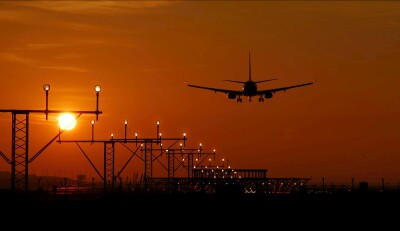
For more than a decade, the United States enjoyed an extraordinary streak of safety in commercial air travel. Since 2009, no multi‑fatality airline accident had occurred on U.S. soil, a record that became a point of national pride and a testament to the maturity of the traditional, crewed aviation system. That streak ended in early 2025 on final approach to Reagan International airport, over the Potomac River in Washington, D.C. The accident was not only tragic in human terms but symbolically disruptive. It reminded the public, policymakers, and the aviation community that safety is not a static achievement but a constantly maintained equilibrium. Even the most advanced, heavily regulated, and deeply institutionalized aviation system in the world is vulnerable to drift, complacency, and the slow erosion of safety margins.
The timing of the accident could not have been more consequential. It occurred just as a new administration was being sworn in the nation’s capital, and a few months before the FAA released the long‑awaited Part 108 Notice of Proposed Rulemaking (NPRM), the regulatory framework intended to normalize beyond visual line of sight (BVLOS) drone operations across the United States. For years, the FAA had been under pressure from industry, states, and federal stakeholders to create a pathway for scalable uncrewed operations. The NPRM was meant to be a milestone, a signal that the United States was ready to move from experimental waivers to a true regulatory architecture for autonomous flight. Instead, it arrived in the shadow of a crewed aviation tragedy, forcing the nation to confront two seemingly contradictory realities at once: the legacy system had shown a crack, and the emerging system was asking for trust.
A Regulatory Crossroads Under Pressure
The FAA now finds itself navigating a uniquely complex moment. On one side, the agency faces renewed scrutiny over the safety of traditional aviation. Congressional hearings, media attention, and public concern have intensified, all demanding reassurance that the system remains fundamentally sound. On the other side, the FAA is being asked to usher in a new era of aviation defined by automation, autonomy, and distributed operations. Part 108 is not a minor rulemaking; it is the foundation upon which the next generation of air mobility will be built. Yet the political environment surrounding its release is far from ideal.
After 122 years of aviation with pilots on board, there is a lot of momentum towards the ‘status quo’ and a sluggish reluctance to new modalities.
This tension raises a profound question about institutional bandwidth. Can the FAA simultaneously defend the safety of the legacy system while expanding the operational envelope of the new one? This question is particularly relevant in an era of diminishing resources (trained personnel) in the embattled federal agency. Historically, regulatory agencies tend to become more conservative after high‑profile accidents, even when the accident is unrelated to the new technology under consideration. The instinct to “slow down and reassess” is understandable, but it risks mixing two different safety challenges. The airline accident reflects vulnerabilities in a human‑centric, aging infrastructure. Part 108 reflects the need to regulate a digital, automated, and rapidly evolving ecosystem. Treating them as the same problem would be a mistake. This is why, the BNATCS Initiative (Brand New ATC System) is so important.
Yet the public narrative does not always make such distinctions. When traditional aviation falters, it becomes harder to convince skeptics that the system can absorb thousands of autonomous aircraft in harmony with current and growing volumes of traditional aircraft. The irony is that the accident may actually strengthen the case for automation. Many modern aviation incidents involve human factors, maintenance lapses, or organizational drift rather than fundamental technological failures. Uncrewed aviation, by contrast, is built on continuous monitoring, real‑time telemetry, software‑defined safety envelopes, and predictive maintenance. The contrast is not lost on those who study systemic risk. The challenge for the FAA is to articulate this nuance without appearing to diminish the seriousness of the crewed‑aviation accident or the need for accountability.
The Paradox of BVLOS Expansion in a Year of Instability
The expansion of the regulatory framework for BVLOS operations in 2025 is happening at a moment when confidence in the national airspace system is being tested. This creates a particular paradox: the very year that drones are poised to become more autonomous, more numerous, and more integrated is also the year that commercial aviation has shown signs of fragility. Even General Aviation (GA) accidents this year have increased by alarming numbers. But this paradox is not a contradiction. It is a reflection of a deeper truth about the natural evolution of aviation. The National Airspace System (NAS) is no longer a single‑paradigm environment. It is becoming a dual‑paradigm system, where human‑piloted aircraft and autonomous aircraft must coexist, complement each other, and ultimately strengthen the resilience of the whole.
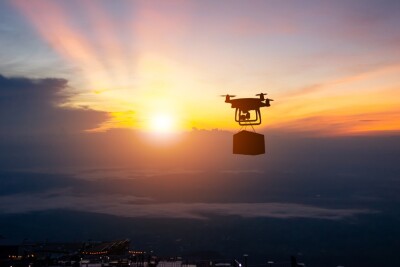
The instinctive reaction to a crewed aviation accident might be to slow down uncrewed integration, but that reaction misunderstands the nature of the risk. The vulnerabilities exposed by the accident are not caused by drones, nor are they exacerbated by them. If anything, the tools and capabilities emerging from the uncrewed sector could help prevent future crewed‑aviation accidents. BVLOS drones can support runway inspections, wildlife detection, approach‑path monitoring, emergency response, and infrastructure assessments. They can provide real‑time data that enhances situational awareness for airports, airlines, and regulators. They can detect anomalies long before they become hazards. In other words, the growth of uncrewed aviation is not a threat to traditional aviation safety; it is a potential asset.
This is the argument that policymakers are only beginning to appreciate, and multiple hearings on Capitol Hill reflect this preoccupation. The question is not whether the FAA can safely integrate drones while managing the aftermath of an airline accident. The question is how the FAA can use the strengths of uncrewed aviation to reinforce the safety of the entire system. The year 2025 forces this conversation into the open. It challenges the assumption that the legacy system is inherently safer and the emerging system inherently riskier. It invites a more sophisticated understanding of how automation, data, and distributed operations can complement human‑centric aviation rather than compete with it.
Aviation at an Inflection Point
The events of 2025 reveal a deeper truth about the trajectory of American aviation. The legacy system, for all its achievements, is aging. It relies on human performance, procedural discipline, and infrastructure that was designed for a different era, when computers occupied entire rooms and the software running them was extremely limited. The emerging system, built around miniaturization, autonomy and digital assurance, offers new tools for resilience but requires a regulatory framework that is still taking shape. The airline accident and the release of the Part 108 NPRM are not opposing forces; they are parallel signals that the United States is entering a period of transition. One event exposes the limits of the past. The other attempts to define the rules of the future.
The challenge for the FAA, industry, and policymakers is to resist the temptation to see these events in isolation. The accident should not be used to justify slowing the progress of uncrewed aviation, nor should the push for autonomy overshadow the need to strengthen traditional aviation oversight. Instead, the two events should be understood as part of the same narrative: the NAS is evolving, and its safety will depend on how well the old and new systems are integrated.
If 2025 is remembered as a turning point, it will be because the aviation community recognized that safety is not a choice between human pilots and autonomous systems; it is a commitment to building a resilient, data‑driven, and adaptive airspace where both can and should thrive.






Comments