

This week’s news round up features a variety of stories, a drone mothership that launched a smaller drone midflight in Austria, a new Amazon delivery hub in Georgia, and aerial oyster farming on the coast of Texas.
Drone Helicopter Launches Drone Mid-Flight
Austrian aerospace and defense company Schiebel announced that it successfully demonstrated its 250-pound (114-kg) CAMCOPTER S-100 unmanned aerial system as a “drone mothership.” In the proof-of-concept trial, conducted in Austria with Poland’s OSIRIS, the S-100 stayed in forward flight while carrying and releasing an inert OSIRIS HSCD-1 High-Speed Camera Drone. Schiebel said the test validated the S-100’s ability to act as both a drone carrier and an airborne communications relay.
After release, the smaller drone kept its communications link through the S-100, which continued relaying video data throughout the flight. Although the S-100’s 110-pound payload capacity was originally intended for surveillance sensors and mission equipment, the demonstration shows the platform can also take on a compact drone-carrying role. Schiebel Group Chairman Hans Georg Schiebel said the result highlights the potential of pairing the mature CAMCOPTER with smaller, specialized unmanned systems. While this technology was developed with counter-UAS operations in mind, this kind of aerial drone-in-a-box system could play well into other sectors such as inspections or wildfire detection.
Amazon Drone Delivery Takes off in Georgia
Amazon has launched its first Prime Air drone delivery service in Georgia, with customer deliveries beginning Sunday, Nov. 15, from a new drone delivery center at its existing robotics fulfillment center in Stone Mountain. The first order was placed at 9:46 a.m. and reached the customer’s doorstep at 10:50 a.m., which was 64 minutes after checkout and four minutes after the drone departed. Eligible Metro Atlanta customers within a 7.5-mile radius of the facility can choose drone delivery at checkout for items marked “Drone delivery,” with packages limited to 5 pounds.
Amazon’s Will Cowsert said the expansion aims to deliver faster, serve residents with fewer convenient shopping options, and add skilled jobs. The company says the drones are fully electric and operate under Federal Aviation Administration oversight, using onboard cameras and sensors for navigation and safe delivery, with no monitored live feed or audio recording.
Aerial Oyster Farming in Texas
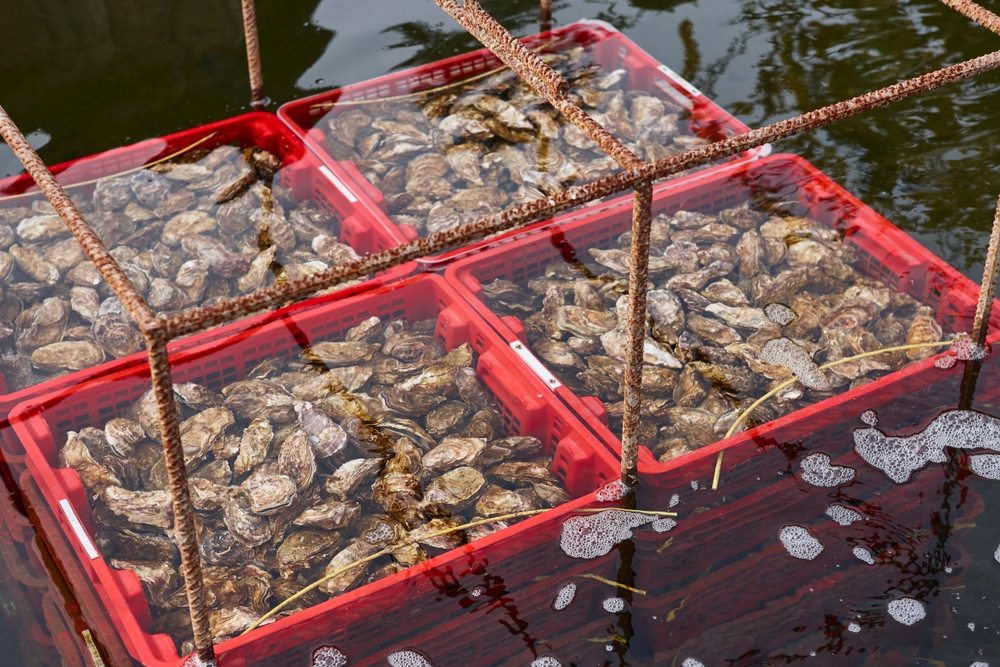
Heavy-lift agricultural drones, long used to spread seed and fertilizer on farmland, are now being used to seed oyster beds in shallow coastal waters. In June, Jeri’s Seafood and the nonprofit Palacios Marine Agriculture Research released over one million baby oysters across about five acres of leased beds in Galveston Bay, Texas, using an XAG drone supplied by ProTexAG. The seeding took about 20 minutes, though it will take months to judge success and 18 to 24 months for the oysters to reach market size. ProTexAG’s Erik Olsen said the main challenge was not launching from a boat but handling the fragile, costly payload, worth roughly $30,000, which makes calibration errors far more expensive than with ordinary crop seed.
The technique was first developed in the U.S. in Florida in 2024, when AquaTech Eco Consultants and partners restored oyster habitat in Apalachicola Bay using American-made Hylio drones. Founder Beau Williams said the drones can reach shallow areas that are hard to access otherwise. A regulatory wrinkle remains: oyster seeding isn’t classed as agriculture, so drones over 55 pounds can’t fly under a Part 137 agricultural exemption. According to the FAA, operators would instead need a Part 91 exemption, possibly via Section 44807, and must follow all safety and airspace rules.












Comments