

.jpg.medium.800x800.jpg)
Contributed by Vikhyat Chaudhry, Co-Founder, CTO and COO @ Buzz Solutions
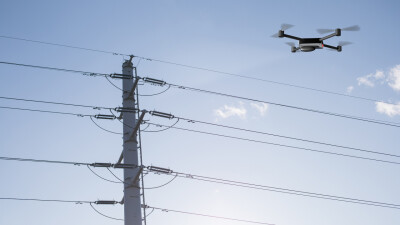
Utility inspections were once human-led events, typically scheduled annually or semi-annually. As innovation accelerated and proliferated across the industry, manual drone systems were adopted to execute faster, safer inspections from the skies. Now comes the next iteration: the docked drone system, an autonomous, weatherproof hub that allows drones to take off, land, recharge, and store data without human intervention.
Docked drones, often referred to as “drone-in-a-box” (DiaB) solutions, have been around for the past decade, but they are still relatively new to the utilities sector. Over the past year, utility leaders looking to modernize inspections have been experimenting with docked drones to turbocharge their inspections, outfitting substations as launch centers that enable autonomous drone deployment within seconds. The technology has been called transformative, and docked drone systems are poised to fundamentally change the nature of utility inspections. They’re designed for a future that will be marked by ongoing extreme weather events, security threats, and an intensifying strain on grid infrastructure driven by data centers, artificial intelligence (AI), and rapid electrification.
The 10x Data Explosion
According to the FAA, the commercial drone industry is experiencing rapid growth, with the FAA-registered small commercial unmanned aircraft system (UAS) fleet more than doubling from 385,000 in 2019 to 842,000 by 2024, projected to reach 1.1 million by 2028. Drone usage among utilities has steadily risen as the learning curve has flattened and more companies experience the advantages of these small-but-mighty workforce multipliers.
Until recently, most utilities deployed their manual drones on an as-needed basis, usually after storms or during seasonal monitoring. But as threats multiply in the modern era, docked drones provide the sort of always-on security and monitoring capabilities that utilities need to protect assets and stay ahead of problems. With a docked drone system, utilities can now execute 10-20 flights per day per site, providing continuous thermal/visual capture, time-series data for change recognition, and real-time anomaly detection.
As with all emerging technology, there are risks. More drone flights mean exponentially more visual data, which can increase a utility’s liability, and the resulting deluge of data can lead to more storage needs and processing costs. Given that many utilities are already sitting on large amounts of unprocessed drone data, what happens when that volume increases 10x? It’s a nice problem to have, but failing to plan is planning to fail.
The Hidden Risk: Data Without Action
Whether publicly or privately owned, utilities are generally considered essential public services, and in addition to their own customers, there’s also an inherent responsibility owed to the communities they serve. When inspections become more frequent, they are likely to surface more problems, and utilities don’t have the luxury of procrastinating or ignoring issues like overheating, vegetation encroachment, or early signs of failure.
Continuous inspection therefore raises regulatory expectations, and without automated prioritization and workflow integration, utilities risk documenting evidence of problems without the operational capacity to resolve them. In other words, docked drones increase visibility, and increased visibility increases accountability. However, with the right preparation and management, the rewards often far outweigh the burden.
The Real Bottleneck: Workflow
Getting a drone program off the ground involves more than just getting drones off the ground, and capturing value requires a defect to be identified, validated, prioritized, and resolved. Meaning, the real returns are measured by risk reduction, and that doesn’t happen by simply flying drones around. Rather, there’s real operational work required on the backend to ensure sustained success.
Common problems that tend to emerge for new drone programs largely stem from issues like keeping drone teams separate from operations, manually reviewing bottlenecks, or failing to integrate drone data with GIS/work order systems. Utilities won’t benefit from continuous monitoring of their facilities without continuous monitoring of their own workflows, and autonomous drones require autonomous intelligence to make a tangible operational impact.
What a Dock-Ready Utility Program Looks Like
Utilities should be wary of any drone or AI vendor promising universal, one-size-fits-all solutions. Like any capability, drone programs can be scaled based on individual needs, and selecting the right offering depends on things like the size of the utility, its specific region, and available budget/resources. And while the hardware might accelerate data capture, it’s the AI that will accelerate value, so caveat emptor applies.
That said, those utilities looking for long-term bang for their buck would be hard-pressed to find a better solution than a docked drone system. In addition to providing fully automated, remote operations that reduce the need for onsite personnel, the tech offers other compelling advantages like:
- AI-Powered Change Detection: to compare flights over time, identify what changed, and filter noise from true risk
- Structure-Centric Asset Management: to organize data by pole/tower/substation asset, level-up from basic image folders, and align with GIS systems
- Automated Prioritization: to track/measure severity scoring, risk modeling, and maintenance urgency
- Workflow Integration: to direct API integration into asset management systems, work order systems, and GIS platforms
- Cross-Functional Workflow Alignment: to integrate drone teams with asset management, vegetation management, compliance, and security
Substations: The Ideal Dock Use Case
Substations are the workhorses of modern energy grids. With more than 79,000 substations spread across the US, they’re under constant pressure due to the convergence of rapidly-rising energy demand, aging infrastructure, and the need for high reliability. Substations are also under persistent threat of attack, both physically in the form of shootings, theft, and vandalism, and digitally via sophisticated cyberattacks that could paralyze critical control systems and create widespread power outages. Substation security, once reliant on simple chain-link fences, has evolved by necessity into a multi-layered defense system, and utilities are paying for that protection.
According to analysis from Morningstar DBRS, US electric utilities are expected to invest $1.4 trillion in electricity infrastructure from 2025 to 2030, double the amount invested in the prior 10 years. At least a portion of those monies will go towards updating security capabilities to make them more robust, self-reliant, and reliable. Docked drone systems aren’t the only solution, but they are the future.
The ROI Equation: Speed to Insight
The advantages of a docked drone system are clear, but what should utility leaders truly expect in terms of ROI? The answer largely depends on the utility itself, and how proactive they are with the information they acquire.
Despite the autonomous nature of a docked drone system, it’s not a set-it-and-forget-it solution. Success depends on speed to insight, and before launching any drones, utilities must first develop (and agree upon) clear measurement metrics (KPIs) tied to specific business outcomes. Some common KPIs include notable reductions in areas like customer outages, wildfire risk, truck rolls, and manual analysis review hours. By tracking those metrics, utilities can better evaluate total value, rather than merely tracking output.
A New Era of Continuous Asset Intelligence
Docked drone systems are just one part of ongoing modernization efforts happening across the utilities industry, but they represent a significant leap as companies transition from reactive to predictive maintenance and evolve manual inspections to digital workflows. Those that treat docked drones as a mere hardware upgrade will only see incremental gains, while those that treat them as a catalyst for AI-driven asset intelligence will be among those helping redefine grid resilience.
 Vikhyat Chaudhry is the Co-founder, Chief Technology Officer, and Chief Operations Officer at Buzz Solutions, an AI-powered software and predictive analytics platform for detecting faults and anomalies on power line assets and components for power utilities. Prior to launching Buzz, he was leading Machine Learning and AI teams at Cisco Systems. He graduated with a Master’s degree from Stanford University, focusing on energy engineering and data science, machine learning, and AI technologies for the energy sector, specifically in smart grid technologies, demand response, clean energy technologies, and energy efficiency.










Comments