

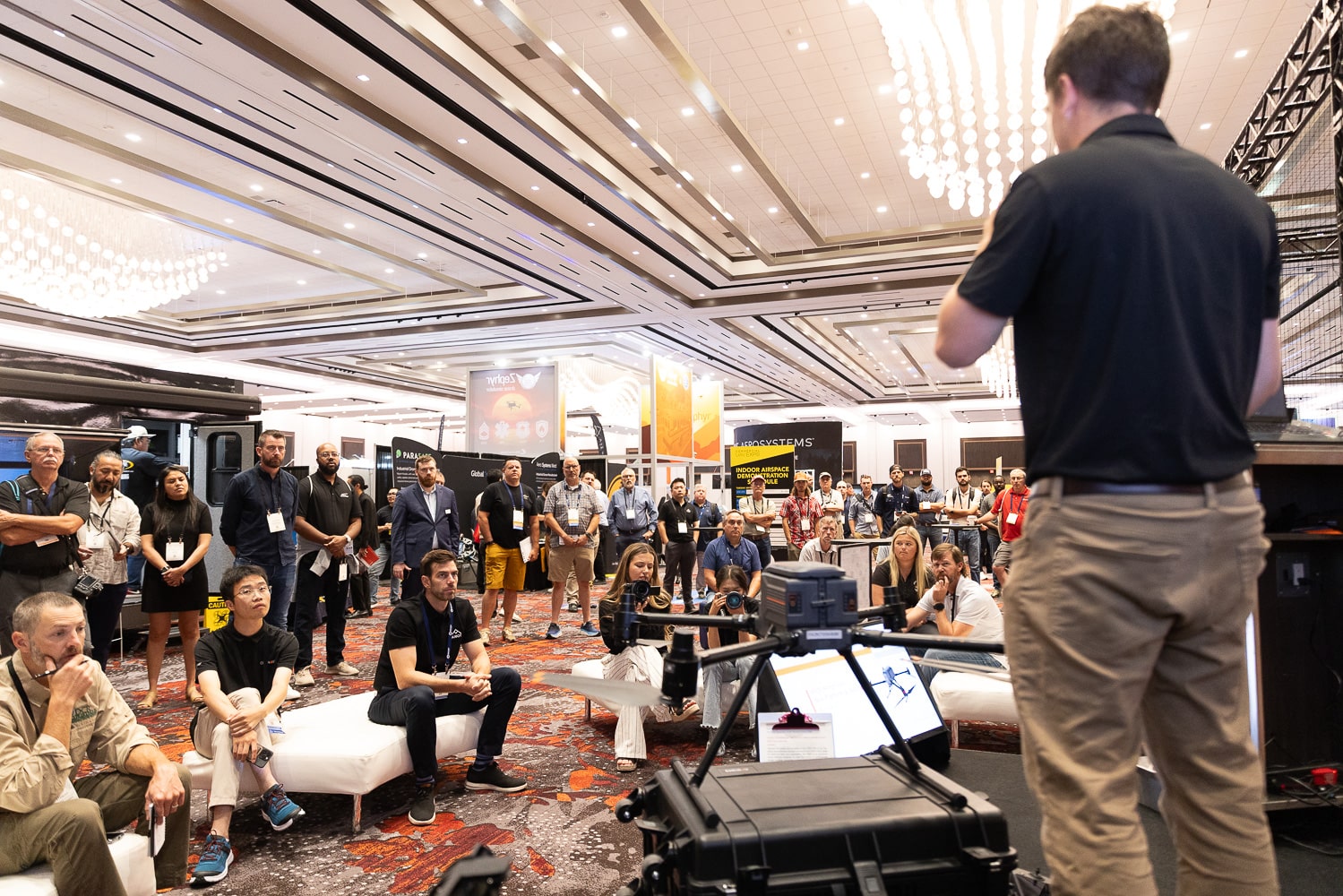
With Commercial UAV Expo less than two weeks away, we have been previewing all of the content available on this year’s conference program. For this final preview, we turn to a theme that hits closer to home for a lot of the audience: what it actually takes to build a drone business that lasts. Turning your passion for drones into a sustainable business takes more than great flights. It takes the right foundation, the right systems, and the right mindset from day one, and this year's programming reflects that reality with sessions built around pricing, positioning, marketing, and the operational discipline that separates the operators who thrive from the ones who stall out.
The theme kicks off with a roundtable discussion entitled Tips for Getting Your Drone Business off the Ground, giving attendees the opportunity to dive deep into the real-world nuts and bolts of launching and growing a drone business. Discussion topics will include everything from choosing the right aircraft and software for your operation, to setting prices that actually reflect your value, to knowing when it's time to make the leap from 1099 to LLC. Attendees will sit down with successful business owners to dig into the aspects of being a service provider that can sometimes be a secondary thought, the admin side that nobody warns you about, contingency planning when your hardware isn't compliant, navigating waivers and approvals, and delivering a quality product that keeps clients coming back. Because the best drone businesses aren't built in a vacuum, the roundtable will also cover community engagement, social media presence, and the client relationships that turn one-time jobs into long-term contracts.
That foundational conversation plays nicely off of What Separates Drone Businesses That Thrive From Those That Stall, a day one session built on the premise that passing a Part 107 exam and flying well are no longer enough on their own to build a sustainable drone business. The market has matured, margins for generalist operators are tightening, and enterprise clients increasingly want service providers who can solve business problems, not just put an aircraft in the air. This session brings together practitioners who've navigated that transition, covering everything from moving off price-based competition to building the operational infrastructure that keeps a program running reliably at scale.
Two presentations make up this session: Ryan Bracken of DroneSense by Versaterm will present Why UAS Programs Plateau and the Operational Framework to Fix It, making the case that hardware and flight skills alone can't sustain a program past its first year, and introducing a four-pillar framework supported by a case study of an organization that moved from spreadsheets and paper logs to a fully integrated management platform. Brandon Beal of Elevation Aerial Application LLC will then explain the foundations of building an agricultural business. Then, Robert Hart of Lidar Drone Services will share his experience as a surveyor and drone service provider, sharing how he built the successful business he has today. Jason San Souci of Do You Know Drones? Podcast will follow with The Evolved Operator: How to Transition from "Hourly Pilot" to "High-Value Partner," breaking down a "High-Value Service Model" built around outcome-based pricing, risk-sharing agreements, and deep data integration for operators ready to stop competing on price.
Marketing gets its own moment in How Drone Service Providers Build Visibility and Win More Business, which reframes something most operators already have sitting on their hard drives: the content captured on every routine site visit. In this presentation Adam Caldwell from Maple Reinders shares how one team turned reality capture work into a content generation engine that fuels business development, client engagement, and brand visibility, covering how to extract marketing photography and video from standard site visits, how automated waypoint missions produce consistent time-lapse sequences, and how to convert field content into social posts, proposal visuals, case studies, and recruitment materials.
The technical and business threads come together in The Camera Skills Every Commercial Drone Pilot Needs to Master, a session built on the idea that autonomous flight has lowered the barrier to getting a drone in the air, but reliable, high-quality imagery still requires a pilot who understands the camera. Chris Tinard of OrangeScreen Productions opens with Beyond Auto Settings: Camera Principles for Commercial UAV Pilots, walking through what happens when automatic camera settings fall short in low-light night operations, harsh midday sun, backlit inspections, and complex public safety environments, and building the case that exposure, shutter speed, ISO, frame rate, and white balance fundamentals are what separate a usable deliverable from a failed mission.
Skip Fredricks of Grossmont College & Hollywood Drones follows with Why Drone Cinematography Built This Industry — and Why It Still Drives It, tracing how the cinematography community built public acceptance of the technology and funded the manufacturer R&D the whole industry now depends on, before turning to a practical breakdown of exposure, color science, log profiles, and editing workflows, plus a look at viable cinematic service models and what it takes to scale from solo operator to production brand.
Rounding out the theme is Seizing the Moment: Finding Opportunity in the Commercial Drone Market's Gaps, in which Miriam McNabb of DRONELIFE will examine where evolving regulations are reshaping risk, operations, and investment priorities across sectors. The presentation digs into the strategic tension between tightly controlled "all in one" manufacturer ecosystems and more modular, third-party-friendly approaches, and asks whether the industry's future favors highly specialized drones built for tasks like tower inspection or general-purpose platforms paired with niche software tools. Attendees will come away with a framework for spotting the white space in the current stack, particularly around specialized applications, integrations, and services, and concrete areas of opportunity to target in the next wave of commercial UAV growth.
Flying skills got operators in the door. What keeps them in business is everything covered across these sessions: pricing, positioning, marketing, and operational discipline. For anyone serious about building a drone business that outlasts the hype cycle, these are sessions you can’t miss at this year’s event.







Comments