


Last week, the commercial UAS industry came together in Las Vegas for Commercial UAV Expo 2026. It was a phenomenal week full of insightful panel discussions, technical presentations, and important networking conversations across verticals and throughout the industry. Over the next few weeks, we will have plenty of coverage from our staff looking at some of the most important takeaways from the week and what we will be thinking about as we move forward after taking so much in at the event. In the meantime, though, we wanted to cover some of the announcements we didn’t have a chance to cover while we were on-site, made by a handful of the exhibiting companies at the event.
Infinite Electronics Showcases New Pasternack Anti-Jamming GNSS Antennas
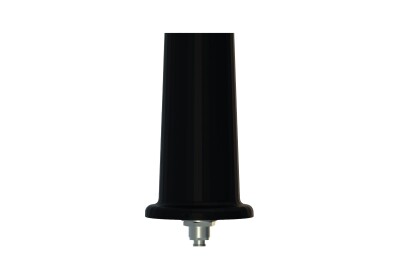
At the event, Infinite Electronics introduced a new lineup of Pasternack multi-constellation GNSS antennas designed to address a growing concern for operators: signal interference in increasingly congested RF environments. The antennas incorporate anti-jamming technology to improve positioning, navigation, and timing performance, and they support GPS, Galileo, GLONASS, BeiDou, QZSS, NavIC, and regional augmentation systems across the L1/E1/B1, L2, and L5/E5 frequency bands.
Built to MIL-STD-810 standards, the antennas are designed to withstand fixed, mobile, and infrastructure-based deployments where reliable GNSS positioning is critical. Gorden Cook, President and General Manager of the RF & Microwave Business Unit at Infinite Electronics, noted that as UAV platforms take on more demanding commercial, industrial, and public safety roles, dependable positioning has become a bigger priority for operators working in challenging conditions. The launch adds to Pasternack's broader lineup of GNSS, RF, and positioning products for autonomous systems, precision timing, and geospatial applications.
A2Z Drone Delivery Launches New Drone
A2Z Drone Delivery, meanwhile, announced the launch of the A2Z Longtail Dual, a new multi-mission drone built on the airframe, propulsion systems, and avionics of the original Longtail. The aircraft's dual-battery design adds battery redundancy, allowing full flight control on a single battery in the event of a power system failure, while integrated smart battery features monitor cell temperature, track charge cycles, and support automatic balancing. The dual-battery setup also enables a one-to-one flight-to-charge ratio when docked on the company's AirDock infrastructure, cutting downtime between missions.
Aaron Zhang, CEO of A2Z Drone Delivery, said the added redundancy is meant to support beyond-visual-line-of-sight operations over cities and other populated areas, where the risk tolerance for a single point of failure is lower. The tradeoff is payload capacity, though Zhang noted that around 85 percent of drone delivery missions carry payloads under six pounds, meaning the Longtail Dual still covers most typical delivery use cases while staying under the 55-pound maximum takeoff weight common to commercial UAV regulations. A2Z is offering the aircraft in two factory-integrated configurations, Cargo and Patrol, aimed at delivery and survey/surveillance missions, respectively.
UAS Sentry Makes a Pair of Announcements
UAS Sentry made two announcements around two related product launches. The first introduced the UAS Sentry Nexus product line, a modular Remote ID detection architecture built around the new Nexus 3 receiver. Each Nexus 3 unit runs three independent processors tied to dedicated radio receivers, and customers can add expansion modules that each bring three more antenna connections and processors, scaling a single installation up to 18 antennas without replacing existing hardware. CEO David Burritt said most permanent installations will likely settle on three or six antennas, with a six-antenna Nexus 6 configuration priced under $10,000, and the entire system, regardless of scale, runs on a single LAN or LTE connection.
The second announcement introduced the UAS Sentry Nexus Observer, a portable version of the same dual-processor approach aimed at field use. The Observer uses two antennas and two independent receivers, each running its own scanning algorithm, to detect Remote ID signals on both the 2.4 GHz and 5.8 GHz bands, and it displays drone and pilot location on a built-in touchscreen without requiring a separate app. The unit ships with two years of UAS Sentry Cloud access, including geofencing, alerts, and flight-log export, and is priced at $1,595. UAS Sentry is also offering existing V4 customers a free firmware update to add Observer functionality, along with trade-in credit toward the new unit for owners of earlier portable receivers under an active maintenance agreement.
Amprius Technologies Introduces New Cell
Amprius Technologies introduced its second-generation SiCore 500 cell, a silicon-anode lithium-ion battery that reaches 500 Wh/kg at a 1C continuous discharge rate. What distinguishes this generation from Amprius' earlier high-density cells is manufacturability: the company has previously hit and exceeded 500 Wh/kg, but only using specialized processes that couldn't scale to commercial volume. The new SiCore platform is designed to reach that same energy density on conventional lithium-ion manufacturing equipment already installed across Amprius' contract manufacturing network, giving customers a qualification path without specialized tooling.
The cell targets sustained, low-rate discharge profiles suited to High-Altitude Platform Stations, fixed-wing drones, and other long-endurance aircraft, where battery weight and stored energy directly determine flight duration and payload capacity. Amprius has supplied cells for AALTO's Zephyr HAPS platform since 2018, including a 2025 flight that reportedly set a 67-day endurance record, and AALTO's COO noted that continued gains in specific energy can extend flight duration and expand mission capability for that program. Amprius expects commercial availability of the second-generation SiCore in Q4 2026, with cells built in customer-specific formats as well as the standard sUAS pouch format defined by SAE JA1016.
GeoCue Announces New Systems in NDAA-Compliant Lidar Portfolio
GeoCue expanded its NDAA-compliant aerial lidar lineup with two new sensors, the TV1 NDAA UL and TV1 NDAA, both starting at $40,000. Both systems are built around the Ouster OS1 MAX REV8, a 256-channel lidar unit that can collect up to 10.4 million points per second with a practical detection range of 200 meters at 10 percent reflectivity, letting operators fly faster and cover larger areas while maintaining data density. CEO Frank Darmayan said the additions respond to sustained demand for NDAA-compliant options, particularly from government, state, local, and education customers, following strong sales of the company's existing TrueView 641 NDAA sensor.
The two sensors target different use cases. The TV1 NDAA UL uses native 48-bit direct colorization to assign RGB values to each point during capture, eliminating the need for a separate mapping camera and keeping the payload lightweight for smaller multirotor and fixed-wing aircraft. The TV1 NDAA pairs the same lidar platform with an integrated 26 MP global shutter camera, aimed at projects like topographic mapping, construction documentation, and infrastructure inspection where high-resolution imagery is part of the deliverable. Both systems are designed and manufactured at GeoCue's Alabama facility, and the company is also pursuing Green UAS approval for the TV1 NDAA UL.
EagleNXT Launches New Flagship Sensor
EagleNXT unveiled the Altum-PT Pro, a new flagship sensor in its MicaSense portfolio that captures synchronized multispectral, panchromatic, and radiometric thermal data in a single payload. Built on the existing Altum-PT architecture, the sensor swaps in a FLIR Boson 640R radiometric thermal sensor for higher-resolution thermal output while retaining the multispectral and panchromatic capabilities researchers rely on. CEO Bill Irby said the update responds directly to customer demand for a sensor that pairs the integrated thermal capability of the original Altum-PT with science-grade thermal performance.
The Altum-PT Pro keeps its sensors pixel-aligned to simplify processing and improve correlation between spectral and thermal layers, and it carries over MicaSense's radiometric calibration workflows and DLS2 illumination correction. It supports integration through Ethernet, MAVLink serial, PWM triggering, and HTTP APIs, and is designed for multirotor and VTOL platforms for large-area, high-endurance missions. EagleNXT positions the sensor for applications including crop analysis, environmental monitoring, solar farm inspection, and industrial temperature mapping. U.S. customers can order the sensor now, with international availability planned for November.












Comments