

Contributed by Jason Shull and Chris Galfano
Innovation is the engine of the commercial drone industry. Advances in autonomy, navigation, sensors, propulsion, communications, and data processing are rapidly expanding the role of unmanned aerial systems (UAS) across industries ranging from infrastructure inspection and agriculture to logistics, public safety, and energy.
But as the market grows more crowded—and as barriers to entry continue to fall—many drone companies underestimate or misunderstand one of the most powerful tools available to protect and leverage their innovations: patents.
Patents are not just legal documents. In the commercial drone sector, they are strategic business assets that shape competition, influence investment decisions, protect product differentiation, and deter copycat technologies in a global marketplace. Understanding the basics of patents is therefore not merely a legal exercise—it is a critical component of sustainable growth.
This article provides a practical overview of utility patents, explains why they matter in the commercial drone context, and outlines how UAS companies can secure meaningful protection while navigating rapid development cycles, regulatory disclosure, and collaboration with partners and customers.
What Is a Patent?
A patent is a form of property that protects the products of original human ingenuity. It is one branch of intellectual property (IP), which also includes copyrights, trademarks, and trade secrets. While all forms of IP can be important to drone companies—brand names, flight software, and confidential algorithms included—utility patents play a unique role in protecting how drone technologies actually work.
A utility patent protects an invention that is new and useful and falls into one of four statutory categories:
- A process (for example, a novel flight-control or obstacle-avoidance method),
- A machine (such as a new airframe, propulsion, or gimbal system),
- A manufacture (a physical article or component), or
- A composition of matter (including new materials, batteries, or coatings).
Utility patents also protect new and useful improvements to existing technologies—an especially important point in the drone industry, where innovation is often incremental and iterative rather than revolutionary. Once granted, a utility patent generally lasts 20 years from its filing date, assuming maintenance fees are paid.

Who Is an Inventor—and Why It Matters
An inventor is someone who contributes to the conception of the invention—the mental step of devising the novel idea. Simply building, coding, testing, or assembling a product by following instructions does not make someone an inventor.
This distinction is particularly important in drone companies, where innovation often involves small teams of engineers working across hardware, firmware, and software. Incorrectly naming inventors can jeopardize a patent’s validity, while failing to include a true inventor can render a patent unenforceable.
Only human beings can be inventors under U.S. patent law. While artificial intelligence and machine-learning tools are increasingly used in drone development—for simulation, flight optimization, computer vision, or path planning—the law requires that an inventor be a natural person who conceives the inventive idea. AI tools may assist or accelerate innovation, but they cannot be named as inventors.
For companies developing autonomy-driven systems, this makes documentation of human decision-making and design choices especially important.
What Does a Patent Actually Contain?
A patent is more than a certificate. It is a technical and legal document with three principal components:
The Written Description
This section explains the invention in enough detail to allow others skilled in the field to make and use it. In exchange for patent protection, the inventor must disclose the invention to the public—often described as the patent “bargain.”
Drawings
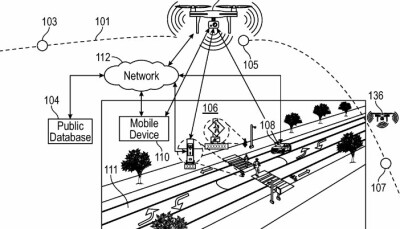
Most drone-related patents include drawings. These can be critical for illustrating airframe geometry, sensor placement, propulsion systems, and system architectures.
The Claims (the Most Important Part)
The claims define the legal boundaries of the invention. They determine what the patent owner can exclude others from doing. In practice, patents are enforced, licensed, and valued almost entirely based on their claims.
Think of the written description and drawings as context—and the claims as the property lines.
What Rights Does a Patent Provide?
A patent gives its owner the right to exclude others from making, using, offering for sale, selling, or importing the patented invention in the United States. Importantly, a patent does not automatically give the right to practice the invention—regulatory approvals, licenses, or third-party rights may still apply.
In the commercial drone industry, this exclusionary right can be extremely powerful. It allows companies to prevent competitors—domestic or foreign—from copying proprietary technology, even where similar products can be rapidly manufactured and distributed.
Why Patents Matter in the Commercial Drone Industry
Creating Competitive Barriers
The drone market is crowded, global, and fast-moving. Patents force competitors to license, design around, or abandon infringing technologies. Well-drafted claims can make design-arounds difficult or economically unattractive.
Supporting Investment and M&A
Investors routinely scrutinize patent portfolios when evaluating drone startups and growth-stage companies. Even early-stage businesses can command higher valuations if they control patented technology that addresses regulatory, operational, or performance challenges.
Protecting Against Global Copycats
Many drone products face rapid imitation overseas. Patents—particularly when paired with international filings—provide enforceable leverage against unauthorized copying.
Encouraging Innovation and Talent
A strong patent strategy signals that a company takes innovation seriously, helping attract top engineering talent and justify continued R&D investment.
Patents, Regulation, and Disclosure Risks
Drone companies face a unique challenge: innovation often must be disclosed early to regulators, customers, or partners. FAA certification, pilot programs, demonstrations, trade shows, and customer trials can all create public disclosures.

Public disclosure before filing a patent application can destroy patent rights—especially outside the United States. While non-disclosure agreements (NDAs) are helpful, they are not a substitute for timely patent filings. NDAs bind only the parties who sign them and do not prevent independent development or accidental public disclosure.
Provisional patent applications are often an effective tool in this environment. They allow companies to establish an early filing date while continuing development, testing, and regulatory engagement.
How Do You Get a Patent?
Under the America Invents Act (AIA), the U.S. operates on a first-to-file system. Patent rights generally go to the first inventor to file—not the first to invent. Speed matters.
A provisional patent application can secure an early filing date and gives the applicant 12 months to file a non-provisional application. If no non-provisional application is filed within that period, the benefit is lost.
After a non-provisional application is filed, the U.S. Patent and Trademark Office examines it for novelty and non-obviousness. Most applications receive at least one rejection, followed by negotiation and refinement before allowance.
Patents vs. Trade Secrets in Drone Technology
Some drone innovations—such as AI models, training data, or manufacturing processes—may be better protected as trade secrets. But trade secrets offer no protection against independent development and are lost once disclosed.
Drone companies should evaluate patents and trade secrets together as part of a portfolio strategy, rather than defaulting to one approach.
Conclusion: Patents as Strategic Business Assets
In the commercial drone industry, technological advantage can disappear quickly. Patents provide a legally enforceable way to protect innovation, shape competition, attract investment, and build durable enterprise value.
For drone companies—whether startups or established players—patents should be viewed not as abstract legal tools, but as core strategic assets. When integrated thoughtfully into product development, regulatory planning, and business strategy, patents help ensure that those who invest in innovation can reap its rewards.
Understanding the basics is the first step. Acting on them is what makes the difference.
About the Authors:
Jason Shull and Chris Galfano are intellectual property attorneys at Banner Witcoff with experience representing technology, aerospace, and unmanned systems companies in complex patent and intellectual property matters.









Comments