

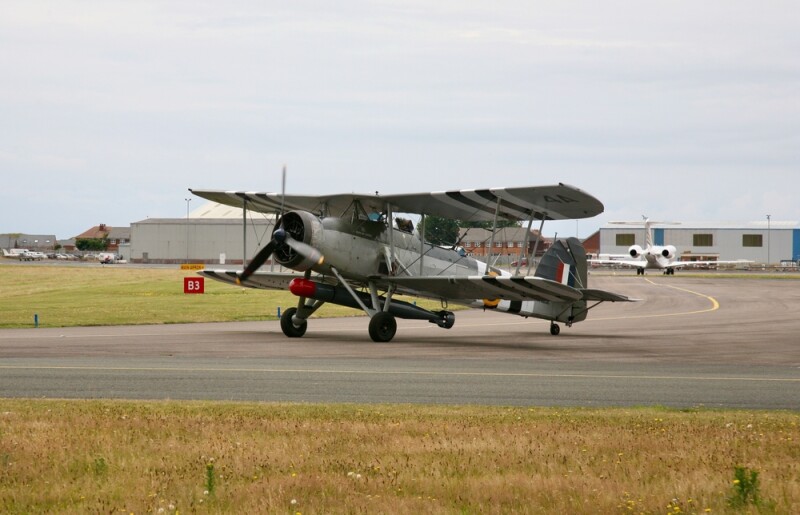
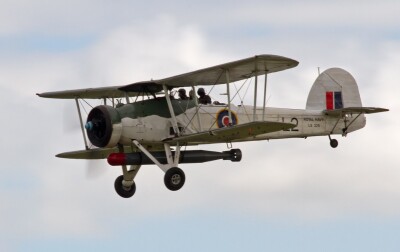
On the night of November 12, 1940, the British Royal Navy executed one of the most consequential naval air operations in history: the attack on the Italian fleet anchored in the Bay of Taranto. In a single night, a small group of Swordfish - a slow, fabric‑covered biplane - demonstrated that the age of the battleship was ending, and the age of naval airpower had begun. Taranto was a turning point, the moment when a handful of inexpensive, lightly built aircraft demonstrated that agility, innovation, and audacity could overcome even the most formidable naval defenses.
Sound familiar?
Today, something similar is happening throughout theaters of war all around the world. Small, commercially available, small drones are having an impact in conflicts that were supposed to be fought using conventional methods and expensive, dedicated equipment.
Eventually, these small, off-the-shelf drones were replaced by specialized military drones, and reshaping modern conflict with astonishing speed. In Ukraine, Gaza, the Red Sea, and dozens of smaller conflicts, drones have become indispensable. They scout, strike, jam, survey, and overwhelm. They have changed tactics, strategy, and the economics of war. They have altered the balance between offense and defense. They have made the battlefield more transparent and more lethal.
Commercial drones, on the other hand, were once heralded as the next great technological revolution, but instead, the progress has been slow. A decade ago, we imagined skies filled with autonomous delivery vehicles, infrastructure‑inspecting robots, and airborne data collectors that would make cities smarter and businesses more efficient. Yet for most people, drones remain a novelty - a gadget in a park, a tool for filmmakers, a promise that never quite arrives.
The contrast is striking. One sector moves at a crawl while the other accelerates at breakneck speed. Understanding why reveals something profound about how societies adopt technology, and why the sky, unlike the PC, the internet, or the smartphone, is such a difficult place to innovate.
War Removes the Friction That Civil Society Cannot Ignore
The most fundamental difference is that military drones operate in environments where risk is acceptable, while commercial drones operate in environments where risk is not. In war, the calculus is brutally simple. If a drone can save soldiers’ lives, provide intelligence, or strike a target, it is worth deploying even if it is imperfect, untested, or vulnerable. The urgency of combat compresses development cycles. A drone that works well enough today is more valuable than a drone that works perfectly next year.
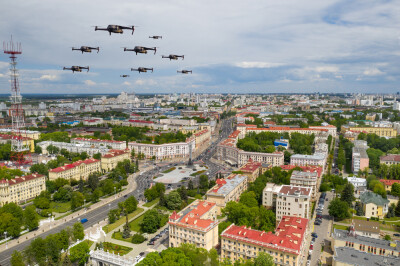
Civil aviation operates under the opposite philosophy. The National Airspace System (NAS) is built on a zero‑fatality expectation. Every new aircraft, every new procedure, every new technology must prove not just that it works, but that it cannot fail in a way that endangers people on the ground or passengers in the air. The burden of proof is immense.
This asymmetry explains much of the divergence. War accelerates innovation because it tolerates risk. Civil society slows innovation because it must eliminate risk.
The Sky Is Already Full, and That Changes Everything
When the personal computer, the internet, and the smartphone arrived in our lives, they entered empty spaces and were not a threat to human lives. These technologies built their ecosystems on blank canvases. Drones do not have that luxury. They enter a sky that is already one of the most complex, tightly regulated, and safety‑critical environments on Earth. Every day, thousands of passenger aircraft move through carefully choreographed corridors. Every altitude, every route, every procedure is designed to prevent catastrophe.
Commercial drones must integrate into this system without disrupting it. They must avoid collisions with crewed aircraft, maintain reliable command‑and‑control (C2) links, detect and avoid (DAA) obstacles, operate predictably in dense urban environments, and comply with privacy, noise, and liability laws.
Military drones, by contrast, often fly in segregated airspace or active combat zones where civilian traffic is absent. They do not need to integrate into a system designed for commercial aviation. They operate in a parallel universe.
This is why the same technology, a quadcopter with a camera, can be deployed instantly in a war zone but requires years of testing, certification, and regulatory approval to operate over a suburban neighborhood.
The Value Proposition Is Different, and So Is the Investment
Military drones deliver immediate, undeniable value. They provide persistent surveillance, precision targeting, reconnaissance, electronic warfare capabilities, logistics support, and battlefield awareness. In modern conflicts, drones are strategic assets. They change outcomes. They save lives as they alter the tempo of operations with clarity of purpose that justifies incremental, massive investment, rapid procurement, and continuous iteration and innovation.
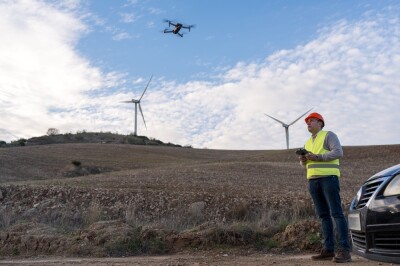
Commercial drones, by contrast, often promise incremental efficiency rather than existential advantage. A drone that inspects a bridge or delivers a package is competing with existing methods that perhaps are dangerous, noisy, and polluting, but are reliable and well understood. The economic case is real, but it is not urgent.
This difference in urgency shapes everything from R&D budgets to regulatory timelines. When a technology is mission‑critical, it moves fast. When it is merely beneficial, it moves slowly.
Liability, Insurance, and Public Acceptance Create Invisible Drag
Commercial drones must navigate a thicket of civilian constraints that military drones simply do not face. Liability is the first. If a drone crashes into a car, a power line, or a person, someone must be responsible. The operator, the manufacturer, the software provider, and the insurer all have stakes in the outcome, and civilian systems require clear answers before operations can scale.
Privacy is another barrier. People are wary of flying cameras near their homes, backyards, and windows. Public acceptance is a slow cultural process, and drones must earn trust one community at a time. Noise adds another layer of resistance, as even small drones generate high‑frequency sounds that neighborhoods may reject. Insurance companies, for their part, demand proven reliability before issuing policies, and reliability takes years of data. These forces are invisible but powerful, slowing adoption not because the technology is lacking, but because society must negotiate its boundaries.
Military drones plug into existing C2 networks. They have dedicated operators, secure communications, and established procedures. Commercial drones require an entirely new ecosystem: unmanned traffic management (UTM) systems, standardized corridors, DAA technologies, remote identification, ground control networks, and integration with local authorities.
This infrastructure is emerging, but it is not yet mature. Until it is, commercial drones will remain constrained to limited, carefully controlled operations.
Put all these factors together, and the contrast becomes clear. Military drones evolve in a world where speed matters more than perfection. Commercial drones evolve in a world where perfection matters more than speed. One is shaped by urgency, the other by caution. One is driven by necessity, the other by regulation. One operates in empty skies, the other in crowded ones.
This is not a failure of the commercial drone industry. It is a reflection of the environment in which these machines must operate. The good news is that, eventually, the advances in warfare drone technology will percolate to civilian uses and the commercial drone industry will benefit from the lessons that today many armies guard as secrets, but that in the future will translate into a better life for all mankind.







Comments