

Sponsored by Apellix
Quick answer: Yes. Apellix cleaning drones can clean commercial and industrial building exteriors. In paid projects performed by Apellix operators, hose-fed drones removed algae, mildew, dirt, vertical streaking and accumulated buildup from windows, warehouse walls, office facades, hotel ledges, university buildings, roofs, water towers, storage tanks, silos and exterior glass. A cleaning drone does not replace cleaning expertise; it changes how the wash stream reaches the work by moving the operator from height to the ground. |
What is a cleaning drone, and how does an Apellix system work?
A cleaning drone is a commercial UAV that positions a spray nozzle at height while water or cleaning solution is supplied from equipment on the ground. Apellix cleaning drones use this patented hose-fed architecture for exterior soft washing and pressure washing. Unlike inspection drones, which primarily collect data, an Apellix cleaning drone performs physical work on the asset.
The Apellix system changes the access problem rather than the fundamentals of cleaning. The operator remains on the ground while the drone delivers the water and cleaning agents to the building. Surface type, soil load, cleaning agents, water quality, pressure, rinse technique, weather and operator judgment still determine the cleaning result. That distinction matters: the drone is an airborne access platform, not a replacement for cleaning expertise.
What the field data shows
The strongest evidence for cleaning drones comes from completed commercial work. The examples below are paid jobs reported by Apellix operators. The results are job-specific rather than universal production guarantees, but they document where Apellix cleaning drones have been used and where operators have reported measurable differences in time, access, cost, or site disruption.
Apellix Cleaning Drone Completed Projects | Surface/asset | Reported result | Why it matters |
Raymond James headquarters | Commercial building facade | Access and total project duration | |
UK multi-story warehouse | Metal warehouse facade | Lift setup and repositioning | |
University of Florida | Nine-story campus building | Mid-rise production without access equipment | |
North Liberty, Iowa | Four water towers | The city received approximately $160,000 in quotes for conventional cleaning but purchased a $47,000 Apellix cleaning drone instead. The city reported a $113,000 difference between the quoted cleaning costs and the drone purchase price. | In-house ownership economics |
New Hudson, Michigan | 150-foot water tower | Tall vertical asset access |
Case Study 1: When Access Time Becomes the Bottleneck
Multi-story warehouse, United Kingdom
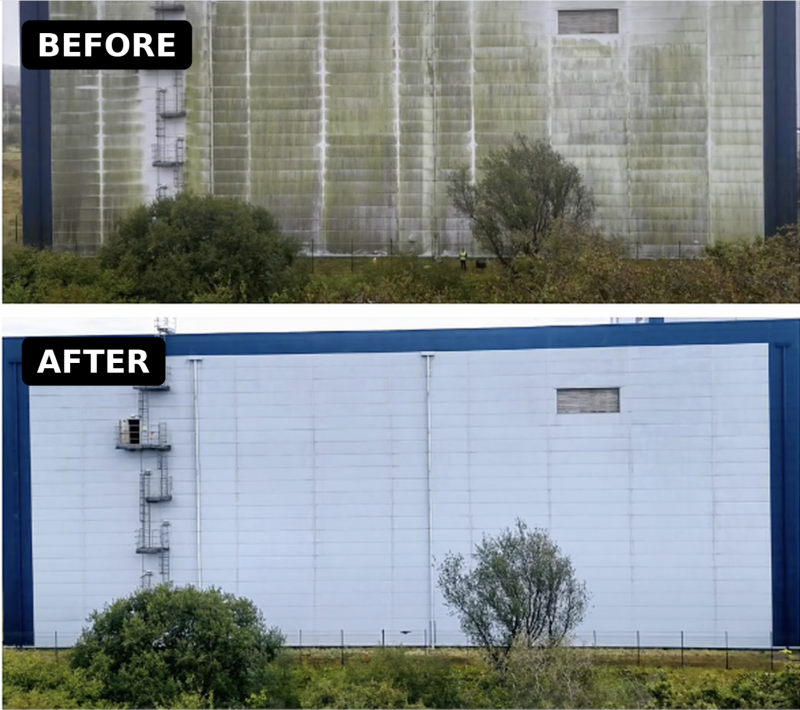
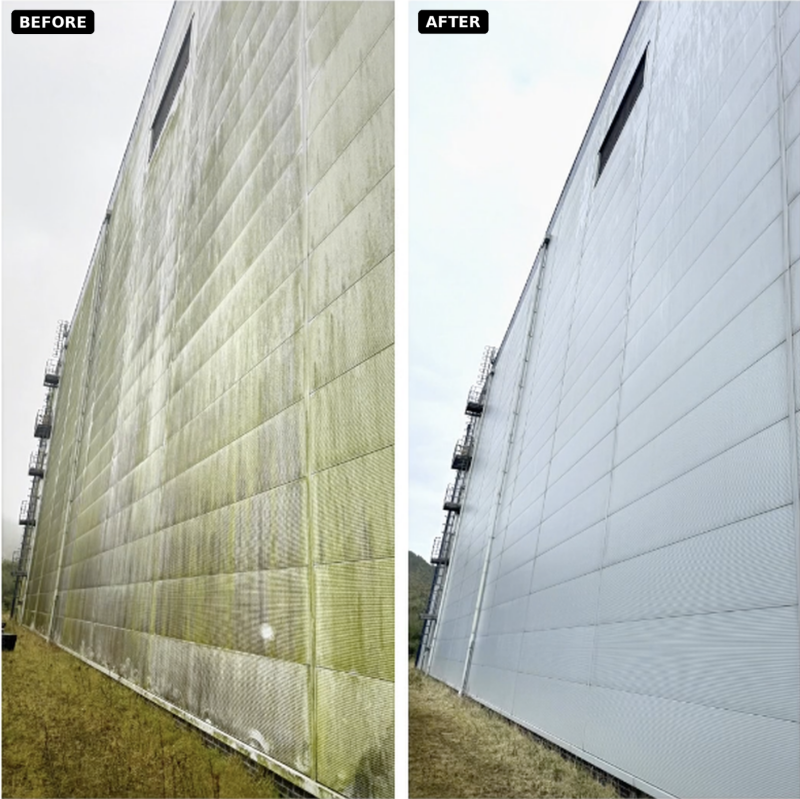
Drone Clean UK used an Apellix drone to clean a multi-story metal warehouse in one day. The same work had previously taken eight days with lift equipment, and the client reported a 20 percent savings compared with the traditional approach.
For a commercial UAV operator, the lesson is not simply that the Apellix drone sprayed faster. Large vertical surfaces can require lift repositioning, scaffolding, equipment staging, and repeated work-zone changes. When an Apellix cleaning drone reduces those access steps, the total project timeline can change much more than spray speed alone would suggest.
Case Study 2: Cleaning Around Active Logistics
ASDA warehouse, United Kingdom
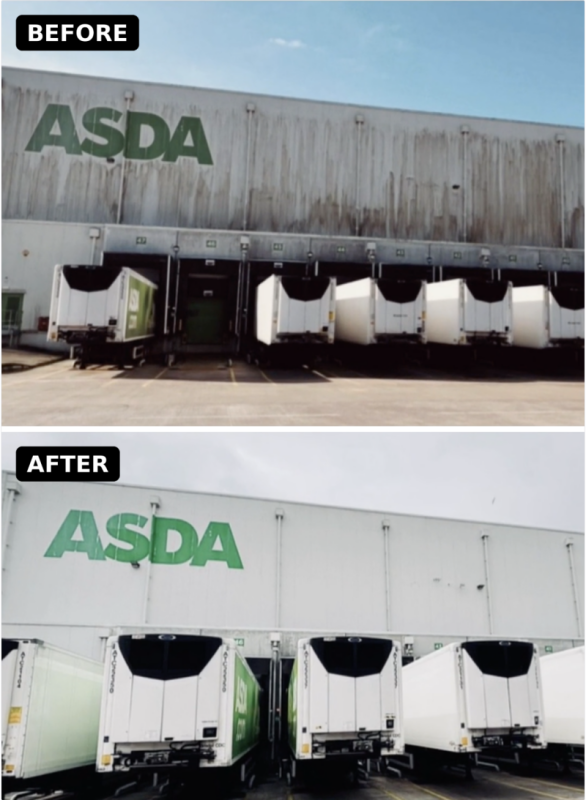
At an ASDA warehouse, Drone Clean UK used an Apellix cleaning drone above active delivery bays to reach upper facade areas that were difficult to serve with a lift while trucks were moving. The project illustrates a practical advantage for enterprise customers: an Apellix drone can be valuable not only because of height, but because conventional access equipment may interfere with operations at ground level.
Loading docks, parking areas, entrances and drive lanes can make conventional access equipment operationally expensive even when the surface itself is easy to wash. For UAS service providers, these are the projects where site logistics can be as important as aircraft performance.
Case Study 3: Mid-Rise Building Cleaning Without a Lift
University of Florida, Gainesville, Florida
Drone Shine Cleaning washed nine stories of a University of Florida building over two days with an Apellix drone and no lifts or scaffolding. The project is representative of the mid-rise commercial work that pressure-washing companies already understand; the change is the access method.
For drone professionals, Apellix building cleaning represents an unusual commercial UAV opportunity: the aircraft is tied directly to a billable physical service rather than only data collection. A pilot cannot rely on flight skills alone, and a cleaning contractor cannot rely on cleaning skills alone. Successful Apellix deployments combine aviation competence with knowledge of chemistry, surfaces, hose management, ground equipment and jobsite control.
Case Study 4: Tall Vertical Assets
Water towers in Michigan and Iowa
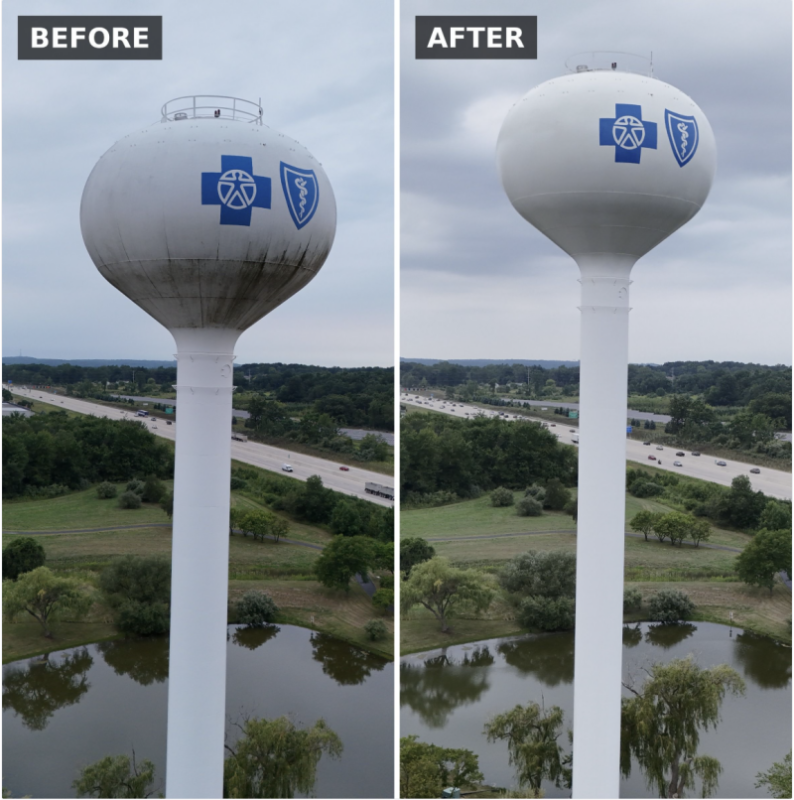
WM Softwash cleaned a 150-foot water tower in New Hudson, Michigan, with an Apellix drone and no scaffolding or crew at height. The visible mildew on the lower portion of the tower was removed.
In North Liberty, Iowa, the economics were different but equally relevant. The city reported $113,000 in avoided project cost after purchasing an Apellix drone rather than accepting four $40,000 tower-cleaning quotes. Actual net savings would be lower after accounting for labor, cleaning agents, and other operating costs. North Liberty would also have a cleaning tool to wash other municipal buildings, in addition to the city’s water towers.
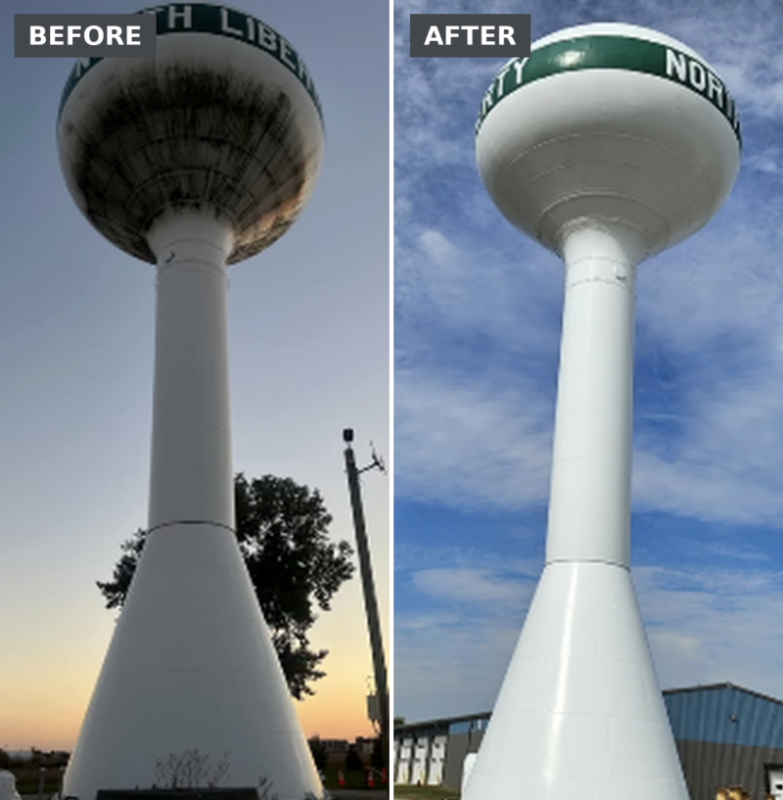
Those numbers are specific to one municipality's quotes and equipment purchase, but they illustrate a second business model for cleaning UAVs: ownership by an organization with recurring high-access assets, rather than hiring a service provider for every job.
Case Study 5: Industrial Silos
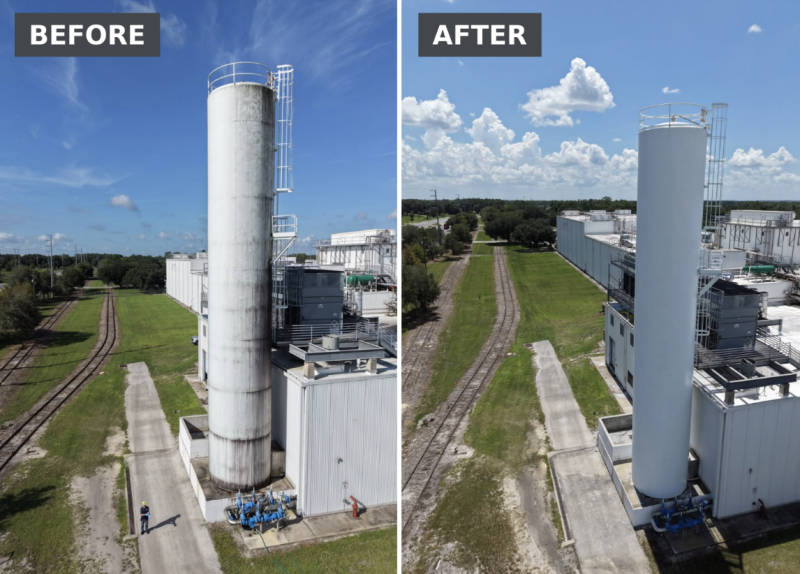
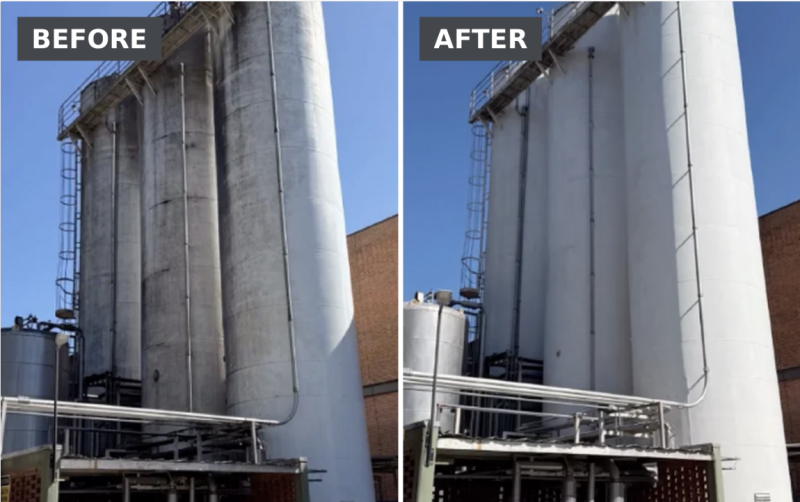
Drone Shine Cleaning soft washed a high-reach industrial silo in Florida with no lifts, ladders or heavy access machinery. In September 2025, Drone Clean Argentina used an Apellix drone to clean three industrial silos for Bimbo Bakeries, removing dark streaking along the silo walls.
Multi-asset sites, like the three silo job shown below, can be particularly attractive for an Apellix operator because the same drone, pump and crew can move from one similar structure to the next without mobilizing a separate lift for each surface. For a drone service provider, that creates the possibility of selling a repeatable cleaning service across multiple assets at one facility.
Case Study 6: Windows
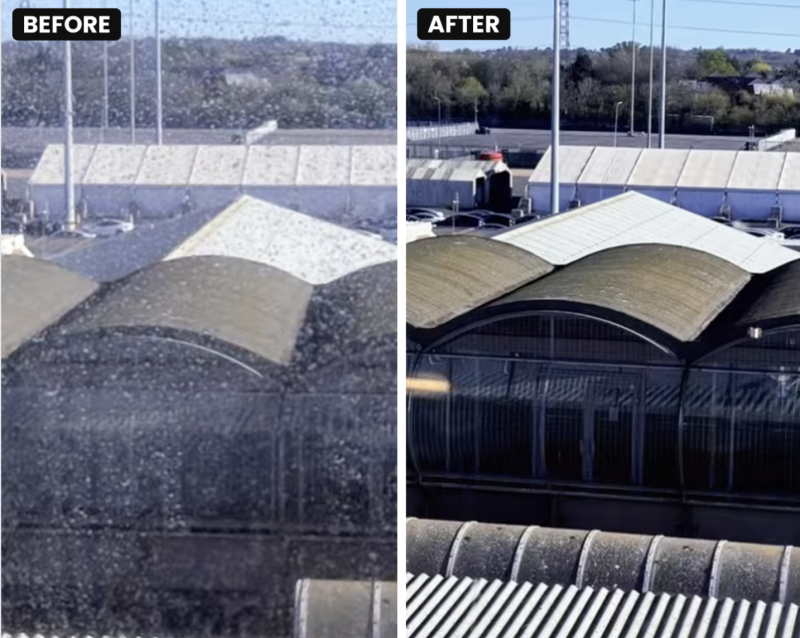
Drone Clean UK used an Apellix drone to clean the exterior and windows of the Aurora in port in Southampton, with no lift staged on the dock.
Case Study 7: Above-Ground Storage Tanks
City of Grandville, Michigan
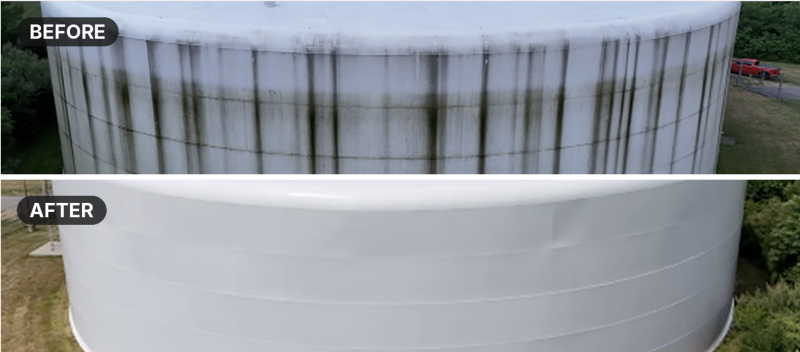
WM Softwash used an Apellix drone to clean an above-ground storage tank for the City of Grandville, Michigan. Multiple near-black stripes of mildew running down the tank came off completely.
Case Study 8: Roofs
Residential tile roofs, Orlando, Florida
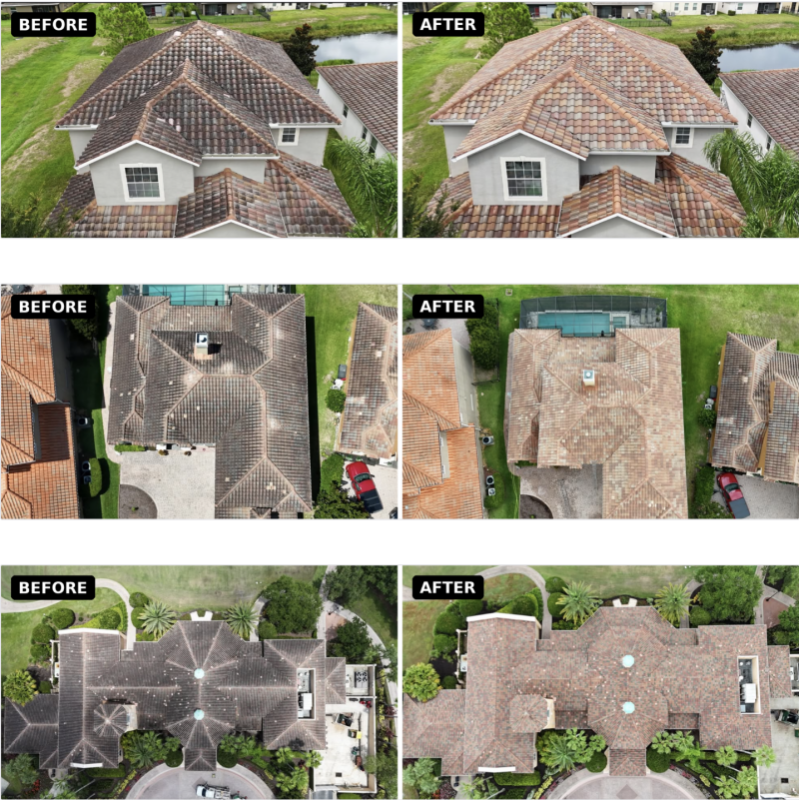
Wash Me Fly used an Apellix drone to soft wash red tile roofs in Orlando, Florida, removing the algae, mold, mildew and dirt that had turned them black. Apellix cleaning drones can soft wash tile roofs using low-pressure application of appropriate cleaning solutions.
By allowing operators to clean roofs without walking directly on the tiles, drone cleaning can reduce foot traffic and the associated risk of cracked or broken tiles. When appropriate cleaning pressures, chemicals, and techniques are used, drone-based soft washing can effectively remove visible buildup while minimizing the risk of roof damage. Results depend on the roof material, condition, and cleaning method.
What Can Cleaning Drones Actually Clean?
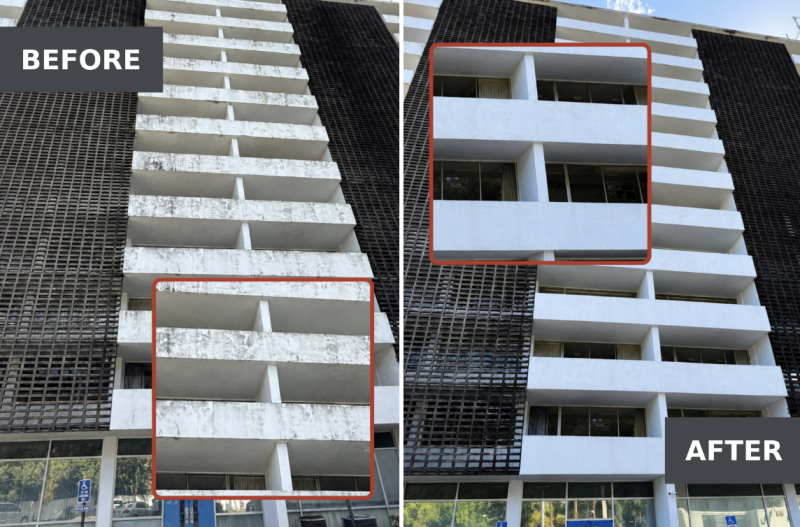
Apellix cleaning drones have been used on windows, metal warehouse walls, office-building facades, hotel ledges, university buildings, roofs, water towers, storage tanks and industrial silos. Documented Apellix projects in this article include both soft washing and higher-pressure washing, depending on the substrate, buildup and cleaning process selected by the operator. The common denominator is access: these are jobs where reaching the surface can be more difficult or expensive than cleaning.
What Commercial UAV Operators Need to Add Beyond Flight Skills
Exterior cleaning combines aviation with a ground-based fluid system and an active work zone. In the United States, operators flying under the FAA's Small UAS Rule must meet applicable Part 107 requirements, including remote-pilot certification, aircraft registration and any airspace authorization required for the site.
But regulatory compliance is only one part of the workflow. Commercial cleaning operations also require surface assessment, chemical selection, pump and hose management, runoff planning, pedestrian and vehicle controls, emergency procedures and a clear understanding of how the wash pattern changes with standoff distance and aircraft movement.
For a Part 107 operator, adding an Apellix cleaning drone is therefore less like buying another camera payload and more like adding a new trade capability - one that can turn flight skills into a directly billable exterior-cleaning service.
Who Are the Potential Customers for Commercial Drone Cleaning?
Commercial cleaning drones are used to serve customers in facility management, industrial maintenance, commercial property management, municipal infrastructure, and exterior cleaning. Apellix cleaning drones allow qualified operators to offer elevated cleaning services for buildings, water towers, warehouses, silos, storage tanks, and other difficult-to-access surfaces. For commercial UAV operators, this creates an opportunity to expand beyond inspection and surveying into revenue-generating exterior maintenance services.
The opportunity extends beyond just traditional pressure-washing contractors as well. There are a variety of commercial and industrial customer groups who regularly maintain large buildings, elevated surfaces, and difficult-to-access structures, including:
- Facility managers: Office buildings, universities, hospitals, hotels, and commercial campuses may require recurring facade, window-area, and exterior maintenance. Apellix cleaning drones can provide an alternative to conventional access equipment for suitable elevated cleaning tasks.
- Industrial operators: Warehouses, manufacturing facilities, distribution centers, silos, and storage tanks frequently have large exterior surfaces that are difficult or expensive to access. Apellix operators have already demonstrated drone cleaning on warehouse cladding, industrial silos, and storage structures.
- Municipalities and public utilities: Water towers, public buildings, and other elevated municipal assets represent potential applications. In North Liberty, Iowa, the city purchased a $47,000 Apellix cleaning drone after receiving approximately $160,000 in outside cleaning quotes for four water towers. The $113,000 price difference does not include cleaning chemicals, labor, and other operating expenses.
- Commercial property management companies: Property managers responsible for multiple buildings may benefit from cleaning methods that reduce the need for lifts and other access equipment, especially on properties with elevated architectural features or limited ground access.
- Pressure-washing and exterior cleaning companies: Existing cleaning contractors may be particularly well positioned to adopt Apellix technology because they already understand cleaning chemistry, job pricing, customer relationships, and surface preparation. Adding a cleaning drone can expand the range of elevated jobs they can pursue.
Frequently Asked Questions About Cleaning UAVs
Can drones actually clean buildings?
Yes. Apellix cleaning drones have been used on paid jobs to remove visible algae, mildew, dirt, streaking and accumulated exterior buildup from commercial building facades and other structures. The Apellix drone delivers the wash stream from the air while the operator remains on the ground; the final cleaning result still depends on using the correct chemistry, pressure, water and rinse process for the surface.
How do Apellix cleaning drones work?
An Apellix cleaning drone positions a spray nozzle in the air while water and cleaning solution are supplied continuously from ground-based equipment through a hose. The pilot controls the aircraft from the ground. Because the cleaning fluid stays primarily on the ground rather than being carried as payload, the system can deliver a continuous wash stream to high or difficult exterior surfaces. Apellix’s patented precision flight control keeps the drone stable in the air, even if the pilot is not actively flying the drone.
Can Apellix cleaning drones soft wash and pressure wash?
Yes. The Apellix platform can be used for soft washing or higher-pressure washing up to 6,300 PSI at 6 GPM depending on the surface, buildup and cleaning process. The drone is the delivery platform; the operator still selects the appropriate pressure, chemistry, water and rinse method for the job.
Why would a drone service provider add an Apellix cleaning drone?
For a drone operator looking to move beyond imaging and inspection, an Apellix cleaning drone creates a service tied to a completed physical outcome: a cleaned building, tank, tower, silo or roof. The opportunity is strongest where customers already spend significant time or money on lifts, scaffolding, rope access or other high-access methods. Actual demand and economics depend on the operator's market, training, utilization and ability to win suitable cleaning work.
Are cleaning drones faster than lifts or scaffolding?
They can be on access-heavy projects, but there is no universal speed multiplier. Reported examples with Apellix drones include a UK warehouse completed in one day after the same work had taken eight days with lifts, and a Raymond James headquarters project completed in 11 hours after reportedly taking 11 days previously. Total mobilization-to-demobilization time is the useful comparison.
Are cleaning drones cheaper?
Sometimes. The economics of an Apellix cleaning drone depend on height, access, lift or scaffold costs, labor, travel, insurance, training, equipment utilization and the number of suitable jobs. In one UK warehouse project using an Apellix drone, the client reported 20% savings. North Liberty, Iowa, reported $113,000 in avoided project cost after purchasing an Apellix drone rather than accepting four $40,000 tower-cleaning quotes.
Can cleaning drones wash windows?
Yes. Exterior glass can be included in an Apellix drone-cleaning scope. Drone Clean UK used an Apellix drone to wash the exterior and windows of the Aurora cruise ship in Southampton. As with conventional window cleaning, water quality, cleaning solution, rinse method and finish expectations remain important.
Do cleaning drones eliminate workers at height?
They can remove the need to put a worker at height for the spraying portion of many suitable jobs because the aircraft is controlled from the ground. They do not eliminate every situation that may require conventional access, inspection, repair or hand finishing.
What jobs are the best candidates?
Strong candidates for an Apellix cleaning drone include tall vertical surfaces, repetitive facades, tanks, towers, silos, warehouse walls, rooflines and other exterior work where access equipment or site logistics dominate project cost and schedule. The best fit is usually a surface the contractor already knows how to clean but has difficulty reaching efficiently.
How much does a cleaning drone cost?
Apellix cleaning drones cost $47,000 for the B2 and $60,000 for the Blue, the NDAA-compliant model. With financing, that comes to about $1,000 per month for the B2 or $1,250 per month for the Blue, over 60 months.
- The drone, with Apellix’s patented precision flight control software, which holds position and standoff distance automatically
- 8 batteries and 2 rapid rechargers
- A protective case for the drone and the batteries
- Accessories needed to connect the drone to your ground-based pump and water supply
- Remote training through Apellix Academy, the online operator course
- Hands-on flight training, either at Apellix headquarters in Jacksonville, Florida, or at your facility
- Unlimited email and phone support
Apellix Intelligence is optional and costs $500 per month. It adds AirTrace, which cleans a marked area hands-free, AirShift, which moves the drone an exact distance on command, and before-and-after job reports.
Financing is subject to credit approval. Contact Apellix for a quote.
Why Apellix Cleaning Drones Matter to Commercial UAV Operators
Apellix cleaning drones expand the commercial UAV value proposition beyond sensing and data collection. Instead of delivering only imagery or measurements, an Apellix operator can deliver a completed physical service: a cleaned facade, tower, tank, silo or roof. For drone professionals looking for a new service line, that changes both the customer conversation and the revenue model.
The field results from Apellix operators support a straightforward conclusion: drones can actually clean buildings. Apellix cleaning drones are already being used on paid work involving warehouses, office buildings, university facilities, tanks, towers, silos, roofs and windows. The more useful business question is where airborne access improves safety, project time, site disruption or cost enough to justify the aircraft, training and workflow changes.
For a drone service provider considering an Apellix purchase, the opportunity is most compelling where a customer already has an expensive access problem. Start with the customer's cleaning need, quantify the lift, scaffold, rope-access or scheduling burden, understand the regulatory environment, and use the Apellix drone where airborne access creates a measurable advantage. That approach keeps the technology tied to an outcome customers can understand and buy.
Source and Methodology Note
All project images and job figures in this draft were supplied by Apellix cleaning-drone operators or facility users. Reported project duration, savings and cleaning outcomes are specific to the cited sites and have not been presented as universal performance guarantees. Results vary with surface condition, buildup, chemistry, water, weather, aircraft configuration, site constraints and operator experience.
For U.S. regulatory references, this draft uses the FAA's Part 107 commercial UAS framework. Editors may wish to link the regulatory section to the FAA's current Part 107 guidance.
About Apellix
Apellix’ Power Wash Drone is the most widely deployed commercial cleaning drone worldwide, with active operators in 21 countries across 5 continents as of 2026. Founded in 2014, Apellix designs and manufactures autonomous drones for power washing, spray painting, inspection, and building maintenance. Apellix has National Defense Authorization Act (NDAA) compliant systems, employs disabled veterans, and is flown by the U.S. Army.
Commercial drone operators interested in offering power washing or exterior cleaning services can explore the Apellix Power Wash Drone, including system specifications, training options, and commercial applications, at Apellix.com.






Comments