

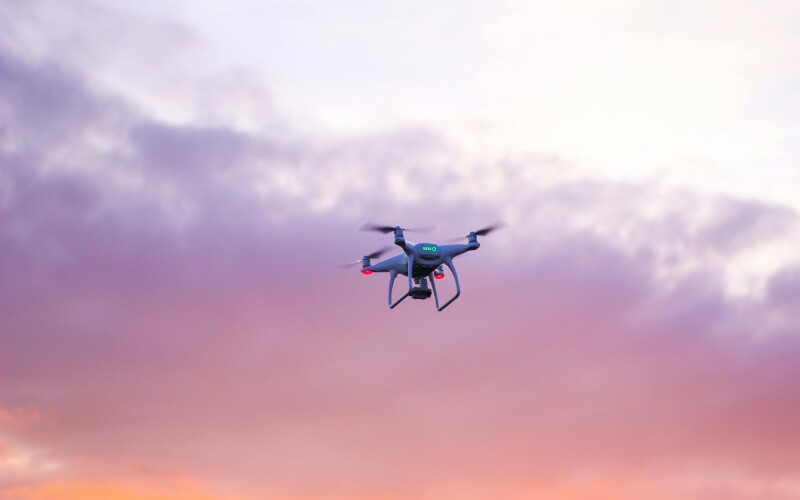
For this week’s round-up of commercial drone industry news, we look at ways to prepare for a potential (inevitable?) DJI drone ban, how NASA is using uncrewed vehicles to refine systems for Mars missions, and MIT research into miniature drones for emergency response.
Preparing for a DJI Ban
Barring a last-minute security audit, DJI’s drones and cameras are set to be added to FCC’s Covered List on December 23, according to PC Mag. Should the company’s products be added to the list, the publication says “professionals who rely on drones for business, farmers who use them to monitor fields, and law enforcement officers who use them for search and rescue” will be severely impacted. That’s because, “around 450,000 US individuals use DJI drones to earn a living; it's estimated to be a $116 billion industry.” Moreover, “a survey of members of the Drone Service Providers Alliance shows that two-thirds of its membership expect to go out of business without access to DJI drones.” So, how should drone operators prepare for this massive shake-up? PC Mag offers equipment alternatives and purchasing strategies.
Drones Help NASA With Mars Exploration
According to a story in Dronelife, “researchers from NASA’s Jet Propulsion Laboratory (JPL) conducted drone flight tests in Death Valley National Park and California’s Mojave Desert to refine navigation software intended for future rotorcraft missions” on Mars. NASA says that the effort “focused on developing Extended Robust Aerial Autonomy, a software system designed to help drones navigate over barren, low-contrast terrain.” The agency chose Death Valley and the Mojave Desert for the research because these environments “closely resemble the sand dunes and featureless landscapes that challenged NASA’s Ingenuity Mars Helicopter during its later flights on Mars.” For the mission, NASA received a “rare research flight authorization.”
MIT Develops “Micro Drones”
DroneXL reports that researchers at MIT are working on the development of “a tiny robot about the size of a matchbox, with flapping wings powered by soft, flexible artificial muscles.” These aerial microrobots, the article says, could be used to perform a variety of important tasks, including exploring “collapsed buildings, unstable tunnels, or disaster zones” to enhance search and rescue missions, helping with “environmental monitoring, infrastructure inspections, or disaster response tasks,” and enabling better mapping of damage at disaster sites.













Comments