

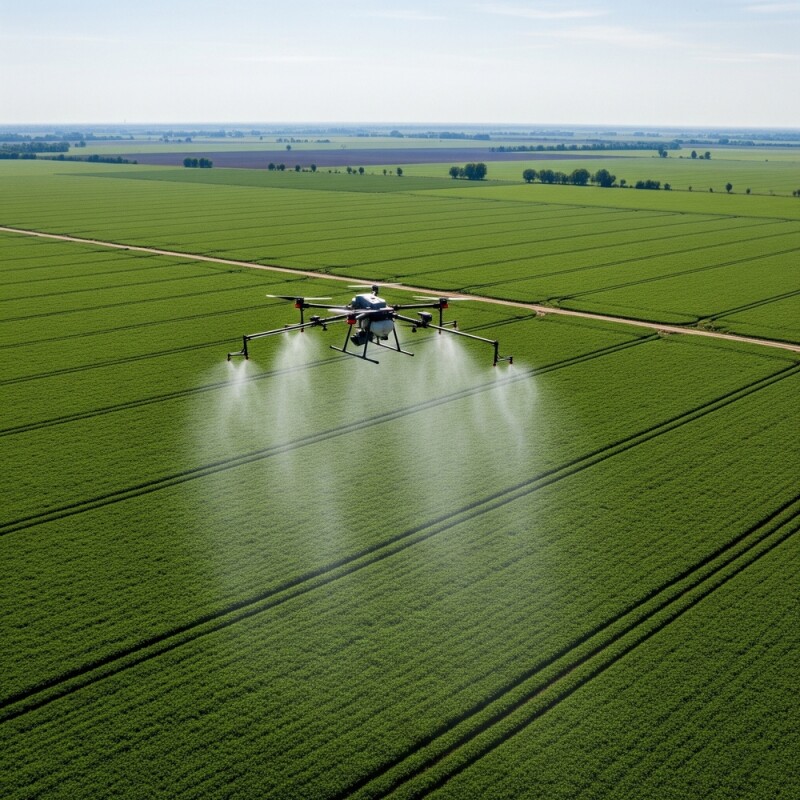
Agricultural spraying using UAVs is increasingly positioned as a sustainability solution, promising lower water use, reduced chemical input, and decreased environmental impact compared to conventional ground-based spraying. While these claims are directionally correct, field-level data shows that they are far more conditional than often presented.
Based on multi-season field trials and performance evaluations conducted across diverse Indian agro-climatic conditions, this article examines where UAV spraying sustainability gains hold up, and where they begin to break down when operational realities are ignored.
The takeaway for commercial operators and decision-makers is clear: Sustainability is not an inherent property of UAV platforms. It is an operational outcome.
Water Savings: Real, But Not Guaranteed
Water-use reduction is the most consistently cited advantage of UAV spraying, and under optimized conditions, it is also the most defensible.
Across crops such as rice, sugarcane, and orchard systems, UAV-based ultra-low-volume (ULV) spraying demonstrated reductions from 150–250 L/ha (conventional) to 10–25 L/ha (UAV). These gains were achieved without compromising canopy deposition when nozzle selection, flight speed, and altitude were matched to crop structure.
However, field data also revealed a critical caveat. Improper nozzle choice, excessive flight overlap, or poor mission planning reduced effective water savings by 30–40 percent. In several cases, operators attempting to “maximize coverage” unintentionally negated the very efficiency UAVs were expected to deliver.
Water efficiency, therefore, is not automatic. It is parameter-sensitive.
Chemical Reduction: Highly Dependent on Micro-Design Choices
Chemical input reduction is often bundled with water savings in sustainability narratives, but the evidence here is more nuanced.
Certain ULV nozzle configurations achieved 15-30 percent reductions in pesticide use per hectare, primarily due to improved deposition efficiency and reduced runoff. These outcomes were strongest when:
- Flight altitude was tightly controlled
- Speed was matched to canopy density
- Droplet spectra were optimized for target crops
Conversely, increased flight speed or inappropriate nozzle geometry significantly elevated drift risk, even under ULV conditions. In these scenarios, chemical losses increased despite lower application volumes, undermining both environmental and agronomic objectives.
This highlights an uncomfortable truth for the industry: chemical efficiency gains are fragile. They depend on decisions that are often treated as secondary during commercial deployment.
Energy and Carbon Footprint: The Most Misunderstood Metric
Carbon reduction is frequently assumed rather than measured in UAV spraying discussions. Life cycle assessment (LCA) results present a more conditional picture.
While UAV operations eliminate direct fuel combustion at the field level, battery charging energy, repeated flight cycles, and payload inefficiencies emerge as dominant contributors to emissions. Under optimized operations, UAV spraying demonstrated lower or comparable CO₂-equivalent emissions per hectare relative to tractor-based spraying.
However, carbon advantages deteriorated rapidly when:
- Multiple flight repetitions were required
- Payload capacity was underutilized
- Mission planning was inefficient
In several observed cases, energy intensity per hectare exceeded conventional benchmarks – not because UAVs are inherently inefficient, but because operations were not optimized for sustainability outcomes.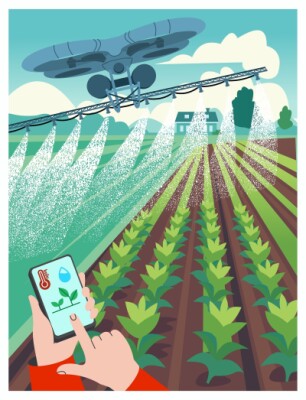
Carbon efficiency, like water efficiency, is operationally determined.
The Core Issue: Sustainability Is a Systems Problem
The breakdown of sustainability claims is rarely caused by hardware limitations. Instead, it reflects a lack of systems-level thinking in commercial UAV deployment.
Field observations consistently point to the same underlying gaps:
- Insufficient operator training
- Overreliance on vendor default settings
- Lack of performance benchmarking
- Absence of standardized sustainability metrics
Without integrating life cycle thinking, parameter optimization, and data-driven decision support, UAV spraying risks becoming a technologically advanced – but environmentally ambiguous – solution.
What This Means for Commercial UAV Professionals
For operators, service providers, and buyers, the implications are practical rather than philosophical.
Sustainability claims must be measured, not assumed. Platforms should be evaluated not only on flight capability, but on their ability to deliver repeatable, optimized outcomes across varying field conditions.
As regulators, insurers, and climate-finance mechanisms increasingly demand evidence-based justification, commercial UAV operations that can demonstrate quantified water, chemical, and carbon performance will be better positioned for scale and legitimacy.
The future of agricultural UAV spraying will not be defined by who flies more drones – but by who operates them intelligently.








Comments