

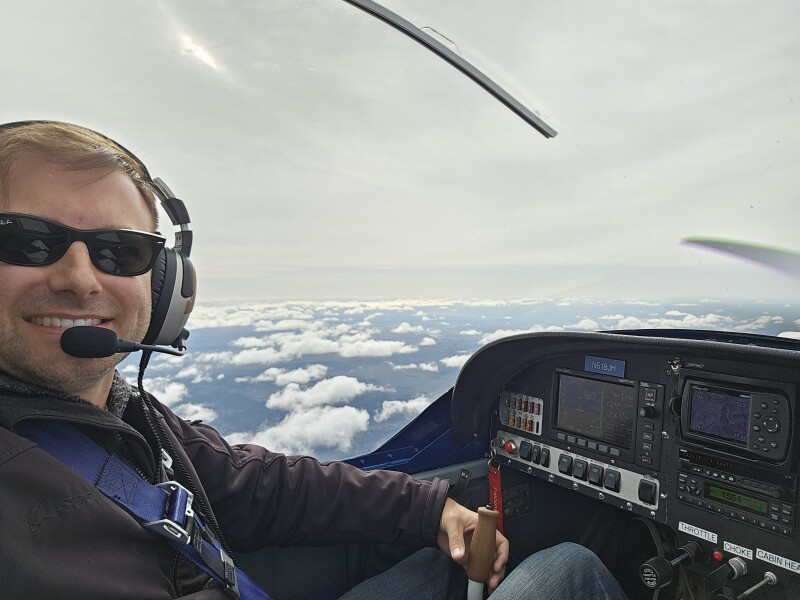
Contributed by Chris Raabe, PhD, Global CTO, ACSL
Checklist. Maintenance. Procedures.
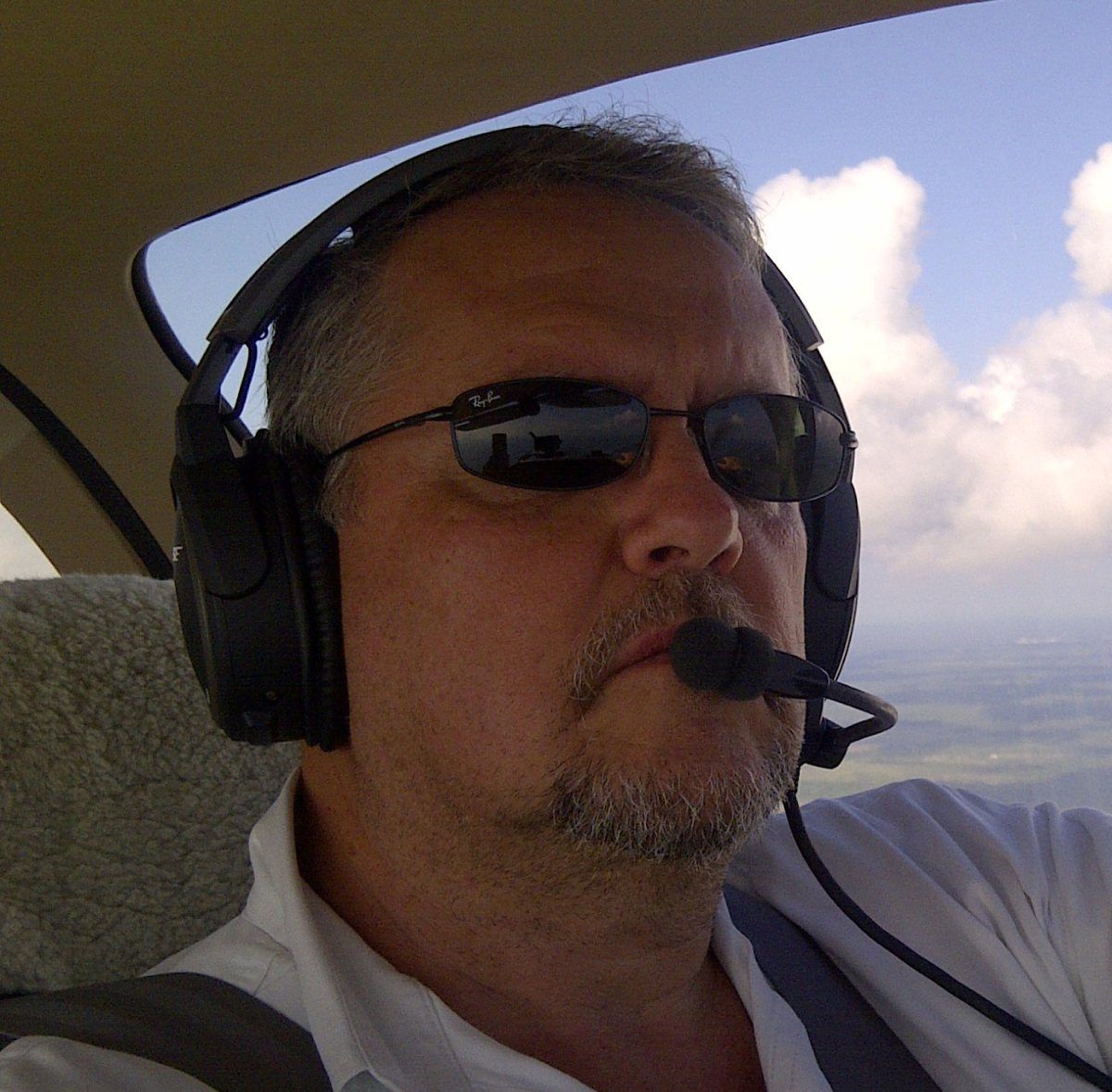
I’m both a drone pilot and recreational single-engine airplane pilot. I’m flying an experimental plane now, and am in the process of building another. Flying a drone and flying an aircraft are, for the most part, very different experiences, but both carry an incredible responsibility. One thing stands out to me when looking at the two: The crewed aircraft industry has over 120 years of safety experience under its belt. It’s worth examining the lessons and procedures it has developed.
Before taking the runway, pilots are taught to wiggle all of their controls. Student pilots may think this is a silly and unnecessary step, but it's an intentional safeguard against something that has led to loss of life in the past. In 1935, two very experienced test pilots died seconds after takeoff because neither noticed that the elevator gust lock was still engaged, preventing them from controlling pitch. This was the birth of the preflight checklist.
Safety is a word that gets tossed around frequently in this industry. UAS platforms have become remarkably capable, remarkably quickly. From autonomous functionality to obstacle sensing to ADS-B technology, significant safety milestones have emerged in a short time. Working on my own aircraft, keeping it airworthy, learning the systems, and training for the license itself has taught me that safety isn’t a mindset you visit once. Aviation safety is about sets of habits you rehearse until they’re automatic, long before you ever need them.
The drone industry was born from radio control hobbyists; it's still young and moving fast. In the U.S., recreational drone pilots require no license, and commercial pilots must only prove their aeronautical knowledge, not their practical flying skill. That makes sense for an industry sprouting from hobbyists, but in my opinion it doesn't match the actual level of risk. And the risk is real, even as reliability and autonomy improve. You never know when a bird is going to take interest in a drone, or when the weather is going to turn faster than the forecast predicts, or if a system fails mid-flight.
Lessons That Have Proven Their Worth
A critical part of crewed aircraft safety procedures is what are called “memory items,” the immediate actions you must take from memory when a certain condition presents itself.
What controls am I reaching for? Where are they located on my instrument panel? What order do I need to hit them?
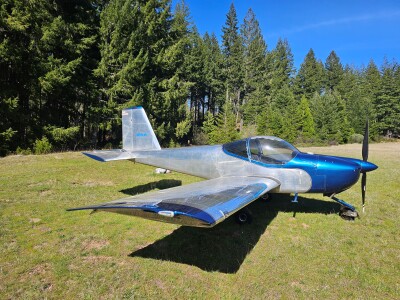
These are lessons drilled into every pilot earning a crewed aircraft license, and they bring confidence and ownership. The engine sputters, and my fingers immediately move from the lower right to the upper left: flap handle up, fuel cutoff valve open, engine choke closed, throttle open, fuel pump switch on, ignition B on, ignition A on.
For drone pilots, similarly memorizing buttons, locations, workflow, and what to do in various emergency scenarios is the first step. It sounds like common sense, but in reality, pilots often get a drone out of the box and into the air without ever thinking it through. What do you do if the drone starts moving in an unexpected direction? What if it loses GPS? What if the wind suddenly picks up?
Every pilot needs to consider scenarios before they’re actually living through them. A bad crash doesn’t affect just the pilot flying. It can injure a bystander, damage property, and set back the credibility of the wider drone community. Getting into the field, memorizing the controller and drone settings in case of an emergency isn’t a regulatory checkbox, but it’s one of the most important things you can do to fly safely.
Crewed aviation built structured tools around safety procedures, some of which the UAS community has adopted. P.A.V.E. breaks risk into Pilot, Aircraft, enVironment, and External pressures to evaluate flight hazards. I’M SAFE is another protocol adopted into Part 107 training where a pilot runs through a fitness-to-fly self-checklist: Illness, Medication, Stress, Alcohol, Fatigue, Emotion.
Communication deserves more attention. When you’re flying or training with an instructor, the first thing they tell you is never touch the controls until I say, “You have the flight controls.” As soon as you touch controls, you say back, “I have the flight controls,” and I once again confirm, “You have the flight controls.” Over-communicating helps reduce risk while clearly defining who is doing what. As drone fleets expand, and more systems are put into the air at once or flying BVLOS operations, we can take lessons from this.
What Procedures Drone Pilots Should Adopt
Crewed aviation emergencies line up with uncrewed aviation more than we think. Loss of GPS is loss of navigation. A lost connection to the control tower is a communication failure. A critical low battery is an engine failure. Platforms have come a long way in performance and reliability, and we’ve become used to that. While the systems continue to improve and become more capable, I believe it is even more crucial for pilots to take safety measures into their own hands.
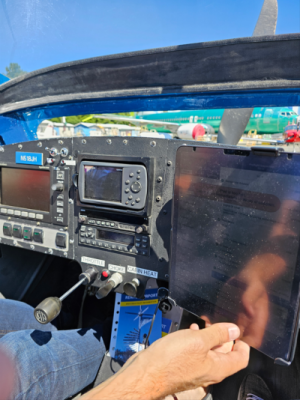
Pilots need to focus on building real-world flying skills, taking the time to run safety-focused missions on their own with dedicated time to learn how to handle emergencies. Before you fly, spend 10 minutes preplanning emergencies, landing sites, and failure scenarios for the mission, and communicate that point to everyone on site. Lastly, understand that risk doesn’t discriminate by experience. Most of us will fly hundreds of uneventful missions, but an unexpected emergency can appear at any moment, no matter how much stick time a pilot has.
Personally, during long stretches of uneventful flight in an airplane, I like to practice button sequences for various scenarios to keep my muscle memory fresh. When I’m flying over a forest or rugged terrain, I am always scanning for places to land in case of an emergency. I apply the same lessons to operating a drone, making sure I’m ready to adjust it in an emergency, locate it in the sky, and fly in manual mode. I know my aircraft. I know how the engine sounds at different RPMs, how the wind noise changes with speed, and how it should smell when everything’s right.
UAS pilots need to focus more on practicing challenging scenarios and knowing their drone inside and out. When a crewed aircraft pilot rents an aircraft, they are asked whether they have time flying that model. If not, they must complete a “transition checkout” where they fly with a Certified Flight Instructor until signed off. This helps bridge the knowledge gap and build familiarity with the aircraft.
Prepare For The Unexpected While Embracing Innovation
Despite the preflight checklist being introduced in 1935 after that initial incident, the elevator gust lock has been responsible for several more deadly crashes in '47, ‘79, ‘92, and even as late as 2014. Knowing your aircraft, practicing regularly, following procedures, and memorizing emergency motions will always remain critical. Pilots can't be complacent even after safety systems continue to improve.
Automation is the future of most enterprise operations. There’s no doubt we’re headed that direction, and it’s the right one. But that doesn’t excuse you from knowing your system in detail. What’s your Return to Home (RTH) flight path? Does it retrace your route home or fly straight back? What altitude does it climb to during RTH? Where is your emergency motor cutoff? Have you actually logged stick time in manual mode, or only automated/positioning mode? Are you flying by the camera feed alone? And have you practiced with the nose facing you, operating the drone in reverse? What’s your critical low battery threshold, and does your mission plan actually respect it?
Aviation developed its safety procedures through experience, practice, and commitment. It earned it through more than a century of hard lessons, most of them written in hindsight. The drone industry doesn't get to skip that process entirely, but we also don’t have to relearn it from zero either.
About the Author
 Chris Raabe has been a pioneer in the Japanese drone industry since 2010. He began his journey by developing robust control and non-GPS navigation systems for multicopters as a doctoral candidate and later as a faculty member at the renowned University of Tokyo. He then transitioned to the role of CTO and board member at ACSL, Japan’s leading manufacturer of multicopter drones. Throughout his career, Chris has collaborated with various governmental and industrial entities across Japan, focusing on infrastructure inspection, surveying and mapping, disaster response, logistics, and other specialized applications.
Since joining ACSL in 2017, Chris has overseen the development of over 10 products, achieved more than a tenfold increase in revenue, and played a critical role in ACSL’s IPO on the Tokyo Stock Exchange in December 2018. In 2023, Chris relocated to the US to spearhead ACSL’s expansion into the North American market.
Before his tenure in Japan, Chris worked as an engineer at Boeing starting in 2006, where he supported autopilot and flight control engineering for the 737-NG and 747-8 programs. Chris holds a bachelor’s degree in aerospace engineering from Georgia Tech and a master’s degree in electrical engineering from the University of Michigan.









Comments