

Contributed by Andriy Shevchyk, Chief Business Development Officer at Indeema
For nearly a decade, the commercial drone industry has been anchored by "precious asset" logic. UAVs have been treated like manned aircraft: expensive, six-figure machines designed for years of maintenance to justify their cost. However, as enterprise leaders in energy and infrastructure hit a "scalability ceiling," a new model is emerging from the world’s most intense drone testing ground: Ukraine.
Lesson 1: Why "Durable" Failed
In the high-stakes environments of Eastern Europe, the "expensive and durable" model has largely collapsed under the pressure of constant electronic warfare and physical attrition. Success has shifted to $2,000–$5,000 units: hardware capable enough for the mission but affordable enough to be treated as a consumable.
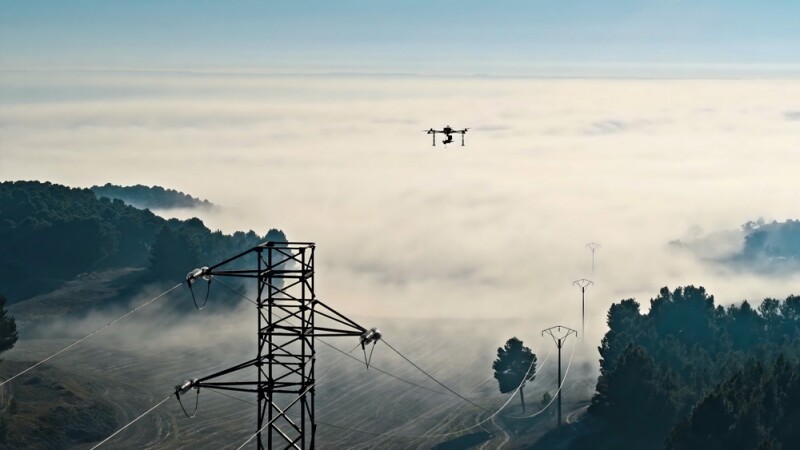
This "consumable" logic is now migrating to the commercial sector. For a VP of Operations, the "gold standard" hardware of the past has become a bottleneck. If a utility company is hesitant to fly a drone near high-voltage lines because a crash results in a six-figure loss, the mission fails before it begins. To scale, the industry must pivot from asking "How long will this drone last?" to "What is the total cost to acquire this mission's data successfully?"
Lesson 2: Ukrainian Experience: Building a Disposable yet Secure Stack
Transitioning to a mission-expendable model does not mean settling for off-the-shelf hobbyist tech. The breakthrough seen in Ukraine is the ability to maintain high-grade security and processing on low-cost frames. This is achieved by decoupling the motors, plastic, and carbon fiber from the drone mission architecture.
In this model, the airframe is treated as a consumable shell, but the command-and-control links and data encryption remain at an enterprise-grade standard. By keeping the "intelligence" within a consistent, modular framework, organizations ensure that even if the hardware is lost or replaced, the integrity of the network and the security of the data stream remain uncompromised.
This is where the transition becomes technical. Companies like Indeema are facilitating this shift by utilizing "solution accelerators". These are pre-integrated software and hardware bundles that allow enterprises to deploy custom-fit, affordable drones without the R&D tax of a ground-up build. By treating the drone as a modular tool rather than a static asset, organizations can swap hardware rapidly while maintaining a consistent, secure "brain."
Lesson 3: Cloud-Native Logistics: The Data Outlasts the Drone
The final lesson from the front lines is logistical. Managing a high-volume fleet cannot rely on manual SD card uploads, yet constant connectivity in the field is rarely a guarantee. To make a "mission-expendable" model viable, the drone must function as an intelligent edge node rather than a simple flying sensor.
The solution lies in a shift toward hybrid cloud architectures. By utilizing tools like AWS IoT Greengrass, drones can process and buffer mission-critical telemetry locally, even in "denied" or disconnected environments. This capability ensures that data is synchronized to the cloud the moment a connection is established, even if it’s intermittent.
When the cloud serves as a persistent repository that is constantly updated from the edge, the mission's intelligence is decoupled from the hardware's survival. In this framework, the loss of an airframe is merely a minor hardware replacement cost, while the data has already been secured in the digital "brain" of the operation. With a cloud-based 'brain,' the data outlives the hardware.
The Bottom Line
The UAV industry is having its "commodity compute" moment. By embracing the lessons of the living lab, enterprise leaders can stop worrying about the survival of the aircraft and start focusing on the power of the data. The future belongs to the sovereign drone: a tool affordable enough to be lost, but secure enough to be trusted with the most critical infrastructure.
 About the Author
Andriy Shevchyk, Chief Business Development Officer at Indeema, brings over 15 years of experience in IoT, embedded systems, AI-driven solutions, and drone technology.

.jpg.small.400x400.jpg)





Comments