
The Drone Safety Team (DST) is a collaboration between the uncrewed aviation industry and Federal Aviation Administration (FAA) stakeholders focused on reducing risk in U.S. uncrewed aircraft operations. It was originally created in October 2016 as part of the FAA broader Safety Team program. It was known as the Unmanned Aircraft Safety Team (UAST) and was primarily focused on improving uncrewed aviation systems (UAS) safety through data sharing, trend analysis, and consensus-based safety enhancements.
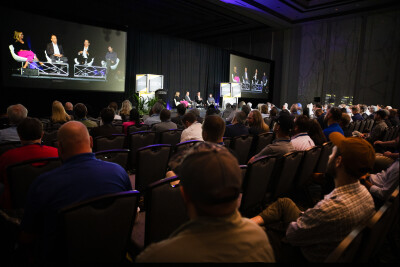
Eventually the final name of Drone Safety Team was officially adopted and the organization became operational. For years it functioned as a separate entity from the FAA, but in September 2023, during Commercial UAV Expo, In Las Vegas, Dallas Brooks, from Wing and Jeffrey Vincent from the FAA announced a complete reorganization of the DST based on new management and a new structure.
During that event in Las Vegas, both Mr. Brooks and Mr. Vincent invited the attendees to apply for membership of the new DST, and in the spirit of full disclosure, my company Plaza Aerospace Corp. applied and we were accepted on October 24, 2023 as Voting Member (Industry).
A year later, again, during Commercial UAV Expo in Las Vegas, in September 2024, Mr. Brooks and Mr. Vincent announced the results of the first year of their joint management of the reorganized DST. At that meeting it was announced that two working groups were formed:
- The Drone Safety Data Working Group. Lead by Noran Abraham D.Eng. of the Center for Advanced Aviation System Development (CAASD) would focus on the gathering of
UAS safety data in order to create a Drone Data Analysis System (DDAS) that would increase safety in the National Airspace System (NAS).
- The Drone SMS Working Group, led by Nancy Graham (Co-Chair) and Jason Starke (Co-Chair) together with Kelsey Muka acting as Government Lead.
These two groups had been working for a few months and planned to continue their efforts in consolidating the new organization. Mr. Brooks and Mr. Vincent announced they would continue their co-chairmanship of the organization and announced their plans to have a formal meeting in Washington, DC, in 2025.
That meeting was delayed due to the arrival of a new administration in Washington, drastic and dramatic changes to the FAA and many other reasons, but it finally took place last week, March 26 and 27.
During this event in the nation’s capital, it was announced that the DST has recently been folded into a broader, cross‑community effort that centralizes aviation safety work under the U.S. Aviation Safety Team (USAST). This organizational shift reflects recommendations from safety leadership to harmonize the activities of several community safety teams , including the U.S. Commercial Aviation Safety Team (USCAST), the General Aviation Joint Safety Committee (GAJSC), the U.S. Helicopter Safety Team (USHST), and the DST, into a single national framework intended to improve coordination, reduce duplication, and prioritize system‑level safety issues across all sectors of aviation.
A central element of the new structure is the National Aeronautics and Space Administration’s (NASA) Aerospace National Safety Issue Registry (ANSIR), a centralized repository designed to collect, analyze, and prioritize safety concerns that span multiple aviation communities. ANSIR is intended to act as the national forum through which safety issues are surfaced and routed, allowing specialized teams like the DST to concentrate on developing voluntary mitigations and safety enhancements that respond to prioritized risks. By aggregating information from across sectors, ANSIR aims to reveal cross‑cutting hazards that individual community teams might not identify independently, and to ensure scarce resources are directed toward the highest‑value safety interventions.
Recognizing that industry participation is essential to the success of this centralized approach, the FAA took steps to encourage voluntary data sharing. On August 1, 2025, the FAA published a Federal Register notice proposing to designate information provided to
USAST/ANSIR as protected from public disclosure. The proposed protections were presented as a means to reassure companies and other contributors that sensitive safety intelligence submitted to the registry would not be publicly exposed, thereby lowering barriers to candid reporting and more robust data sharing. That notice opened a public comment period and formed part of the FAA’s broader FY2025 reporting and implementation activities documenting the establishment and operationalization of USAST and ANSIR.
Operational materials and agency reports in the FY2025 cycle and subsequent communications through March 2026 reference USAST and ANSIR as active initiatives, indicating that the integration of the DST into the national framework is underway rather than merely conceptual. For stakeholders, the practical implication is that the DST’s mission, promoting voluntary safety enhancements for drone operations, will continue, but its agenda, priorities, and workflows will be coordinated through the centralized registry and the USAST governance structure. This coordination is intended to make drone safety work more strategic, adding the ability to address interoperability, airspace integration, and other system‑level concerns in concert with the broader aviation community.
The shift also raises questions about how protections for submitted information will be finalized, as the August 2025 Federal Register notice sought public input on the scope and application of disclosure safeguards. The final form of those protections will influence industry willingness to contribute safety data and therefore the effectiveness of ANSIR as a national safety information hub. In short, the DST remains integral to U.S. aviation safety efforts but is now operating as part of a centralized, cross‑community framework designed to elevate, harmonize, and accelerate safety outcomes across all modes of flight.
By integrating the DST into a bigger family of general aviation, commercial airliners and helicopters, drones are now treated as any other aircraft and the artificial separation because of the lack of a pilot onboard has been erased. It is possible that the next iteration of aviation has started with this move, and we hope that the new management recognizes the importance of letting these changes be known to a broader audience.











Comments