

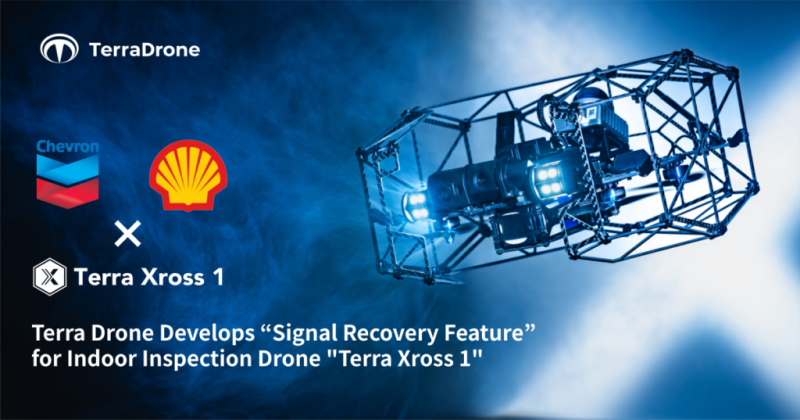
.png.small.400x400.png) Terra Drone Corporation has added a signal recovery feature to its Terra Xross 1 indoor inspection drone, it announced on Tuesday. The Tokyo-based company developed the capability through the Nippon Foundation and DeepStar joint technology program, drawing on feedback from consortium members Chevron and Shell.
Terra Drone Corporation has added a signal recovery feature to its Terra Xross 1 indoor inspection drone, it announced on Tuesday. The Tokyo-based company developed the capability through the Nippon Foundation and DeepStar joint technology program, drawing on feedback from consortium members Chevron and Shell.
The Terra Xross 1 uses lidar and other visual sensors for flight stability, and they say it is priced at roughly a third of the cost of conventional indoor visual inspection drones. The company said the lower price point has helped expand adoption of indoor drone inspections across critical infrastructure sectors.
Terra Drone joined the Nippon Foundation and DeepStar program to align the drone's development with field requirements from operators. DeepStar is an offshore technology development consortium whose members include major oil and gas companies, and the program is designed to advance technology, improve safety, and support decarbonization efforts in the energy sector.
Indoor, confined, and GPS-denied environments carry a risk of signal degradation or loss during drone operations, and this new feature is an automated safety mechanism that activates when the drone loses communication with its controller during flight. Once triggered, the drone flies back toward the point where it last maintained a signal to reestablish the connection.
Terra Drone said the feature is intended to reduce the risk of flyaways or equipment loss in settings such as storage tanks, boiler rooms, and underground structures, where radio signals often weaken or drop out. The company said the addition allows operators to conduct wide-area and long-distance inspections without the same exposure to lost assets.
Terra Drone said it plans to continue working with infrastructure owners, operators, and inspection firms to develop features based on field feedback.

.jpeg.small.400x400.jpg)
.png.small.400x400.png)







Comments