

.png.small.400x400.png) Huntsville, Alabama-based SkyfireAI announced on Tuesday that it has closed an $11 million seed round to accelerate development of its AI-native platform for autonomous, coordinated multi-drone operations. Mucker Capital led the financing, with participation from AI Fund, SaaS Ventures, Halogen, Harvard Business School Alumni Angels, New York Angels, and additional investors.
Huntsville, Alabama-based SkyfireAI announced on Tuesday that it has closed an $11 million seed round to accelerate development of its AI-native platform for autonomous, coordinated multi-drone operations. Mucker Capital led the financing, with participation from AI Fund, SaaS Ventures, Halogen, Harvard Business School Alumni Angels, New York Angels, and additional investors.
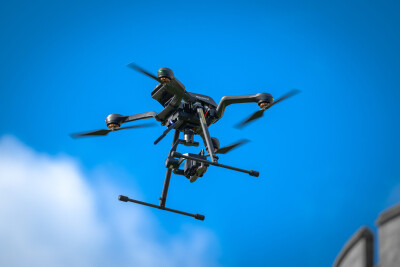
SkyfireAI targets public safety agencies, defense organizations, and “other mission-critical” operators that need to expand drone program scale without a proportional increase in staffing or operator workload. Its platform covers the full mission lifecycle — from pre-mission planning and deployment through real-time orchestration and operational oversight — and is built around a hardware-agnostic, systems-level approach to autonomy.
Use cases include 911 first response, critical-incident overwatch, medical delivery, event and crowd safety, and perimeter defense. The company says its computer vision and autonomy stack is designed to perform under the time pressure, safety requirements, and regulatory constraints typical of emergency response and defense environments.
Founded in late 2022, the company's leadership team brings backgrounds from the U.S. Navy, the Intelligence Community, and DARPA. Andrew Ng's AI Fund has been involved since inception and participated in the seed round.
CEO and co-founder Don Mathis said in a statement that the platform is built around operational realities rather than controlled conditions.
"When seconds matter, teams need faster eyes on scene, better coordination, and better information," he said. "SkyfireAI is building AI-native autonomy that helps first responders, defense operators, and other mission-critical teams deploy drones faster, manage more complex missions, and ultimately protect more lives."
SkyfireAI says it currently serves federal, state, and local public-safety and law-enforcement agencies alongside “an increasing number” of defense customers. The company plans to use the new capital to expand its technology and product teams and scale deployments across its target verticals, among other uses.








Comments