

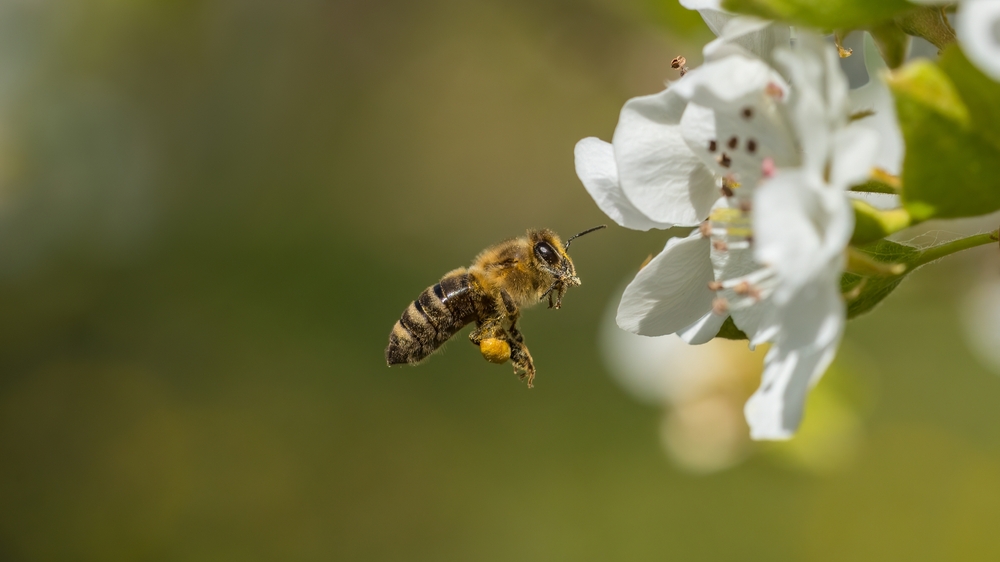
This week’s news round up looks at how drones are stepping in to help pollinate crops when bees can’t, ResilienX receiving a BVLOS waiver from the FAA, and a new first-response drone from BRINC that is the world’s first Starlink-connected drone.
“Robot Bees” Pollinate Crops
Unfortunately, bee populations are suffering due to pesticides, habitat loss, and disease. This is having a direct negative effect on flora and fauna in the United States. Almond, apple, and other tree crops are feeling this pain the most. Farmers of these crops looked for an alternative method of pollinating and were pleasantly surprised to find a solution in Dropcopter drones.
According to the article, “the dinner plate-sized Dropcopter drone can now be seen releasing dry pollen from what looks like a WW2 aircraft ball turret under its belly. One person can manually pollinate five to 10 trees a day, while Dropcopter will cover 40 acres in around four hours.” Farmers saw a significant increase in crop yield after using this method. Dropcopter is not the only company approaching aerial agriculture in this way. The Singapore-based company, Polybee, is performing similar operations for farms in Australia and Europe.
ResilienX Recieves BVLOS Waiver
ResilienX, a leader in systems integration for UAS ecosystems, was granted a Certificate of Waiver to fly BVLOS by the FAA.
The waiver, valid through September 2029, allows drone operations outside the pilot's direct line of sight by relying on NUAIR's FAA-accepted surveillance network, which covers about 1,900 square miles in Central New York. That network provides continuous airspace awareness and helps prevent mid-air conflicts.
The broader significance is industry-wide. The approval validates the FAA's NTAP framework, which allows third-party infrastructure providers like NUAIR to serve as the safety backbone for advanced drone operations. The idea is that shared infrastructure can help scale BVLOS approvals nationally, rather than each operator building its own safety case from scratch.
BRINC Releases “Guardian” 911 First Response Drone
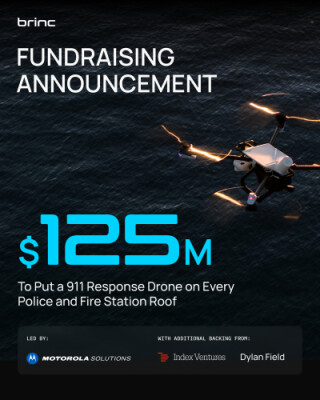
BRINC has unveiled Guardian, a new 911 response drone built for round-the-clock public safety operations. It's the world's first Starlink-connected drone, giving it a range of up to eight miles and reliable connectivity even without cellular infrastructure.
This drone model is even autonomous when it comes to charging.
“When Guardian is paired with Guardian Station, its robotic charging nest, the system automatically swaps batteries and redeploys to a new mission in under 40 seconds. That’s a massive improvement over current DFR drones that must charge for at least 30 minutes between missions.” stated the article.
It also auto-loads medical payloads like AEDs, Narcan, and flotation devices based on the type of emergency call.






Comments