
Now that Parts 108 and 146 are closer to becoming the law of the land, the uncrewed aviation industry is preparing for a world in which there will be two remotely piloted sets of rules, one for flights within the visual line of sight (VLOS) of the operator, Part 107, and one for beyond VLOS (BVLOS), Part 108.
Companies currently operating under Part 107 and holding a waiver or a Certificate of Authorization (COA) will have to transition to the new rule, as all waivers and exceptions are expected to expire after the formal issuance of Part 108. This will create a huge bureaucratic nightmare in which companies will have to adapt their current workflows and processes to comply with the wording of the new rule.
As most in the industry know, safety is generally the reason for complication in aviation, and it is not negotiable, regardless of how high you are flying or how much your aircraft weighs. Ultimately, it means these companies will have to scale up their operations to operate in the new and exciting world of BVLOS.
Commercial UAV News reached out to Josh Olds, CEO of the Unmanned Safety Institute (USI), to better understand how this transition will need to focus on the delicate balance between safety and profitability.
“The ability to scale any operation in the drone industry begins with the size and complexity of the organization,” Olds said. “That includes the scale in number of personnel, the technology being deployed, and the governance framework supporting the operation. In many ways, it mirrors the structure used by aviation flight departments today to maintain the strong safety record the industry has achieved. Training scalability, organizational governance, and the technology necessary to manage it all will look very different for a visual line of sight operation than for a beyond visual line of sight operation.”
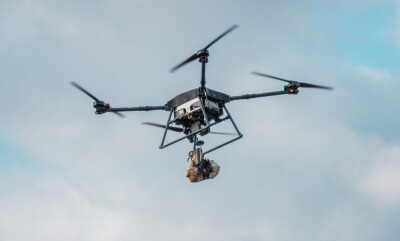
Operations under Part 108 will vary depending on the hardware. One aircraft under 20 pounds versus a group three aircraft at 600 pounds; the risk profiles increase, and that complicates the associated risk matrix.
“Every organization has a risk matrix, and within that matrix are risk areas such as reputational risk, kinetic energy risk tied to the size of the aircraft, air risk based on where the operation will fly, and ground risk based on whether the operation is conducted in an urban or rural environment and what lies beneath it,” Olds clarified.
“Across industry sectors and individual companies, we have identified 14 distinct risk areas. By evaluating, assessing, and implementing risk-transfer or mitigation processes, organizations can scale their operations. The key is applying time-tested aviation safety practices to create scalable programs for drone technology. That is the new era we are entering.”
With the democratization of drone technology around the world, civil aviation authorities are beginning to analyze the possibility of becoming aircraft certification entities, something that was the exclusive domain of just a few and that creates a problem of homologation of standards.
“Aircraft are being manufactured across the globe, but the industry has not yet fully standardized areas such as user-interface architecture or battery technology. In many respects, the drone industry is still learning,” Olds said. “For operations to scale effectively, we need the full human ecosystem and governance structure in place. That includes standard operating procedures, checklists, site surveys, emergency response plans, maintenance manuals, safety management systems, and the documentation necessary for a program to grow from 10 pilots to 300 while operating the same way, using the same checklists and procedures every time. That is how aviation scales.”
Scalability is important because in aviation, everybody is measured on the same scale. It doesn't matter how big operations are, from one small flying school to an American Airlines-sized company. If an aircraft falls from the sky, it poses a hazard to people and property on the ground, so every corporation needs to understand that there are different levels of risk that require adaptation to their particular business niche.

“If you are a one-person operation, your risk profile is limited to you in the field. For example, if you are working in agriculture or electric utilities, you will conduct a risk assessment and complete a site survey for each new operation,” Olds said. “But once you add a second person, the complexity changes. That individual may come from a different operational background like recreational or hobby flying and may be highly skilled with the control sticks, but may not approach risk in the same structured way. That added variable increases the complexity of the risk assessment matrix.”
For decades, the FAA and every other civil aviation authority across the globe have been occupied and preoccupied with safety in the sky, but now with thousands of small, medium and large remotely piloted aircraft potentially sharing the airspace, the concern might not be entirely with other flying objects but with persons and property on the ground. That is new regulatory territory for these agencies.
“We are working to create a shared mental model for the drone industry, something that, frankly, does not fully exist today,” Olds said. “That is a central focus for USI. Part 107 provides a framework for visual line of sight operations with small aircraft, but this industry is much broader than that. We are leveraging ASTM standards alongside proven aviation practices and applying them to the drone industry. To scale from one pilot to five hundred, the industry must develop a shared mental model and a shared safety culture.”
But we're not there today, and the closer we get to the reality of Parts 108 and 146, the more dangerous this situation becomes. As an industry, we will achieve these levels of safety, but the question is how long will it take? Right now, humans are an important part of every drone flight in the national airspace, but this will change radically with the new BVLOS ruling, as automation takes over and operations become fully autonomous.
“Scalability is driven by safety culture, and that culture includes governance, personnel training, technology, and the systems that support safe operations,” Olds concluded. “We use the term safety culture broadly because every element of an aviation organization, including its people, processes, and technology, falls under that umbrella. The goal is to build organizations with safety at the center, while recognizing a return on investment with the implementation of that technology.”







Comments