
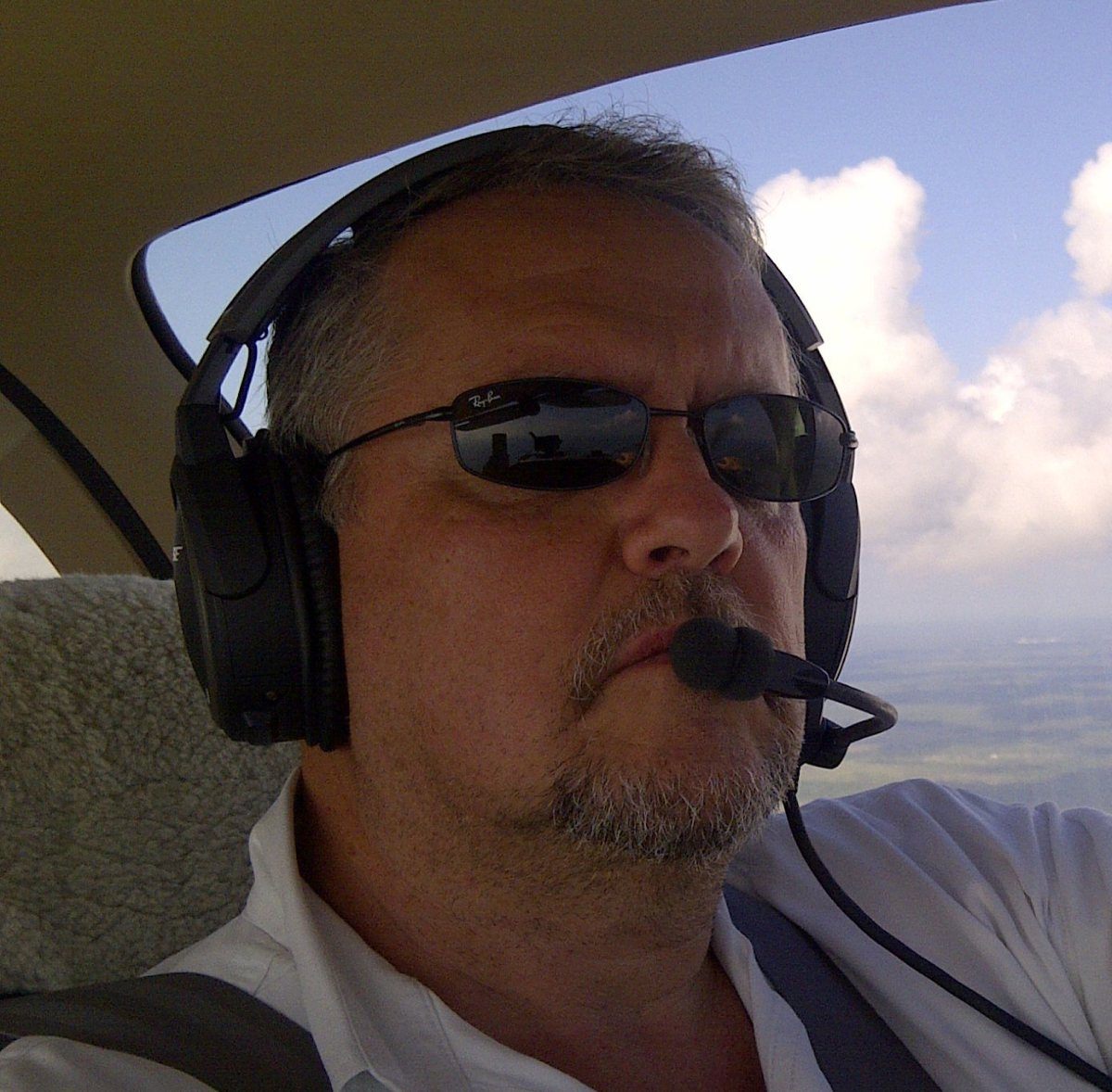
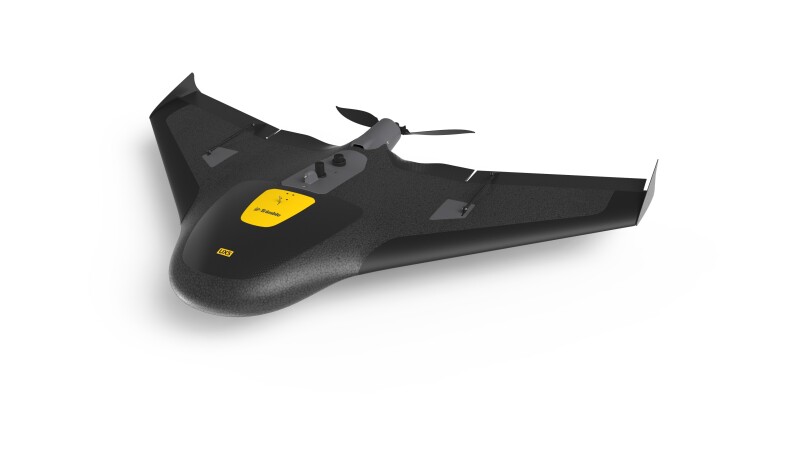
On May 26, 2013, I saw my first drone. It was not the traditional multicopter that a lot of people were beginning to use for photography and having fun at the beach or in the backyard. Instead, this drone was a fixed-wing black beauty made in Belgium and designed specifically for aerial photogrammetry, my profession. It was called the UX5, and I was responsible for selling it in Latin America as part of my duties (and my quota!) as Sales Manager LATAM for Trimble Navigation, which later changed its name to Trimble Inc.
The story of the UX5 is, at its core, the story of how a small Belgian startup helped pull a global geospatial giant into the age of unmanned aviation. Gatewing, founded in Ghent at the dawn of the 2010s drone boom, was one of the first companies to recognize that fixed‑wing UAVs could become precision tools for mapping rather than toys for hobbyists. Its engineers built the X100 and later the UX5, lightweight, foam‑bodied aircraft that could autonomously fly photogrammetric survey missions with a level of repeatability and reliability that was rare at the time.
What Gatewing lacked in scale, it made up for in technical clarity. The company understood that the future of surveying would be a fusion of sensors, flight automation, and data processing. That clarity caught Trimble’s attention. Trimble was expanding aggressively beyond GPS receivers into full‑stack geospatial solutions. Acquiring Gatewing gave Trimble an instant foothold in professional UAVs, along with a talented Belgian engineering team that had already solved many of the early problems of fixed‑wing mapping drones.
Under Trimble, the UX5 matured into a polished commercial product, integrated tightly with Trimble’s surveying ecosystem and sold globally under the Trimble brand. But by 2016, the drone landscape had shifted. Hardware was becoming commoditized, regulatory complexity was rising, and Trimble’s long‑term strategy was tilting toward software, analytics, and workflow integration rather than inhouse aircraft manufacturing.
In October of that year, Trimble divested the entire Belgian UAS business Gatewing’s people, IP, and product lines, to Delair, a French company specializing in long‑range fixed‑wing drones. The move allowed Trimble to step back from hardware while still partnering with Delair and others for UAV data capture. For Delair, the acquisition provided a proven platform and a seasoned engineering team. And for the UX5, it was the continuation of a uniquely European lineage that began in a Belgian startup and ultimately helped shape the early professional drone market.
I feel somewhat responsible for the divestiture of the UX5 lineage to Delair because our success in selling the aircraft in Latin America showed the ugly underbelly of the aviation business. Airplanes fall from the skies, and when that happens, everyone, beginning with the pilot (if they are still alive) and the operator, begin searching for answers, and in most cases for someone to blame.
In traditional aviation, every country has a dedicated team of people who investigate these accidents and in some large cases, the manufacturer gets involved.
In uncrewed aviation, the damage to people and property on the ground is normally small, especially in aerial photogrammetry for which flights are conducted in rural, empty areas. But the damage to a foam-made aircraft is catastrophic and almost always total.
We did emphasize training on every sale and had a great Spanish-speaking team from Belgium who personally came to the region and trained the pilots of the organizations which bought the UX5. Regardless of how careful and exhaustive the training was, there were accidents, and those accidents had to be investigated thoroughly to determine what had happened and who was responsible.
This process required that the PIC recover the flight data from the aircraft and make a claim to the team in Belgium, who in turn analyzed the data and determined what happened. Invariably, it was pilot error, and the claim was dismissed, but the damage was done. A product that sold for a fair price was beginning to create a huge backlog of support calls and costly investigations that eventually piled up to create an untenable situation for a company accustomed to selling equipment that worked flawlessly for years, even decades.
The demise of the UX5 within Trimble was somewhat linked to my own dismissal from the company at the end of 2025. It would be the last position I held with Corporate America for good, and that’s when I decided to dedicate the rest of my life to the industry of uncrewed aviation. In September of that year, I launched Plaza Aerospace and began to walk the steep road of becoming an entrepreneur after 26 years of selling land surveying hardware and software throughout the Americas.
So, here we are, in 2026, exactly 13 years later after I saw the UX5 for the first time, and we are still waiting for drones to make a significant impact on our lives. The technology has advanced immensely, and the issuing of Part 107 in the summer of 2016 gave the industry the legal framework to begin building a foundation that would allow regulators around the world to move a step closer to full integration, but we are still waiting.
In the meantime, drones are beginning to have a definite impact in certain industries like infrastructure inspections and agriculture, which are not only undeniable but rather significant.
And perhaps it’s better that drones take their time percolating our daily lives because there are generations of helicopter pilots and light sport aerial vehicles enthusiasts that are still operating as if drones do not belong in the skies. This attitude is not only wrong, but it’s firmly planted on the wrong side of history.
Uncrewed aviation in general and drones in particular are here to stay, and the entire aviation community will have to grapple with that reality at some point. Portraying drones as the bad actors in every accident is not only not accurate, but it helps cement the belief that they are always acting outside the law, which is not true.
Today, thousands of FAA certified Part 107 pilots are flying legally registered uncrewed aircraft, performing necessary tasks in a large number of industries and the number keeps growing as we approach the day when we will have Part 108 and flights beyond visual line of sight (BVLOS), and the profitability of the industry will finally arrive.
But is Part 108 the final step? No. These last 13 years have given us hope that aviation without pilots on board is not only possible, but highly profitable and would benefit humanity in ways can only speculate today. It is the equivalent of aviation in 1915, 13 years after the Wright brothers' flight, aviation was just a dream in the head of a few enthusiasts around the world who could envision what was possible.
Today, the reality is not that different. A large group of people around the globe, are working day and night creating different platforms, technical approaches and business models to make uncrewed aviation a reality. At the same time civil aviation authorities are working hard to come up with the next regulatory step that would place drones and air taxis closer to full integration with their piloted counterparts.
I look forward to the next 13 years, when this dream might become a reality and all of us would benefit from a cheaper, faster and less polluting aerial platform as we perform our tasks safely and fully integrated.






Comments