

.jpg.medium.800x800.jpg)
On January 26, U.S. Transportation Secretary Sean Duffy and Federal Aviation Administration, Bryan Bedford announced a major, and some say historical, reorganization of the federal agency.
This is not a sudden pivot, but rather the culmination of decades of tension between legacy aviation structures and the disruptive rise of uncrewed systems. For most of its history, the agency treated drones as exceptions, first as model aircraft restricted to certain areas and for hobbyists, then as a niche military technology, and finally as a commercial curiosity. Each of these stages left its own imprint on the regulatory architecture as the early years were defined by ad hoc exemptions and one‑off authorizations, a patchwork that reflected the FAA’s instinct to fit new technology into old categories. Then, when commercial drones began to scale, the agency responded with Part 107, which provided a workable foundation, but was never designed to support the industrial ambitions that followed.
The result was a regulatory environment that struggled to keep pace with the technology it was meant to govern. Waivers became the de facto mechanism for enabling operations beyond the rule’s original scope, and the industry learned to navigate a system where innovation depended on case‑by‑case approvals and lots of Certificates of Authorizations, or COAs. The FAA, for its part, found itself managing a growing backlog of requests with processes that were never intended for volume. As uncrewed aviation matured from small quadcopters to long‑range Beyond Visual Line of Sight (BVLOS) platforms–from simple cameras to complex autonomy sensors–the mismatch between the agency’s structure and the industry’s trajectory became impossible to ignore. Something needed to be done.
From my viewpoint, the reorganization is an attempt to reconcile that history. It deliberately aims to acknowledge that uncrewed aviation is no longer peripheral but central to the future of the National Airspace System (NAS). It recognizes that drones and advanced air mobility (AAM) aircraft are not temporary anomalies but enduring participants in the airspace. And it reflects an even broader shift: The FAA is moving from a reactive posture to one that attempts, for the first time, to build a durable institutional home for uncrewed systems.
.jpg.small.400x400.jpg)
A New Architecture for New Entrants
At the heart of the reorganization is a structural realignment meant to give emerging aviation technologies the institutional weight they have long lacked. For years, responsibility for drones was scattered across directorates, offices, and working groups, each with its own priorities and constraints. The result was a diffusion of authority that made it difficult to establish consistent policy or move quickly on rulemaking. The new structure consolidates these functions, elevating new entrants into a more coherent, strategically positioned domain.
This shift is particularly significant for Part 108 and the broader BVLOS ecosystem. The rule has been years in the making through many administrations, shaped by a long history of waiver‑driven operations, pilot programs, and advisory committee debates. Under the old structure, its progress was slowed by the need to coordinate across multiple internal silos, airworthiness, operations, safety oversight, and air traffic integration. The reorganization aims to streamline that process by giving new entrants a clearer path through the agency, with leadership empowered to make decisions without navigating a maze of overlapping jurisdictions.
It is important to understand that all of this needs to happen while traditional aviation continues to move millions of people a year in the safest mode of transportation and that the new system will have to be integrated smoothly. It’s like a motorcycle joining a busy highway with cars and trucks driving at 100 miles per hour. It’s risky and dangerous, but needs to be done.
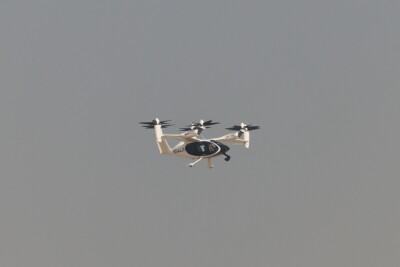
The same logic applies to advanced air mobility. Manufacturers in the eVTOL space have spent years working through certification pathways that were never designed for distributed electric propulsion or high‑automation flight decks. The FAA’s new structure attempts to bring these technologies under a unified strategic umbrella, aligning certification, operations, and integration in a way that reduces internal friction and makes it commercially available for aircraft that are flying low and slow. The agency is signaling that AAM is not an experimental corner of aviation but a mainstream domain that requires sustained regulatory attention.
Air traffic integration is another area where the reorganization carries real weight. For decades, the NAS was built around traditional crewed aircraft operating under predictable rules and human‑centered procedures. Drones and air taxis challenge that paradigm. They require new traffic management concepts, new data architectures, and new approaches to risk. The FAA’s reorganization strengthens the ability of the Air Traffic Organization (ATO) ability to modernize, giving it clearer authority to develop the systems needed to accommodate high‑density, low‑altitude operations. It also creates more direct pathways for coordination between ATO and the teams responsible for uncrewed aviation, reducing the institutional distance that has historically slowed progress.
The Road Ahead for an Integrated NAS
The reorganization marks a turning point in the FAA’s relationship with uncrewed aviation. For the first time, the agency is building a structure that treats drones and AAM not as exceptions to be managed but as core elements of the airspace. This shift has profound implications for how the NAS will evolve over the next decade.
For operators, the new structure promises greater predictability. Instead of navigating a labyrinth of waivers, exemptions, and one‑off approvals, they may finally see a regulatory environment where rules are designed for scale. Part 108 is the clearest example: its success will depend on the FAA’s ability to align certification, operations, and oversight under the new architecture. If the reorganization works as intended, the rule could become the foundation for routine BVLOS operations, enabling everything from infrastructure inspection to medical delivery to long‑range logistics.
For manufacturers, the consolidation of certification functions offers the possibility of more consistent standards and clearer expectations. The FAA’s renewed emphasis on technical independence and unified policy development could reduce the variability that has long frustrated companies working on novel aircraft designs. AAM developers, in particular, stand to benefit from a structure that recognizes the unique challenges of electric propulsion, autonomy, and high‑frequency urban operations.
For the broader aviation ecosystem, the reorganization is a signal that the FAA is preparing for a future where the NAS is more diverse, more automated, and more dynamic than ever before. It suggests a federal agency that understands the need to modernize not only its technology but its institutional mindset. The cultural shift, toward transparency, technical rigor, and proactive engagement, may ultimately prove more important than the structural one.
The FAA’s reorganization does not erase the complexities of integrating new entrants into the airspace, nor does it guarantee rapid progress. But it represents a meaningful attempt to align the agency’s internal architecture with the realities of modern aviation. After years of incrementalism, the FAA is positioning itself to lead rather than follow. For uncrewed aviation, which has spent decades pushing against the boundaries of a system not built for it, this moment marks the beginning of a new chapter, one where the regulatory framework is finally catching up to the technology it must govern.
In the last four decades we have seen three major technical revolutions that have changed our lives forever, the personal computer, the internet and the smart phone. Each one brought with it regulatory challenges to federal and state agencies but never on the scale that uncrewed aviation, the fourth revolution of our lifetimes, is bringing to the FAA. This time human lives are at stake, and it is understandable that everyone involved is pushing for change but moving cautiously. This FAA reorganization seems to be the culmination of that process and the maturation of a plan for a more modern aviation.












Comments